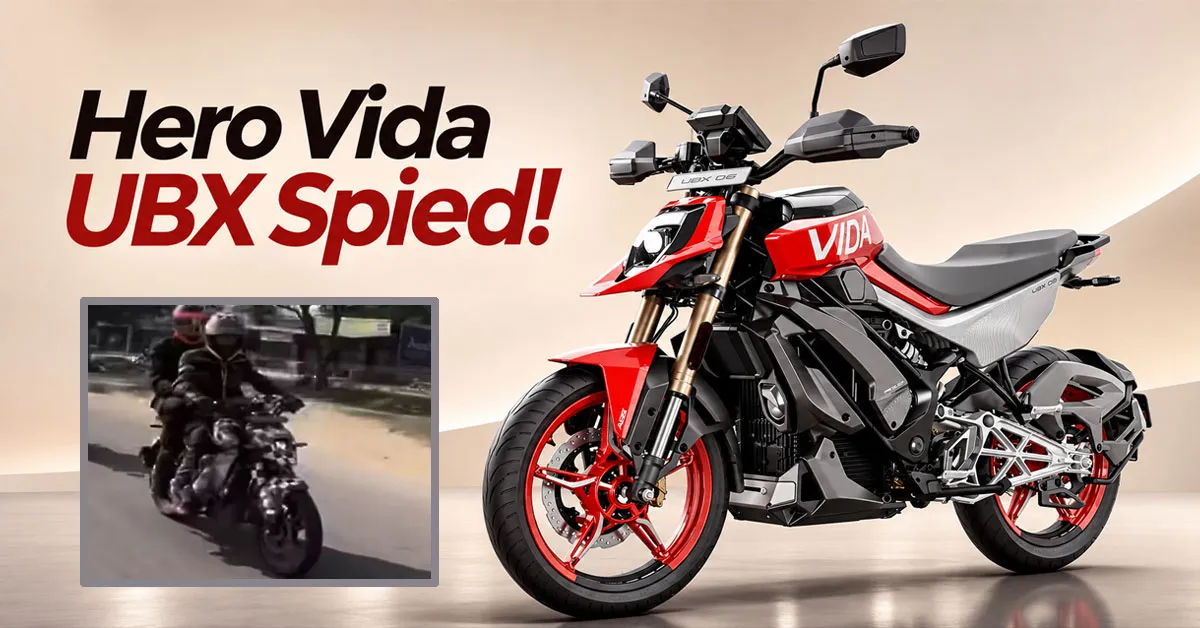
Hero MotoCorp’s electric brand Vida has been spotted testing its UBX motorcycle on public roads, just days after showing the machine at EICMA 2026 in Milan. The development matters because Vida has so far been associated mainly with electric scooters. An electric motorcycle would take it into a different and potentially much larger part of the two-wheeler market.
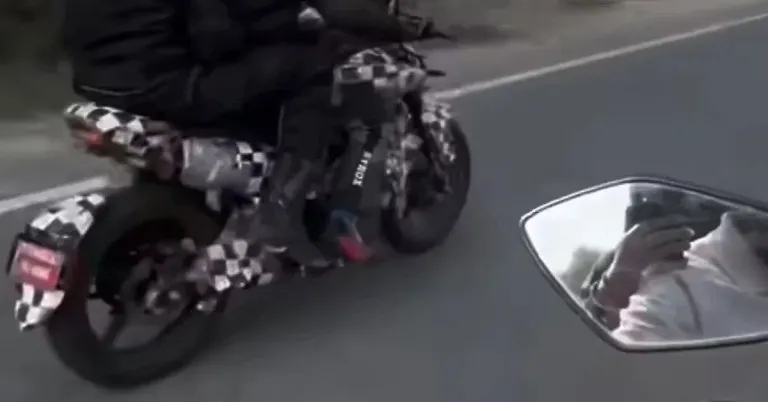
The test motorcycle was heavily camouflaged, but its shape closely resembled the UBX displayed at the international motorcycle show. The photographs also showed the bike carrying both a rider and a pillion, giving us a better idea of its size and the sort of use it is being prepared for. This is a test vehicle, however, not a confirmed production-spec motorcycle.
The UBX uses a lean, aggressive design with a high tail, wide handlebar and very little unnecessary bodywork. Hero describes the concept as a neo-naked urban explorer. In simpler terms, it looks like a compact street motorcycle with some supermoto influence rather than a traditional commuter or a full-size adventure bike.
The EICMA show bike featured handguards, LED lighting, a single-piece seat and a rear tyre hugger with the number-plate mounting. Upside-down front forks, a rear monoshock and a steel trellis-style chassis have also been reported. The test bike appears to retain much of this layout, although components and tuning may change before production.
One of the more interesting details is the seating position. The camouflage could not hide the relatively compact proportions, and the rider-and-pillion photographs suggest that the rear seat may be better suited to short trips than long journeys. That is not necessarily a problem for a sporty city motorcycle, but buyers expecting everyday two-up comfort will need to check the production model carefully.
The motorcycle also appears to use a rectangular colour TFT display. Controls on both sides of the handlebar suggest a more detailed rider interface than a basic speedometer. What features the final software will offer, including navigation, riding modes and connectivity, remains to be announced.
Vida has not officially disclosed the UBX’s motor output, torque, top speed, battery capacity, charging time or certified range. The centrally mounted battery enclosure suggests a motorcycle-specific layout, and reports describe a fixed rather than removable pack. But the size of the enclosure cannot reliably tell us how far it will travel on a charge.
This is an important point because electric motorcycles have a different set of demands from scooters. A scooter is frequently used for predictable city journeys at modest speeds. A motorcycle rider may expect stronger acceleration, sustained higher-speed performance and the ability to travel farther without stopping to charge. Range at highway speeds and how the battery manages heat will therefore matter as much as a headline range figure.

The other practical question is charging. Removable batteries are convenient for people who cannot park next to a plug, but they are harder to package once battery size and performance increase. If the UBX reaches showrooms with a fixed battery, home-charging access and the availability of suitable public chargers will be important considerations.
The UBX has not appeared out of nowhere. Vida showed an earlier Ubex concept in 2025 and has been developing dedicated platforms for electric motorcycles instead of simply adapting its scooter architecture. The more complete motorcycle displayed at EICMA this month and the new Indian test sightings suggest that development work is progressing.
Hero has separately indicated that its first electric motorcycle will arrive in 2027. That gives the UBX a plausible window, but the company has not confirmed that this particular model will launch on a specific date.

Vida also displayed the off-road-focused DIRT.E MX7 and Project VXZ at EICMA. The latter is being developed with US electric motorcycle specialist Zero Motorcycles. The three concepts show that Hero is exploring different types of electric motorcycles rather than banking on a single design.
The UBX’s biggest test will be whether it offers a reason to choose it over a familiar petrol motorcycle. Electric acceleration and lower routine running costs are useful, but buyers will also look at range, price, charging convenience, service support and the quality of the ride. For a motorcycle with sporty styling, handling and braking will be judged particularly closely.