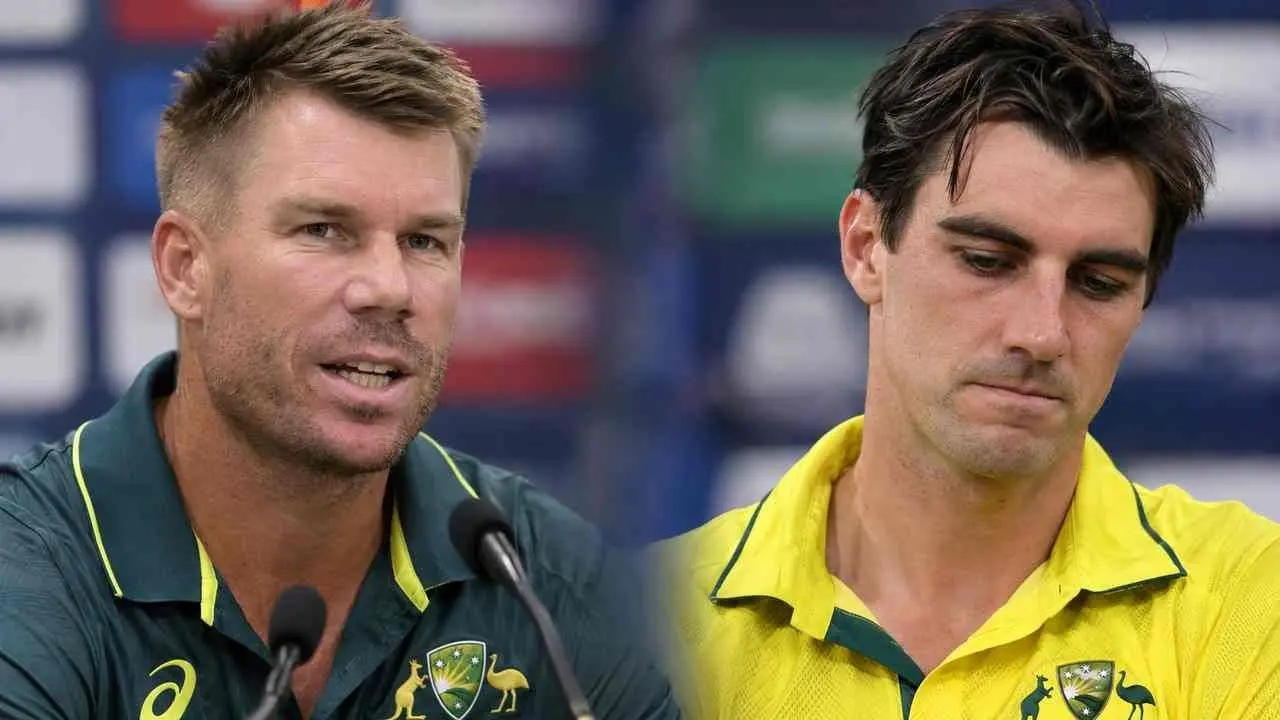
It looks as though David Warner has openly rebelled against Cricket Australia. His latest statements carry the anger of a man who feels he has endured years of humiliation and now wants answers from the board. At the centre of this confrontation is one of Australian cricket’s most controversial episodes: the 2018 ball-tampering scandal.
David Warner, Steve Smith and Cameron Bancroft accepted responsibility and were punished after the incident in Cape Town. Warner and Smith received 12-month bans, while Bancroft was suspended for nine months.
Warner and Smith were in the prime of their careers. For Warner, the damage went beyond missing cricket. His reputation became closely tied to the scandal, and the emotional cost has remained evident in his public appearances. What appeared to have settled down is now threatening to become a much bigger dispute.
Khawaja Claims the Entire Australian Team Knew
The latest confrontation began with Usman Khawaja’s autobiography. Khawaja claimed that the entire Australian team knew about the ball tampering—not just Warner, Smith and Bancroft, who were punished.
He also explained that he had promised his childhood friend Warner that he would one day tell his side of the story. His account directly challenges the idea that knowledge was confined to three players. If his account is correct, why were those three alone left carrying the blame?
Read alsoShreyas Iyer Is Team India’s Biggest Burden: Shocking Stats will blow your mindShreyas Iyer ODI stats since 2024 raise questions over his place, with a 33.25 average and concerns over his batting record in SENA countries.
Pat Cummins then addressed the allegations at a press conference. He denied knowing that sandpaper was going onto the field and rejected suggestions that he or other bowlers had helped devise the plan.
Warner responded during television coverage, defending Khawaja and accusing Cummins of throwing him “under the bus”. Rather than ending the argument, the press conference brought the disagreement between the former teammates into the open.
David Warner Questions Cricket Australia’s Investigation
Warner then challenged the investigation itself. In his social media statement, he named three bowlers and questioned the basis on which Cricket Australia had concluded that they had no prior knowledge.
His complete statement read:
“As far as I am aware, CA did not interview Josh Hazlewood, Mitchell Starc or Nathan Lyon in their 2018 investigation. If that’s correct, then how can CA push the idea that the bowlers didn’t know? It looks like they had decided who they wanted to blame from the very beginning ran a shoddy investigation to serve the purpose and now they want to maintain the false narrative that the bowlers had no idea. That stinks of a cover up.”
The most serious part is Warner’s suggestion that Cricket Australia had decided whom to blame before completing its investigation. His allegation goes beyond an incomplete inquiry. It suggests that Warner, Smith and Bancroft were made scapegoats and left to accept responsibility while the fuller truth remained hidden.
Read alongside Khawaja’s claim that the entire team knew, Warner’s statement raises the possibility that the investigation was shaped around a predetermined outcome: punish three players and protect the rest. That is the implication of his accusation, rather than an established finding.
Warner qualified his statement with “as far as I am aware” and “if that’s correct”. But his question remains specific: if Hazlewood, Starc and Lyon were not interviewed, what evidence allowed Cricket Australia to conclude that they knew nothing?
Read alsoRemember the Name: Mahli Beardman, New Mitchell Starc of AustraliaMahli Beardman stunned England on ODI debut with a five-wicket haul. Explore his rise and why his bowling invites comparisons with Mitchell Starc.

Why Warner Wants Wider Accountability
Warner’s anger appears rooted in the feeling that the punishment never really ended. The suspensions expired, but his name remained attached to ball tampering.
While Smith and Bancroft are not leading this latest public confrontation, Warner is challenging the account that has defined a painful part of his career. The force of his statements suggests he believes there is more to reveal about what happened inside the team.
His demand is for responsibility to reflect everyone’s role and knowledge. Accepting his own involvement does not prevent him from questioning whether others escaped scrutiny or whether the three punished players were left carrying a burden that should have been shared.
Cricket Australia has defended its original findings, while Cummins disputes the claim of wider knowledge. Warner has now put the investigation’s fairness at the centre of the argument. The board faces questions not only about whom it interviewed, but also about whether it followed the evidence or had already decided where the blame would fall.