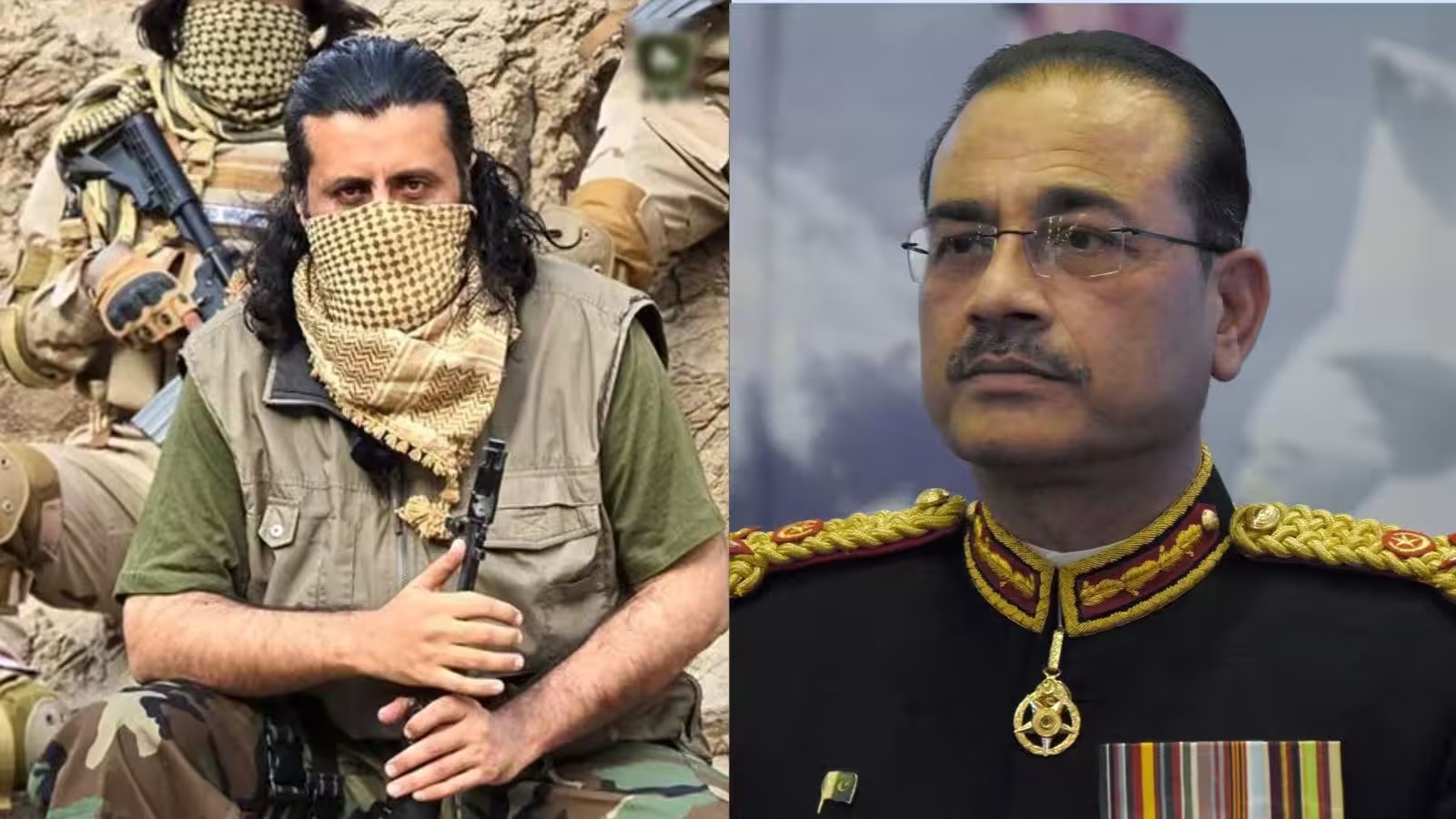
In a major organizational reshuffle, the Baloch Liberation Army (BLA), active in Pakistan's restive province Balochistan, has appointed former Pakistan Army officer Captain Rehman Gul as its new Commander-in-Chief. This decision to hand over the supreme command of the organization to a former Pakistani military officer trained at Pakistan Military Academy (PMA) Kakul has created a stir in the military and diplomatic circles of Islamabad. According to the information given by the High Council of Baloch Liberation Army (Majeed Brigade and Fateh Dastah), Rehman Gul has been given this responsibility because of his diplomatic ability, guerrilla tactics and deep understanding of the inner workings of the Pakistani Army. The move comes at a time when the resistance of local Baloch fighters against the operations conducted by the Pakistan Army in Balochistan has reached its peak. Strategic challenges have increased for Army Chief General Asim Munir. This development is considered very sensitive and worrying for Pakistani Army Chief General Asim Munir and Pakistan's Military Intelligence System (ISI). Captain Rehman Gul, who served within the Pakistan Army for many years, left the army in 2021 and joined the Baloch freedom movement. Being aware of Pakistani military strategies and the shortcomings of its security arrangements, the accuracy and lethality of the upcoming BLA attacks under Gul's leadership are expected to increase. Intelligence analysts believe that the appointment of Rehman Gul may see a major change in the strategy of attacks on Chinese Economic Corridor (CPEC) projects in Balochistan, Pakistani military bases and infrastructure, due to which the challenges of the Pakistani Army have increased manifold. The crisis looms over CPEC projects and Pakistani institutions in Balochistan. With the assumption of command of Captain Rehman Gul, the Baloch Liberation Army has indicated its future strategies. In a statement issued after assuming charge, the new Commander-in-Chief has said that the ongoing struggle against exploitation of Balochistan's natural resources and Chinese CPEC projects will be further intensified. After a series of major attacks in Gwadar, Quetta and Bolan areas in the last few months, the new leadership of BLA is now working towards adopting modern warfare methods by moving beyond traditional guerilla warfare techniques. Pakistan's government and army have now been forced to deploy additional forces and conduct security audits to thwart the strategies being hatched by their own former officers. The impact of this decision of Baloch Liberation Army will not be limited to the internal affairs of Pakistan only, but it will affect the strategic balance of the entire South Asian region. A former army officer taking over the leadership of the insurgent organization also highlights the internal cracks and dissent within the Pakistani army. According to analysts, Rehman Gul's experience in raising the Baloch issue at the international level and uniting local tribes can take the BLA to a new level. This development clearly shows that the ongoing conflict between Pakistani military establishments and BLA fighters in Balochistan is going to become more bloody and complex in the future, which will deeply impact Islamabad's administrative hold.