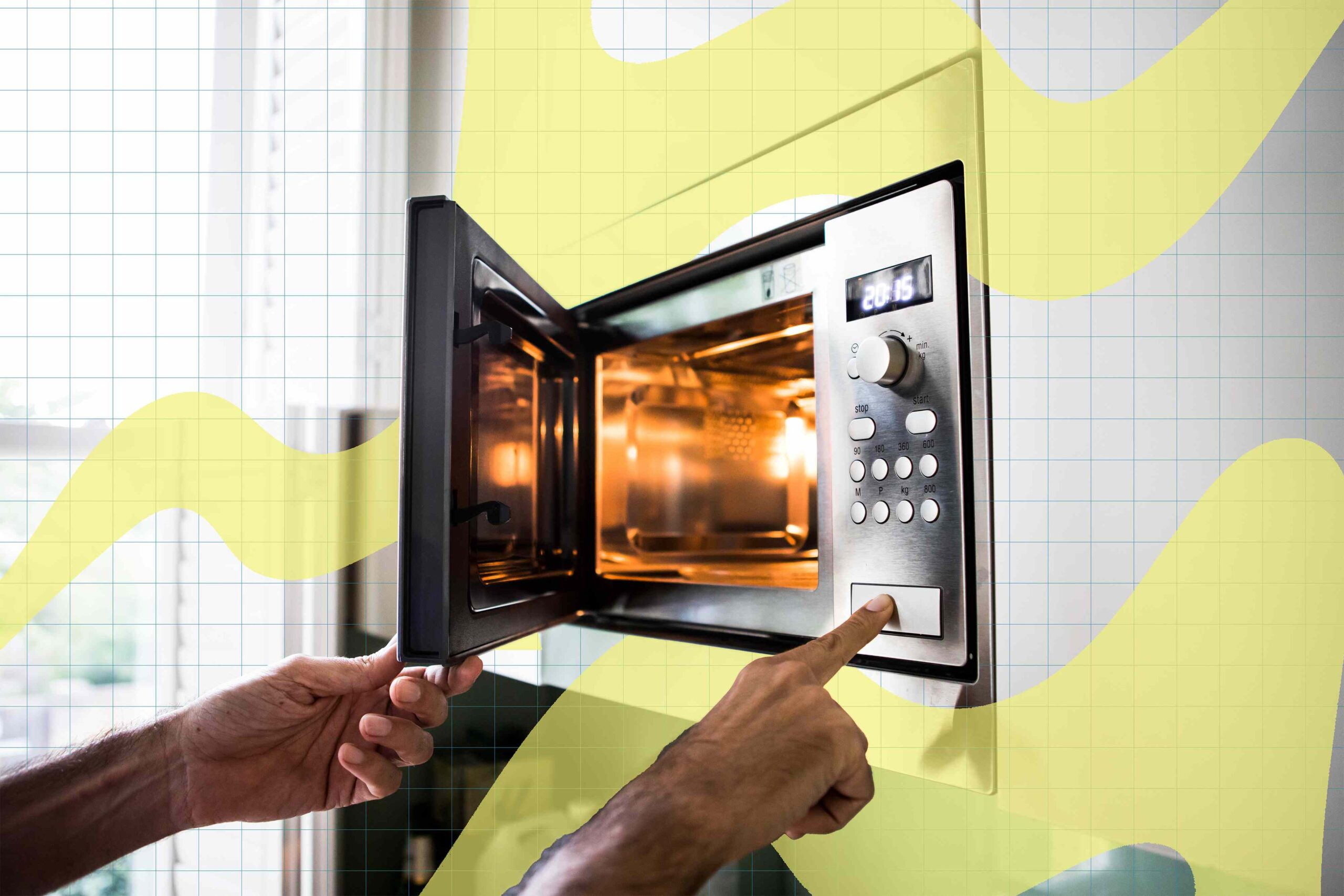
Unless you want a mess in the kitchen, be careful what you heat up.
Reviewed by Dietitian Jessica Ball, M.S., RD
Key Points
- Microwaving grapes can create plasma, which can lead to explosions and safety hazards.
- Uneven heating in the microwave can cause hot spots in liquids, risking burns or injury.
- Microwaving processed meats may release harmful compounds linked to heart health risks.
The microwave can be the greatest gift on a busy weeknight. It heats frozen meals and leftovers and can make meal prep a breeze. Yet, there are certain foods that you shouldn’t put in the microwave because of health reasons, a mess in the kitchen or even an explosion. (Yep, it can happen!)
So, to avoid these major disasters and health scares, it’s best to check whatever you’re about to put in the microwave to make sure everything is safe to heat up. Here are 8 foods to never put in the microwave. Trust us, you will regret it afterward!
1. Grapes
Grapes are a tasty snack to munch on, freeze for a chilly snack or enjoy in wine, but they certainly cannot go in the microwave. “An amazing reaction happens when grapes are microwaved. This specifically happens when grapes are halved, but still attached by their skin,” says Gabrielle McGrath, M.S., RD, LDN. What happens? “Plasma is created, which looks like a mini flame. Scientists figured out why this is the case, and it all revolves around the fact that microwaves don’t evenly cook foods,” she says.
For grapes, microwaving them creates pockets of electromagnetism that look pretty cool, but can also be a bit dangerous in your home kitchen. So, you’ll want to avoid any potential explosions, of course!
2. Whole Raw Eggs
“Whole raw eggs have been shown to explode when microwaved, potentially even exploding in your mouth once you’ve bitten into it,” she says. Yikes! “This is not only dangerous from the sense of being extremely hot, causing potential hearing issues if exploding in your mouth, but it’s also downright messy,” she says. So, be sure to only heat up cooked eggs, like a quiche or frittata, if you want to enjoy leftovers for breakfast.
3. Processed Meats
When exposed to microwave radiation, processed meats form cholesterol oxidation products (COPs), and COPs have been shown to be more damaging than typical cholesterol alone and more likely to lead to the development of atherosclerosis (plaque buildup that can lead to hardened arteries) and coronary artery disease (CAD), she says. So, by heating them in the microwave, you could be putting your heart health at risk. It’s best to avoid doing this with processed meats, just to be safe!
4. Carrots
This is a shocker! You don’t want to put carrots in the microwave. “Arcing is sparks produced inside the microwave from the microwave’s reaction with metallic materials. Carrots may contain minerals from the soil that can cause this spark,” she says.
And the same goes for hot dogs. “With hot dogs, arcing may occur because of uneven mix of salts and additives. If this occurs, turn off the microwave immediately to stop the sparking and cook the food with a different method,” she says.
5. Breast Milk or Formula
To protect your child, don’t put breast milk in the microwave. “This again comes down to microwaving not evenly distributing heat, which can create extreme hot spots in the liquid, which is dangerous for your baby,” she says. These hot spots happen because of uneven heating. Instead, place the bottle under hot, running tap water to warm it up. It’ll be about 1 to 2 minutes. Or heat it on the stove. Heat water in a pan and then remove the pan from the heat to set the bottle in it until it’s warm.
6. Raw Meat
“It is not necessarily a complete ‘no’ to microwaving raw meats, but it’s a cautionary tale. Microwaving can cook food less evenly than conventional ovens—and with certain meats, like chicken, you want your meat cooked all the way through,” she says. If you’re choosing to cook raw meat in a microwave, use a food thermometer in several parts of the meat to ensure it cooks evenly throughout. “For chicken specifically, ensure the internal temperature is at least 165°F; otherwise, there’s an increased risk for bacteria or pathogen exposure,” she says.
7. Plain Water
“Again, this is not a firm rule, but you have to be very careful when microwaving water as ‘superheating’ can occur,” she says. “This means that the temperature of the water rises above the boiling point of water (212°F) in what are called ‘hot spots,’” much like with the breast milk scenario. Motion (like moving and removing the cup from the microwave) can cause an eruption of boiling hot water (usually onto the person handling it), which can lead to serious burns and injury.
8. Sauces
Just like with the water, hot spots can linger under the surface of microwaved sauces and, when “popped,” can cause hot sauce to fly everywhere. So, it’s both dangerous and messy! “Instead, heat up sauces on the stove, where you can stir them to avoid hot spot creation,” she says. This keeps your health in check and saves you the hassle of a cleanup disaster!
Our Expert Take
Microwaves make life easier, but some foods just aren’t meant for them. Grapes and eggs can explode, sauces, water and baby bottles can overheat in spots, and processed meats can release stuff you don’t want to mess with. It’s worth taking the extra time to heat things up the right way so you stay safe and avoid a messy cleanup.