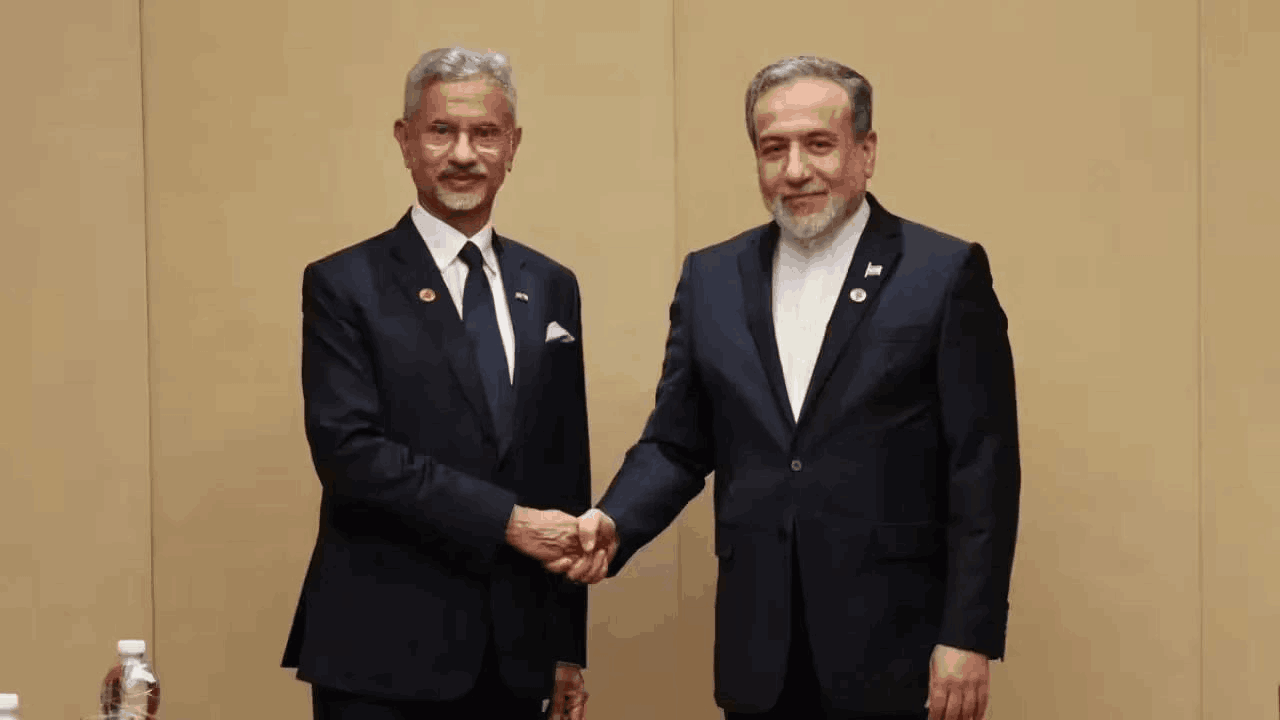
Whenever there is an attempt to corner any country in world politics or a proposal is brought to criticize a particular country, India's role has always been restrained, balanced and autonomous. In the current era of tension and geopolitical instability in the Middle East, India has once again presented its old and strong diplomatic role to the world. India has given a kind of diplomatic relief to Tehran by voting against the human rights resolution presented by Canada in the United Nations.
This resolution was to criticize the human rights violations in Iran and the functioning of the Islamic government there. However, India has shown its old policy by opposing this proposal. India believes that resolutions targeting a particular country are often politically motivated and hence unnecessarily politicize sensitive issues such as human rights at the international level. This decision has once again started the discussion at the global level on India's strategic autonomy and the sensitive political balance in the Middle East.
What actually was this proposal and Iran's reaction?
This human rights resolution presented by Canada was strongly criticized on the human rights situation in Iran and the policies of the government there. The Iranian Administration strongly opposed this proposal from the beginning. The Permanent Representative of Iran's Mission to the United Nations expressed strong displeasure over this proposal and clearly said that this proposal presented by Canada and some other countries is completely motivated by political motives and we completely reject it.
The Iranian mission further said that through this resolution the human rights agenda is being openly misused for political gains. Iran accused the countries presenting this proposal of pursuing their easy politics. In such a situation, India registered its objection to the Human Rights Mechanism in Iran and voted against the resolution. Due to this stand of India, a big change was seen in the voting on this proposal at the global level.
Why did India support Iran in the United Nations?
Often, common citizens or analysts wonder why India does not go against Iran while voting on human rights issues”citation-542 citation-end-542″>Voting against resolutions targeting specific countries on human rights issues has been a long-standing and traditional policy of New Delhi.
India strongly believes that proposals focusing on one country are often one-sided. Some countries may have special political agendas hidden behind them. Deliberately targeting a country and imposing a system of international investigation on it weakens mutual relations with that country. More importantly, according to India, such interference is an insult to that country's sovereignty and internal affairs. That is why India maintains distance from such country-specific resolutions or votes against them.
Tension in the Middle East and diplomatic consequences of this vote
Right now, the political environment of the Middle East (West Asia) has become very sensitive and delicate. The conflict between the US and Iran can escalate at any time or a new war can break out in this region. In such a volatile environment, it is important for India to take every step very thoughtfully.
If India had voted in favor of the anti-Iran resolution, India's long-standing relations with Tehran would have been strained. Keeping in mind the energy security of the Middle East, trade routes, strategic projects like Chabahar Port and the security of millions of Indians living in the region, it is in India's interest to maintain coordination with Iran. Moreover, it was better for India to oppose this proposal so that it could strengthen its position in the political strategy of the region and take a different stand without being bound by the demands of any one group.
Reiteration of the January proposal; common stance
This stand of India was not taken suddenly or in a day. Earlier this year, in January, a similar resolution against Iran was introduced in the United Nations Human Rights Council (UNHRC). The resolution held Iran responsible for its crackdown on protests in December last year. There was also a demand to increase the fact-finding mission.
India had voted against the resolution at that time also. This shows that even in times of changing international development and increasing tension, India remains firm on its principles and political priorities. Although India has no problem in protecting human rights, it has always opposed the practice of selectively targeting countries for this purpose.
Also read-
India's progress from GTA 5 to GTA 6, PM Modi shared the post