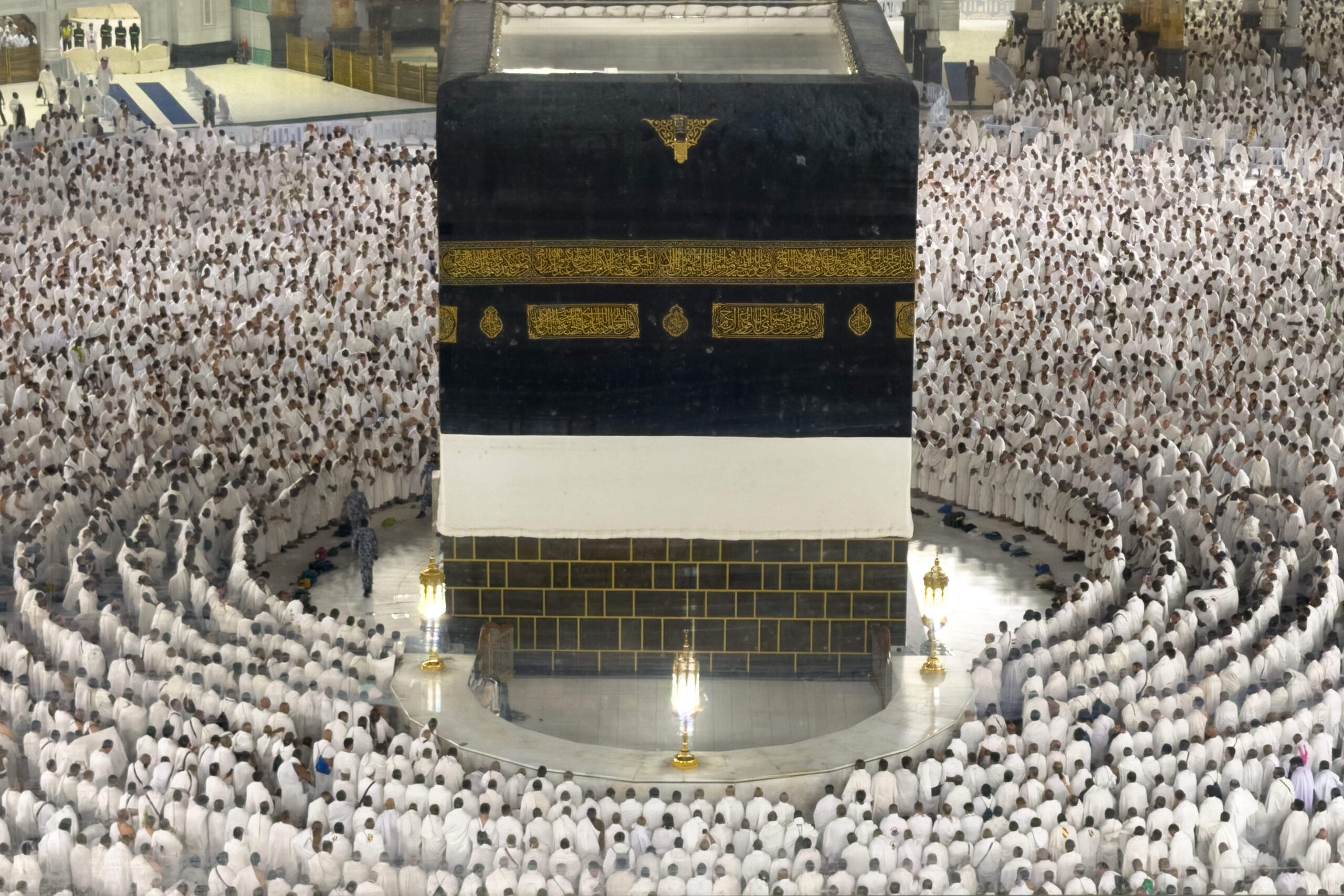
Muslims Projected to Outnumber Christians by 2035 as The World’s Largest Religion, Pew Finds/ NEWSLOOKS/ WASHINGTON/ Jehan Mansour/ Islam is projected to surpass Christianity as the world’s largest religion by 2035, according to new Pew Research Center estimates. Higher fertility rates and younger populations are the main drivers, with both faiths expected to grow substantially in sub-Saharan Africa. The projections also indicate that Christians could fall below half the U.S. population by 2065 as religious disaffiliation increases.


Global Religious Population Trends: Quick Look
- 2035 projection: Approximately 2.57 billion Muslims and 2.52 billion Christians worldwide.
- 2070 outlook: More than 3.6 billion Muslims and just under 3 billion Christians if recent trends continue.
- Main demographic driver: Differences in fertility and age profiles, rather than conversion.
- Fertility rates: Muslim women averaged 3.1 children and Christian women 2.5 during 2020-2025.
- African growth: More than half of the world’s Christians are projected to live in sub-Saharan Africa by 2070.
- U.S. religious change: Christians are projected to fall below 50% by 2065.
- Canada: Christians could become a minority by 2030, with unaffiliated people eventually outnumbering them.
- Conditional findings: The projections depend on demographic and religious trends continuing.


Global Religious Population Trends: Deep Look
Pew Projects Muslim Population Will Surpass Christian Population
NEW YORK — (AP)- Muslims are projected to outnumber Christians worldwide by 2035, according to Pew Research Center estimates released Wednesday that identify fertility rates and population age as the principal forces reshaping global religion.
Both Islam and Christianity are expected to grow, but the Muslim population is projected to expand considerably faster.
Pew estimates that the world had approximately 2.27 billion Christians and 2.02 billion Muslims in 2020. By 2035, those totals are projected to reach 2.52 billion Christians and 2.57 billion Muslims.
By 2070, if recent trends continue, the Muslim population could exceed 3.6 billion, while the Christian population would approach 3 billion.
The projections incorporate age profiles, fertility, migration and patterns of religious switching. They describe possible demographic outcomes rather than guaranteed future totals.
Fertility Differences Drive Much of the Growth
“It’s the babies,” said Pew senior demographer Conrad Hackett, emphasizing that births play a much larger role than conversion in the projected changes.
During 2020-2025, Muslim women had an estimated fertility rate of 3.1 children per womancompared with 2.5 among Christian women.
The average for women in other religious categories combined was 1.6, below the approximate replacement level of 2.1.
Pew estimated that Muslim mothers gave birth to about 252 million babies during that period, compared with 208 million born to Christian mothers.
Muslims are the only major religious group projected to experience increasing numbers of births in the decades ahead. Birth totals among other groups are expected to remain stable or gradually decline.
Africa Becomes Increasingly Central to Both Faiths
Pew projects that much of the world’s population growth through 2070 will occur in Africa, particularly south of the Sahara, where Christianity and Islam are widespread.
Higher fertility and improving life expectancy are expected to increase the populations of both faiths.
By 2070, more than half of the world’s Christians are projected to live in sub-Saharan Africa.
Congo is expected to surpass the United States as the country with the largest Christian populationreaching approximately 299 million Christians — more than three times its earlier total.
Globally, Pew projects population growth of 29% between 2020 and 2070. Christians are expected to increase by approximately 30%, while Muslims could grow by 80%.
U.S. and Canada Face Declining Christian Shares
In North America, religious disaffiliation is expected to reshape the population.
Pew projects that Christians will fall below half the U.S. population by 2065. Their number is expected to decline from approximately 217 million in 2020 to 174 million in 2070.
Religiously unaffiliated people could account for 41% of the U.S. population by 2070.
In Canada, Christians are projected to fall below 50% by 2030. By 2070, people with no religious affiliation are expected to outnumber Christians.
These trends reflect both demographic differences and people changing their religious identification.
Europe’s Christian Population Expected to Contract
Europe’s overall population is projected to shrink 17% by 2070.
Over the same period, the number of Christians is expected to fall from 505 million to 324 million, a decline of roughly one-third.
Muslims’ share of Europe’s population is projected to rise from 6% to 13%.
The findings illustrate how changes within religious groups interact with broader regional population growth or decline.
Pakistan Projected to Have Largest Muslim Population
Pakistan is expected to become the country with the largest Muslim population by 2070, followed by India, Nigeria and Indonesia.
Indonesia currently has the largest Muslim population.
Pew also projects that Hindus and Jews will increase in absolute numbers but account for smaller shares of the global population.
Buddhists are expected to decline both numerically and proportionally, partly because of population decreases in China, South Korea and Japan.
Researchers Warn Against Framing Growth as Religious Competition
Alan Cooperman, Pew’s director of religion research, said much of the projected growth will occur in countries where Muslims or Christians already constitute majorities.
Conversion plays a comparatively small role.
“I don’t think this is a situation in which the growth of Muslims is coming at the expense of Christians,” he said.
“I do worry about mischief being made with headlines or narratives that take this finding and portray it as sort of a clash where Christians are losing to Muslims.”
Gina Zurlo, a senior researcher at Harvard Divinity School specializing in religious demographics, said the findings underscore the importance of stronger Christian-Muslim understanding.
“I hope people seek opportunities for greater interreligious education,” she said. “Personal contact is important — when people have personal relationships across religious differences, it ‘humanizes’ the ‘other’ in fruitful ways.”
Religiously Unaffiliated Populations Grow Unevenly
People identifying as atheist, agnostic or religiously unaffiliated — often called the “nones” — are already majorities in 10 countries, according to Pew.
Those countries include the Czech Republic, Japan, the Netherlands, New Zealand, Uruguay and Vietnam.
South Korea, France and the United Kingdom are projected to join that group by 2070.
Outside China, the unaffiliated population is expected to grow by more than 180 million. China’s large unaffiliated population, however, faces the effects of a substantial projected decline in the country’s overall population.
For more world news
More on US News