Nvidia has suffered a sharp decline in its market valuation, losing its position as the third-most valuable company in the United States after a prolonged sell-off in technology stocks pushed its market capitalisation below that of Google parent Alphabet.
The American semiconductor giant’s shares plunged around 14 per cent on Friday, November 20, bringing its market value down to approximately $3.4 trillion, according to LSEG data. Alphabet overtook Nvidia with a market valuation of around $3.44 trillion, while Apple and Microsoft retained the top two positions.
Nvidia’s latest decline marked its seventh consecutive losing session, its longest losing streak since 2008. The development comes amid growing investor concerns over the sustainability of artificial intelligence (AI) investments, leadership uncertainty and the future of the technology sector.
Nvidia stock crash: Why are shares falling?
Nvidia’s share price has remained under pressure despite the company reporting quarterly earnings that exceeded Wall Street expectations.
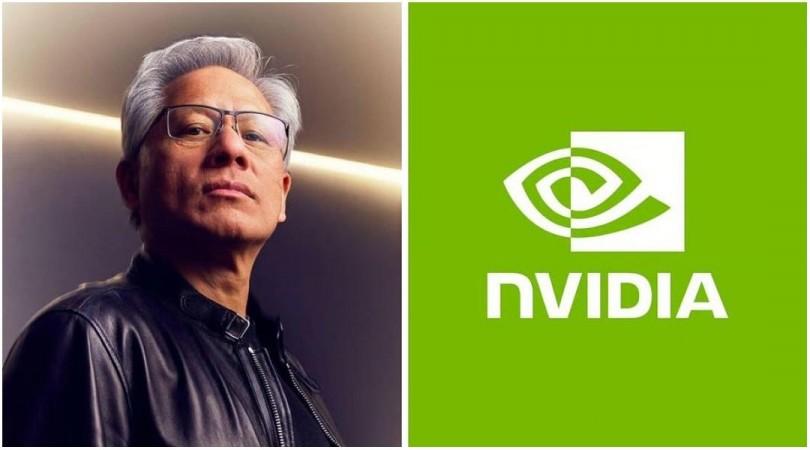
The latest sell-off follows the resignation of co-founder and former Chief Executive Officer Jensen Huang, which has raised questions about the company’s leadership and future direction.
Investors are also reassessing the massive investments being made in AI infrastructure, including data centres, advanced chips and computing capacity. Concerns are growing over whether the enormous spending by technology companies will generate sufficient returns to justify their high valuations.
Nvidia, widely regarded as one of the biggest beneficiaries of the global AI boom, has been at the centre of these concerns.
According to market estimates, the company has lost trillions of dollars in market value since reaching its record valuation earlier in October.
Global tech sell-off: Nasdaq, S&P 500 and Dow Jones tumble
Nvidia’s losses triggered wider selling across the semiconductor and artificial intelligence sectors, making Friday one of Wall Street’s worst trading sessions in more than a year.
The S&P 500 plunged 3.7 per cent, entering correction territory after falling more than 10 per cent from its October peak.
The Nasdaq Composite dropped 5.3 per cent, turning negative for the year, while the Dow Jones Industrial Average declined 1.9 per cent.
Several major semiconductor companies also witnessed sharp losses. Advanced Micro Devices (AMD) fell 13.3 per cent, Micron Technology declined 13.9 per cent and Broadcom plunged 12.2 per cent. The PHLX Semiconductor Index also dropped 10.7 per cent.
The sell-off extended beyond chipmakers, with companies associated with AI infrastructure and data centre expansion also witnessing declines.
Alphabet overtakes Nvidia as AI stocks face pressure
The decline has reshuffled the rankings of America’s most valuable companies.
Alphabet moved ahead of Nvidia with a market capitalisation of approximately $3.44 trillion, compared with Nvidia’s $3.4 trillion.
Apple remained the most valuable US company, followed by Microsoft. The changing rankings reflect a shift in investor sentiment towards technology companies with diversified businesses and established revenue streams.
Investors are increasingly questioning whether the AI boom can sustain the valuations of companies that have benefited from massive infrastructure spending.
Global markets lose nearly $9 trillion amid tech rout
The technology sell-off has also intensified concerns across international financial markets.
Global stocks have reportedly lost nearly $9 trillion in market value since reaching their peak in August. Taiwan’s stock market also witnessed a sharp decline, recording its biggest weekly fall since the early 1990s.
The pressure has extended to commodities, with copper heading towards its steepest weekly decline since April 2025. The metal had benefited from expectations of rising demand from data centres and AI infrastructure projects.
Market experts have warned that the bigger concern is whether the correction in technology stocks could spread to broader financial markets.
The latest developments have raised questions about the sustainability of the global AI investment boom, with investors closely watching corporate earnings, technology spending and leadership changes at major companies.