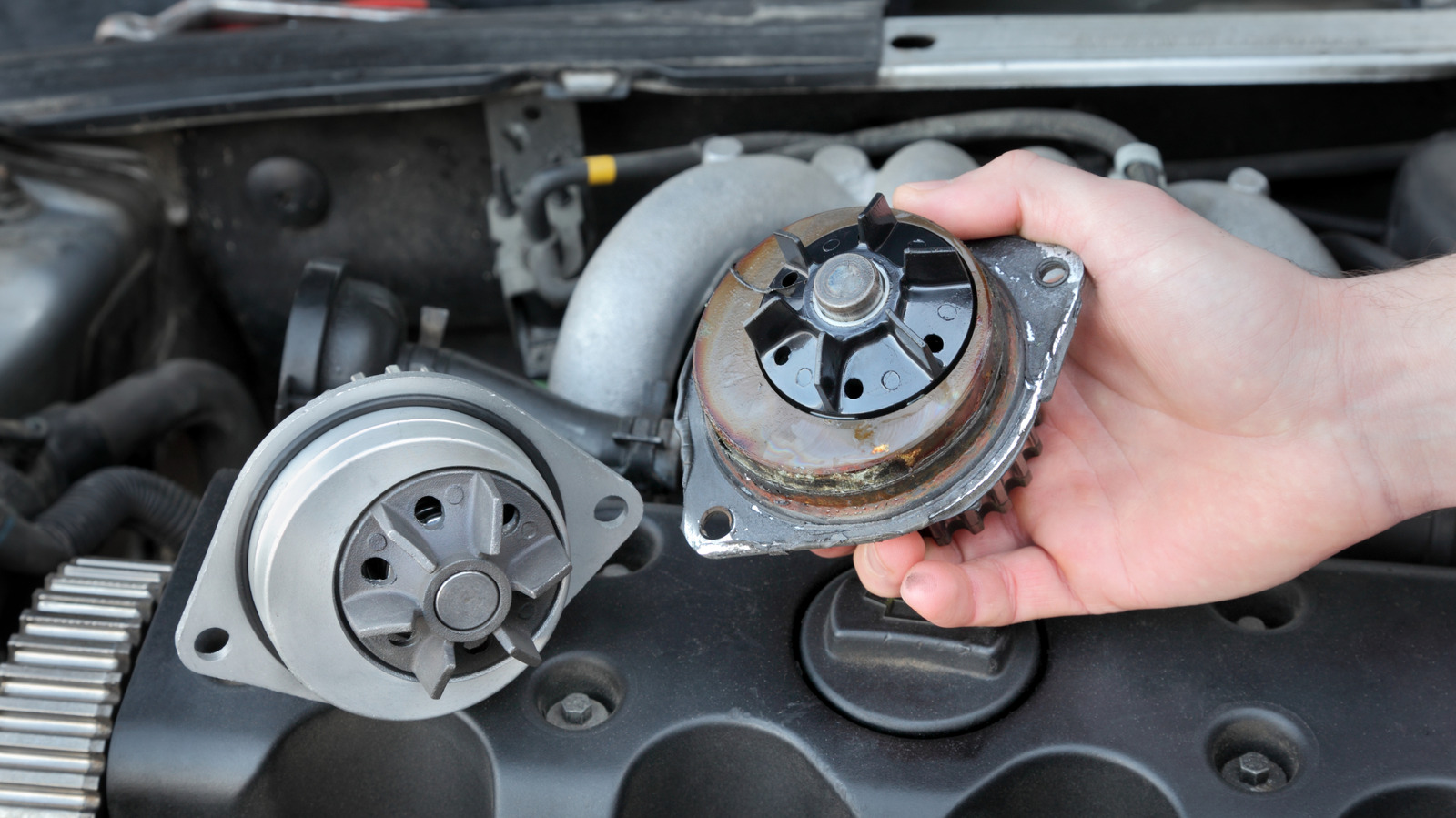
Your vehicle’s water pump is the heart of the engine’s cooling system. By circulating coolant, the water pump prevents excessive heat from damaging important components. (Because the water pump is an essential component of your car’s engine, it can be helpful to know when it may need to be replaced.) That said, different types of water pumps have different capabilities. Specifically, electric water pumps can perform several functions that mechanical water pumps can’t.
A mechanical pump stops circulating coolant almost the moment the engine shuts off. The problem is, even when the engine is off, it can sometimes take time for its temperature to drop back down to safe levels. Luckily, research shows that an electric water pump can keep coolant circulating in an engine for an additional one to two minutes. An electric water pump can also offer enhanced control over when coolant is circulated throughout an engine, as well as how much coolant is circulated.
Electric water pumps make engine bay design easier for vehicle manufacturers, as well. That’s because a traditional mechanical water pump requires a belt drive to drive it and therefore has to be mounted on the same plane as said belt drive. This isn’t a requirement with an electric water pump, as it can be mounted virtually anywhere on an engine.
Electric water pumps aren’t universally superior to mechanical water pumps
The fact that an electric water pump can do some things a mechanical pump can’t doesn’t mean this option isn’t without its potential drawbacks and limitations. In fact, even though this type of water pump offers some clear benefits, most car manufacturers still haven’t equipped most of their vehicles with electric water pumps.
This is partially due to the fact that an electric water pump adds to the overall complexity of a vehicle’s electrical system. Added complexity often increases the costs for both manufacturers and consumers, and it can also result in greater maintenance needs and less overall reliability when compared with a mechanical water pump. Naturally, a more complex electrical system will also require more voltage to run it.
Keep these points in mind if you’re in the market for a new vehicle, as the type of water pump a car is equipped with might be a factor you consider when evaluating your options. It’s possible that the maintenance and complexity of an electric water pump may outweigh its benefits.