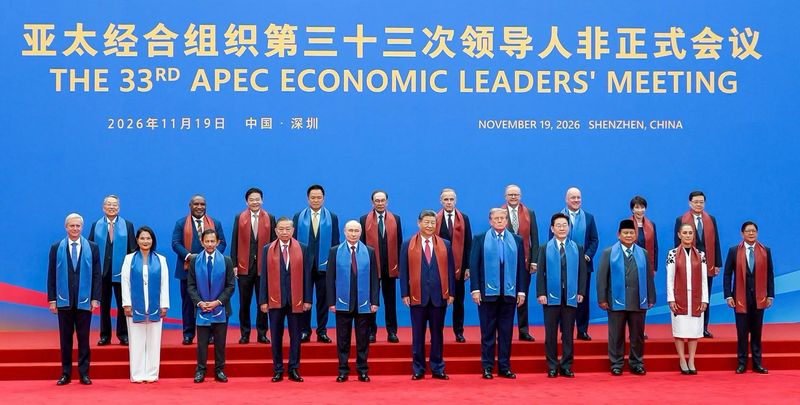
The America-China-Russian Federation APEC- Summit in Shenzhen on November 18-19, 2026, invites a comparison with the historic Yalta Conference of February 4-11, 1945. Although both encounters involve three influential powers, their geopolitical circumstances, strategic objectives and historical responsibilities differ profoundly. Yalta was convened during the final phase of the Second World War, when the Allied powers were shaping the post-war order. Shenzhen, by contrast, belongs to an era of strategic rivalry, economic interdependence, nuclear deterrence and increasingly fragmented international governance. The significance of Shenzhen should therefore not be measured merely by photographs, statements or diplomatic symbolism. Its real importance rests on whether the three powers can translate strategic competition into restraint, crisis management, international cooperation and credible commitments to peace. A summit among powerful states may influence the world, but legitimacy in the twenty-first century must increasingly derive from inclusiveness, international law and the interests of humanity beyond the negotiating table of great powers. This ‘Big Trio’ summit witnesses a paradigm shifts from the grand bargain of wartime powers to strategic competition, global stability and the limits of great-power diplomacy
1945 Yalta: Confronting a Common Enemy – Nazism and Fascism
The Yalta Conference was shaped by a common existential threat: Nazi Germany and the Axis powers. Franklin D. Roosevelt, Winston Churchill and Joseph Stalin negotiated against the backdrop of a war that had devastated continents, displaced populations and exposed the catastrophic consequences of aggressive nationalism, militarism and fascism. Their cooperation, despite profound ideological disagreements and mutual distrust, was driven by the overriding necessity of defeating Nazi Germany, determining the future of Europe and establishing institutional foundations for post-war international order, including the United Nations. Yalta was not an idealistic alliance of equals. Its compromises, particularly concerning Eastern Europe, generated lasting controversy and contributed to subsequent Cold War divisions. Nevertheless, its historical context was fundamentally different from Shenzhen: the three leaders in 1945 faced an identifiable common enemy and an immediate military imperative. In 2026, the three powers are not united against a comparable adversary. Their meeting is consequently a test of whether strategic rivalry can produce negotiated restraint without subordinating the sovereignty and interests of smaller states.
Common Agenda, Understandings and Declaration
The Shenzhen meeting reportedly produced a joint declaration addressing strategic stability, nuclear risk reduction, energy security and reform of the United Nations. The declaration’s political significance lies in the willingness of three nuclear powers to engage collectively, notwithstanding their divergent strategic interests. However, declarations are not substitutes for implementation. Nuclear risk reduction requires verifiable measures, communication channels, transparency and reciprocal commitments. Energy security must not become a pretext for coercive economic leverage, while UN reform must strengthen multilateral legitimacy rather than entrench privileged power. The reported agreement to engage on global security challenges is welcome, but the test of its credibility will be measurable outcomes: fewer threats of escalation, sustained diplomatic engagement, respect for sovereignty, restraint in military deployments and renewed confidence in multilateral institutions. A summit that produces broad language without practical mechanisms risks becoming an exercise in geopolitical theatre. Its declaration should instead be treated as the beginning of a process of accountability, consultation and diplomatic follow-through.
Strategic Agenda: Trump, Xi and Putin
The summit is observed to have reflected three distinct political and strategic ambitions. Donald J. Trump unequivocally focused on Washington’s central objective to preserving American global leadership, strategic influence and military-technological superiority while avoiding costly, prolonged confrontations. Nuclear negotiations and economic leverage remain instruments of American foreign policy, although the pursuit of supremacy may conflict with the pursuit of durable multilateral stability. While Xi Jinping seeks international recognition as a power capable of competing with the United States across technological, economic, industrial and military domains. Hosting the summit reinforces Beijing’s diplomatic profile and its claim to a central role in shaping global governance. China, however, must demonstrate that its advocacy of peaceful development is consistent with regional conduct and respect for other states’ security concerns. At the same time, Vladimir Putin aimed to secure reaffirmation of Russian Federation’s status as an indispensable global power, particularly in nuclear diplomacy, European security, energy markets and international negotiations. Moscow’s desire for recognition cannot, however, substitute for compliance with international law and respect for the sovereignty of neighbouring states. The summit thus reflects three ambitions, not a unified strategic vision.
Major Geopolitical Issues: Wars, Maritime Security and Global Stability
The Russia-Ukraine war, the Iran-Israel confrontation, tensions surrounding the Strait of Hormuz, energy-market volatility and the security of Indo-Pacific maritime routes remain interconnected challenges. Their consequences extend beyond regional boundaries through disrupted trade, energy supplies, shipping insurance, inflation and humanitarian suffering. The Strait of Hormuz is particularly consequential because of its significance to global petroleum transportation. Any military escalation there risks destabilising energy markets and increasing economic pressures on vulnerable importing nations. The Indo-Pacific maritime environment demands restraint, freedom of navigation, peaceful dispute settlement and adherence to international law, particularly the UN Convention on the Law of the Sea. The reform of the United Nations Security Council must also address contemporary geopolitical realities, regional representation and institutional effectiveness. The end of the Cold War did not end strategic rivalry; it transformed its character. The Shenzhen dialogue should therefore encourage practical diplomatic engagement, conflict de-escalation, maritime confidence-building, nuclear restraint and a commitment to resolving disputes through peaceful means rather than military coercion.
India’s Diplomatic Philosophy Echoed: Converting Conflict into Confidence
India’s diplomatic tradition emphasises dialogue, peaceful coexistence, strategic autonomy, confidence-building measures and the prevention of escalation and the same has been observed to echoed in the address of the ‘Big Trio’. These principles offer a constructive framework for addressing international conflicts, including those involving nuclear-armed states. The global community must strengthen commitments against nuclear use, accidental escalation and arms races. Nuclear deterrence cannot be regarded as a permanent substitute for diplomacy, disarmament and crisis-management mechanisms. India’s approach also underscores the importance of inclusive participation. The United Nations currently has 193 Member States, while two states-Holy See and Palestine-hold observer status. The world additionally contains territories and political entities whose international status remains unresolved. The diversity of political aspirations and economic circumstances cannot adequately be represented by a structure conceived in 1945. The Security Council’s five permanent members possess veto powers that frequently constrain collective action. Reform must therefore provide greater representation for Africa, Asia, Latin America and the Global South, while strengthening accountability, transparency and responsiveness to emerging international challenges.
Why India Matters, Even Without a Seat at Shenzhen
India was not a participant in the trilateral Shenzhen Summit, yet its diplomatic, economic and strategic significance cannot be marginalised. India’s advocacy of dialogue, peaceful dispute resolution, strategic autonomy and inclusive multilateralism resonates with several contemporary global challenges. The reported emphasis on nuclear risk reduction and peaceful engagement reflects principles that India has consistently advanced in international diplomacy. India’s experience in balancing strategic partnerships, maintaining independent foreign-policy positions and engaging diverse geopolitical blocs offers a useful perspective on conflict management. However, the assertion that Indian diplomatic proposals occupied the greatest portion of the summit’s deliberations within a 90-minute meeting cannot be established without an authenticated transcript or official minutes. Such a claim should not be presented as verified fact. India’s influence should instead be assessed through the convergence between its diplomatic principles and the international agenda: nuclear restraint, dialogue, strategic stability, inclusive global governance and peaceful resolution of disputes. Influence is not always measured by participation at the negotiating table; it can also be measured by the relevance of ideas adopted by others.
India Must Examine China’s Conduct, Not Merely Its Declarations
India must carefully assess whether China’s diplomatic rhetoric on peace, equality, sovereignty and multipolarity is consistent with its conduct across the Indo-Pacific and along disputed borders. Strategic declarations acquire credibility only when reflected in policies, actions and sustained restraint. India’s assessment should encompass border security, maritime activities, freedom of navigation, infrastructure development in sensitive regions, relations with India’s strategic partners and China’s engagement with countries in India’s neighbourhood. The Quad’s diplomatic engagement, including the Manila meeting referred to in this brief, should reinforce maritime cooperation, economic resilience, humanitarian coordination, technological partnerships and regional stability without unnecessarily escalating strategic confrontation. India must avoid assuming that diplomatic assurances automatically translate into policy commitments. Equally, prudence demands avoiding premature conclusions and evaluating evidence objectively. The Shenzhen summit may create opportunities for dialogue, but India must continue strengthening its diplomatic, economic, technological and defensive capabilities. Engagement and vigilance are not contradictory policies; they are complementary instruments of responsible statecraft.
Europe-the World-India and Future of the UN
Europe, India, the Quad and the wider international community should pursue coordinated diplomatic efforts to end the Russia-Ukraine war, de-escalate the Iran-Israel conflict and prevent military confrontation in the Strait of Hormuz. Peace initiatives must involve affected parties, respect sovereignty and avoid imposing settlements through coercion. The international community should also pursue nuclear arms reduction, maritime confidence-building, energy security, economic resilience and meaningful reform of the United Nations. India should approach any prospective permanent Security Council membership with strategic clarity. A permanent seat without meaningful decision-making authority, particularly without veto power, would raise legitimate questions of institutional equality and effectiveness. India should neither accept nor reject such a proposal reflexively; it should negotiate for a reform framework that strengthens representation, accountability and collective security. History repeatedly demonstrates that powerful states may proclaim universal principles while pursuing national interests inconsistently. India and the world must therefore judge diplomacy by practice, not promises. The lesson of Shenzhen is not that great powers should dictate the future, but that their power must be restrained by international law, responsibility and the interests of humanity.
(The author is an educationist, a management scientist and an independent researcher)