3
New Delhi:
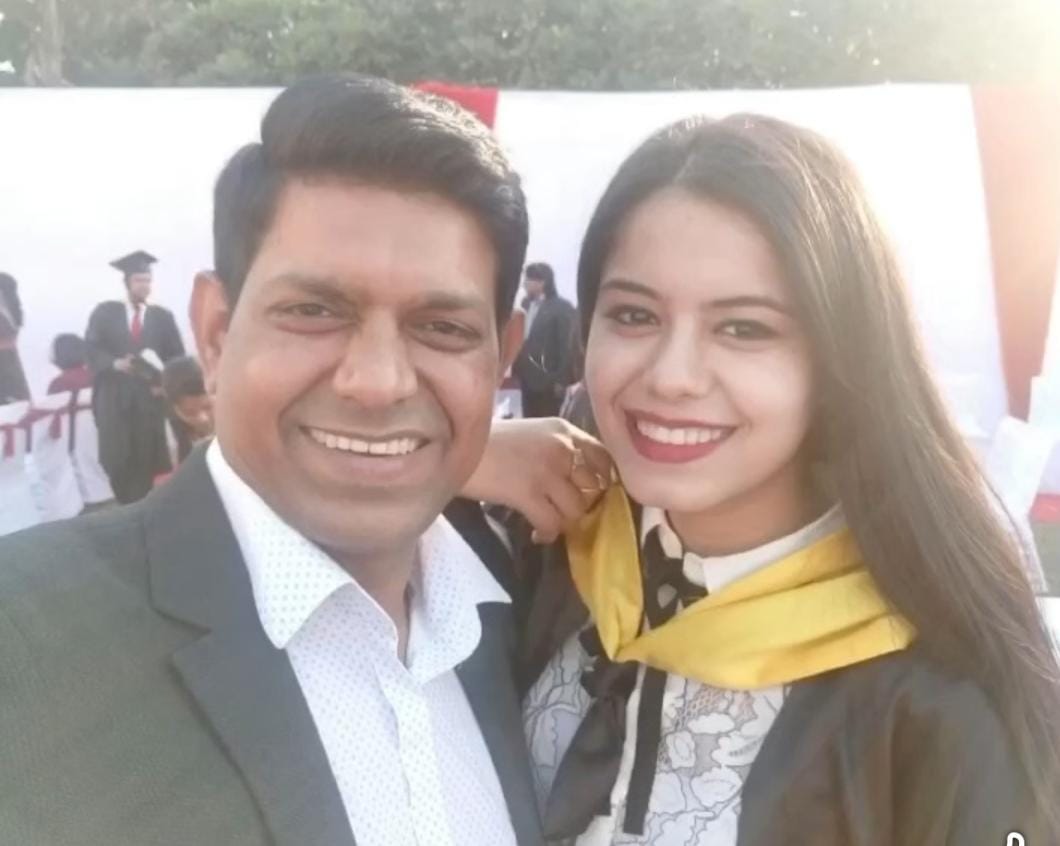
Siddhi Gupta, daughter of Nikhil Gupta, has said that her family is struggling to come to terms with his 235-month prison sentence in the United States, describing the punishment as devastating and saying they had never anticipated such a lengthy term.
Gupta was sentenced for his role in a plot to assassinate Gurpatwant Singh Pannun, a US citizen of Indian origin.Pannun has been designated an individual terrorist by the Indian government under the Unlawful Activities (Prevention) Act (UAPA), while his organisation, Sikhs for Justice (SFJ), has been declared an unlawful association and banned in India.
Speaking to Read after her father’s sentencing on Friday, Siddhi said she was shocked by the punishment, particularly because the probation officer had recommended 144 months, significantly lower than the range proposed by the prosecution. Despite this recommendation, the court ultimately sentenced her father to 235 months in prison.
“I am shocked and devastated beyond words. I never expected such a lengthy sentence,” she said.
Siddhi said she did not intend to undermine the gravity of the allegations. However, she questioned whether such a severe sentence was necessary, pointing out that nobody had been physically harmed and the alleged offence had not taken place.
“I wish there had been more consideration of everything he has already been through and the impact this would have on his family. I wish there was some room for compassion and humanity,” she said.
According to Siddhi, her father has been separated from his family for three years and four months and has not seen his mother, wife or children during this period. She said the family had already lost precious time and moments together that they could never recover.
“We have already lost so much time together, so many moments that we can never get back,” she said, adding that the prospect of her father spending another two decades in prison was unbearable.
Siddhi said she, along with five other immediate family members, had written to the court ahead of the sentencing, appealing to US District Judge Victor Marrero to show her father kindness and leniency. The others were her mother, brother, grandmother and her father’s two elder sisters.
Their letters described the family’s distress during his incarceration and appealed for an opportunity for him to return home.
Describing the impact of the sentence, Siddhi said her grandmother had been crying since hearing the court’s decision. Her grandmother had been waiting for more than three years to see her son.
“The thought that she may never get to see him again absolutely breaks my heart,” she said.
Siddhi said her father’s incarceration had also affected her mental and physical health and career. She described the exhaustion of putting on a brave face while struggling privately with the situation.
“There are days when even getting out of bed or doing the most basic things feels difficult. I feel like my life has been on hold for the past three years, while the rest of the world has continued moving forward,” she said.
Recalling her father’s statement following the sentencing, Siddhi described it as an emotional moment but said she could not speak on his behalf or interpret his feelings.
She said their conversations had consistently revolved around his desire to return home.
“In all our conversations, papa has only expressed one desire, and that is to come back home to us as soon as possible,” she said.
Siddhi said the family had barely been able to speak to him for nearly two minutes after the sentencing. She added that he had never discussed the circumstances of the case or the allegations during their limited phone conversations.
“In our already limited phone time, my father has never discussed the circumstances of the case or any details concerning the allegations, so I wouldn’t want to speculate,” she said.
Describing her father’s efforts to keep the family strong, Siddhi said he continued to enquire about her, her brother, her mother and his own mother. He also missed their cats and home but never allowed himself to break down in front of them.
“In all our conversations, his voice never trembles. He never lets us hear his pain,” she said.
She added that his biggest concern remained the effect of his incarceration on the family, even as he himself was going through a difficult period.
“What hurts the most is that even when he needs us the most, he tries to be our strength. I just wish I could hug him and tell him that he doesn’t always have to be the strong one,” she said.
On the family’s next course of action, Siddhi said they had not yet decided what steps to take following the sentencing. She recalled approaching the Ministry of External Affairs through the MADAD portal when her father was in the Czech Republic.
However, she said the family was currently too overwhelmed to consider its next steps.
“We need some time to gather ourselves and find our footing again,” she said.
Siddhi said calls from prison were expensive, irregular and monitored, leaving the family with little time to discuss anything beyond their personal lives.
“We spend that time talking about our day, telling him what’s happening in our lives, and sharing the smallest, most ordinary family things that we once took for granted,” she said.
She said these brief conversations had become precious after more than three years of separation, and the family is struggling with the prospect of losing many more years with him.