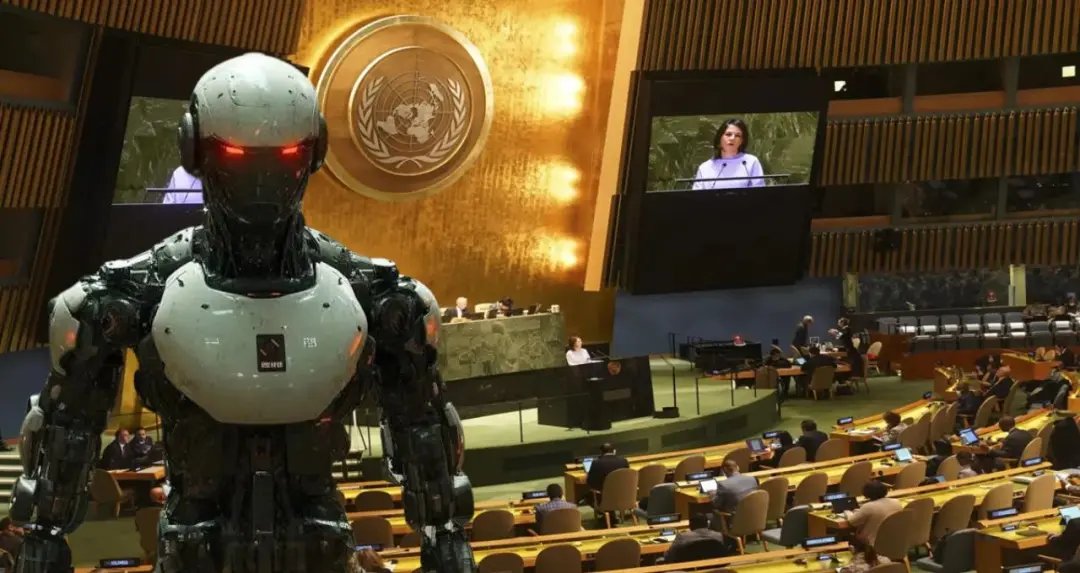
In the Geneva meeting of the United Nations, it has been agreed to continue talks till 2028 to control autonomous weapons like 'killer robots'. About 100 countries supported strict legal rules, but a final decision could not be taken due to opposition from America, Russia and Israel.
Geneva: The world's concern is increasing about the use of Artificial Intelligence (AI) powered weapons in the battlefield. Such weapons can identify targets and attack without any human command. These are called 'killer robots'. To control these, the meeting held under the United Nations in Geneva, Switzerland ended on Saturday, 21 November 2026. The countries have decided to continue negotiations on new international rules for the next two years.
Discussion on rules till 2028, but no legal agreement
128 member countries associated with the Convention on Certain Conventional Weapons (CCW) participated in this meeting which started from 16 November in Geneva. The main issue was to impose controls on the use of weapons that are capable of striking without human oversight or with very limited human intervention. About 100 countries demanded that legally binding international rules be made for these weapons soon. However, even after long negotiations, not all countries agreed to this proposal.
The final decision calls for further work on the provisions of a possible agreement till 2028. At present it is not clear whether the rules made in the future will be legally mandatory for all countries or will be limited to guidelines only. Switzerland's representative Julien Thony, who was chairing the meeting, described this agreement as an important achievement in the direction of humanitarian disarmament. According to him, after talks that have been going on for more than ten years, the way forward is open.
What are killer robots and how do they attack?
Killer robots are weapons that can identify targets with the help of technologies like sensors, software and AI. Some Autonomous Weapons significantly reduce the role of humans in the process of selecting and attacking targets. In normal weapons the final decision to attack is taken by the soldier or operator. But in fully autonomous weapons the machine can decide for itself which target to attack.
Security and human rights experts are expressing concern about this capability. The biggest question is that if such a machine accidentally targets a common citizen, then whose responsibility will it be? The increasing use of modern drones and AI-based military technologies amid the ongoing conflicts in Ukraine, Sudan and the Middle East has further intensified this debate. However, not all modern drones are fully autonomous weapons.
Why did America, Russia and Israel protest?
At the meeting, major military powers like the US, Russia and Israel did not support immediate progress towards a legally binding international agreement. The trend of these countries has been towards setting rules and security related guidelines at the national level instead of international treaties. In this process of the United Nations, the consent of all the countries is necessary for important decisions.
In such a situation, the decision on a strong agreement may be stalled due to opposition from some countries. This is why despite the support of most countries, no immediate international ban on killer robots emerged from the meeting.
Human rights organizations expressed disappointment over the decision
The international organization Stop Killer Robots has described the results of the talks as not sufficient. The organization believes that technology is advancing rapidly, while there are continuous delays in creating legal rules governing it. Nicole van Rooyen, the organization's executive director, warned that delays in creating a binding legal regime could pose serious risks to the security of civilians and humanity. UN Secretary-General Antonio Guterres and organizations like the Red Cross have also stressed the need for strong international control over these weapons.