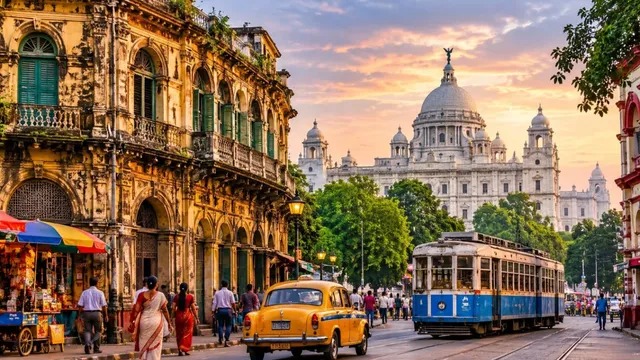
With time, the shape and pace of every city changes, new roads are built, tall glass buildings come up and modern changes come in the lifestyle, but in the context of Kolkata this change tells a different story. Situated on the banks of the Hooghly River, the city has been witness to history, literature, art, architecture and social movements for centuries. Even today, when new chapters of modernity and urban expansion are being written, the heartbeat of the city is clearly heard in the tall pillars, carved verandahs, wooden stairs and old windows of the old buildings of Kolkata. The specialty of Kolkata is that here the past is not limited to books or museums only, but is seen breathing in everyday life. From the narrow streets of North Kolkata to the wide boulevards of Dalhousie area and Central Kolkata, at every turn one finds some historical building standing within itself, which holds the memory, architecture and cultural consciousness of some era or the other. How Kolkata's identity survives in changing times The real identity of any city is not determined only by its new buildings or modern shopping complexes, but by the places that connect the memories of generations. Kolkata is home to a variety of architectural styles, from grand colonial-era buildings to traditional landlord mansions and historic institutions. The fusion of Gothic, Indo-Saracenic, Neo-Classical and traditional Bengali architecture has given the city a unique visual and cultural identity. As the city grew, many of the old buildings turned into offices, libraries, educational institutions, art galleries or centers of local business, but their original structure and historical significance still connect people with the past. When a traveler or a local resident passes by these buildings, it feels as if the layers of time are slowly opening and history is keeping pace with the present. Architecture, Memories and Challenges of Heritage Conservation Preserving old buildings is as emotionally enriching as it is practically challenging. Many historic structures require special care due to heavy monsoon rains, high humidity, degradation of materials over time, maintenance costs and increased pressure on urban land. Architects, historians and urban planners believe that heritage conservation does not just mean leaving buildings as they are, but also preserving them and promoting their optimal use. When historic buildings are renovated scientifically and sensitively, they not only retain their original beauty but also prove useful for tourism, culture and local economy. The right conservation policies can ensure that the pace of development does not come at the expense of historical heritage. What it means for travelers across North India and across the country A large number of people from various cities of North India including Lucknow, Varanasi, Prayagraj, Kanpur and Delhi travel to Kolkata to know the history, literature, art and culture closely. This vibrant heritage of Kolkata also creates a deep cultural connect for the people of Awadh and Ganga-Jamuni culture cities, as both the regions have a rich tradition of architecture, art and communication. Even in today's digital and AI-based era, people give priority to real experiences, authentic stories of historical places and local culture. The old buildings of Kolkata are a living proof of this authenticity, which shows that every city has its own soul which can be recognized even in the noise of modernity. In the coming times, a balance between heritage and modernity is called the city of the future which adopts the needs of the new times while keeping its roots strong. The old buildings of Kolkata give the message that the heritage of the past is not a burden, but a force that guides the present and future. If the collective efforts of the administration, experts, local residents and citizens continue to protect and enhance these heritages, then future generations will also be able to be proud of this unique identity of the city. Even in the years to come, when the city's streets will see new technology and new changes, the walls and courtyards of these old buildings will preserve the spirit of Kolkata that has made it one of the most distinctive cultural cities in the world.