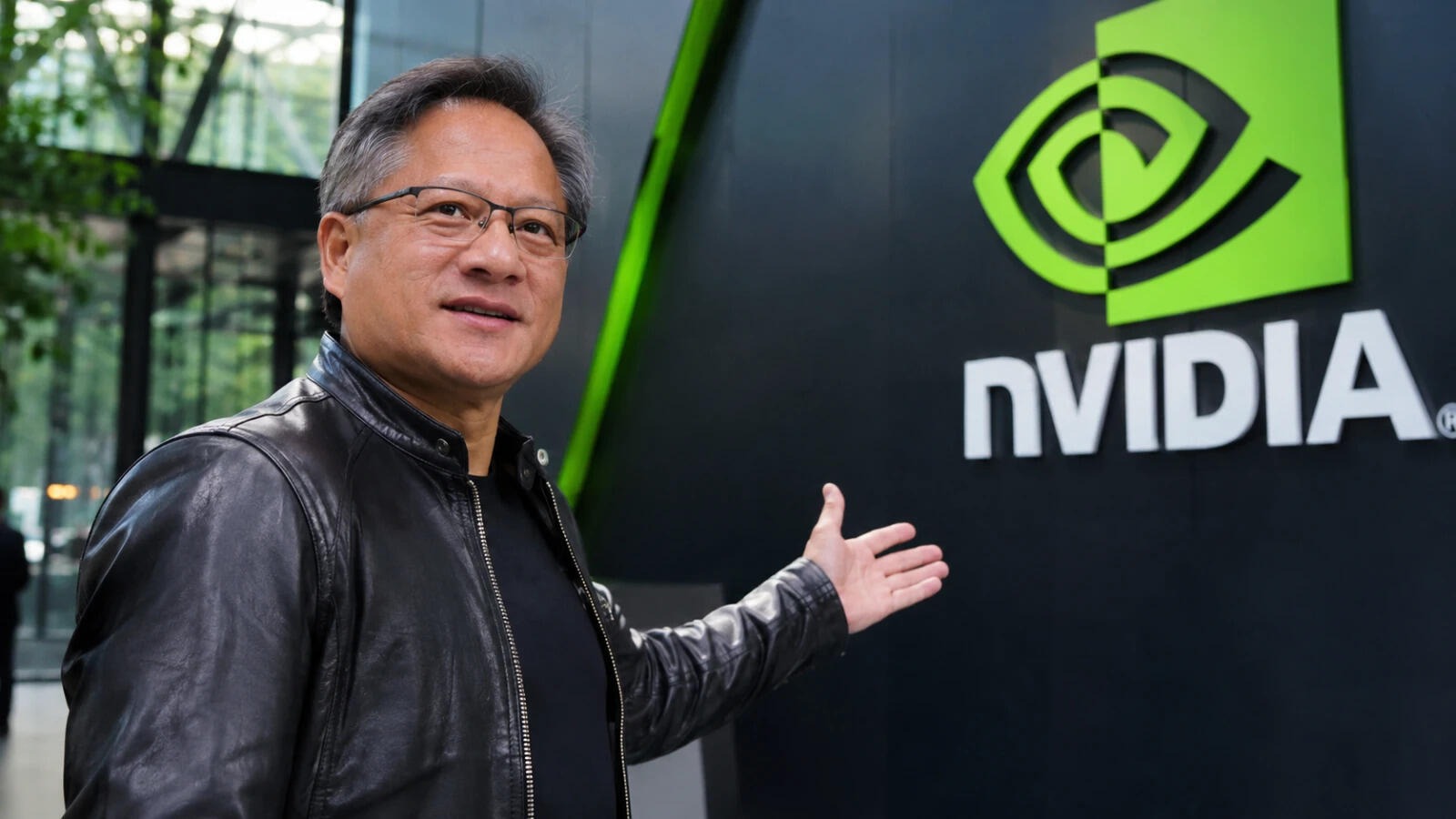
Nvidia, the company leading Artificial Intelligence i.e. AI hardware in the global stock market and technology world, remains the subject of intense discussion among investors and market analysts these days. According to reports, within just five trading days, Nvidia's market capitalization has seen such a huge contraction or decline that it is often compared in a pinch or metaphorically to the size of the economies or GDP of many countries. Meanwhile, the business and strategic moves of Mukesh Ambani-led Reliance Industries, one of the largest companies in India's corporate world, have attracted the attention of investors. In the market world, when there is a sharp fluctuation in the valuation of a big tech company, its impact is not limited only to Wall Street or American tech stocks. It also has broader implications for global capital flows, fund managers' strategies and investment sentiment in emerging markets. At such a time, the pace and diversification model of an Indian company active in diverse sectors like Reliance Industries is also being re-evaluated. Why did Nvidia's market price move in five days? In the past few years, the expansion of AI data centers, GPU chips and cloud computing had taken Nvidia to unprecedented heights. When a stock or company goes through an extraordinary bull run, short-term declines due to profit-booking, valuation caution, supply chain speculation or broader market pressures can be equally acute. The huge decline in market value within five days was presented in social media and financial discussions with metaphors such as a value decline equal to the GDP of many countries. However, financial analysts believe that the market cap of a company in the stock market is not the imaginary cash reserves, but it is the product of the current share price and the total number of shares issued. Therefore, the percentage change in share price also starts appearing in billions or even trillions of dollars after reaching high valuation levels. Still, this kind of movement does show how high investors' expectations are in the AI sector and that even the slightest apprehension can trigger a big reaction in the market. Strategy of Mukesh Ambani and Reliance Industries While on one hand there are sharp ups and downs in companies focused purely on AI hardware and semiconductor cycle, the business structure of Mukesh Ambani's Reliance Industries is spread across many different sectors. Reliance's model is based on diverse business streams, from digital and telecom services to retail, energy, petrochemicals and new energy initiatives. According to analysts, multi-regional presence provides some degree of balance to a large conglomerate from cyclical ups and downs in a single sector. India's expanding domestic economy, increasing scope of digital connectivity and depth of the consumer market have provided companies like Reliance with opportunities for long-term expansion. When there is news of volatility in global tech stocks, it is natural for Indian investors and market observers to look at how domestic giants are scaling up their operations, capital expenditure and new business areas. What it means for Uttar Pradesh and Indian investors Interest in understanding the stock market and global economic developments has increased rapidly among retail investors, youth and professionals in Lucknow, Kanpur, Varanasi, Noida and across Uttar Pradesh. Today, a large number of people even from small cities and towns of India are getting involved in investment through mutual funds, SIP and equity market. In such a situation, it becomes very important to understand the fluctuating news of a foreign company like Nvidia and the progress of an Indian company like Reliance with basic facts instead of sensationalism. Financial advisors and market experts say that one should not take hasty investment decisions influenced by any trending news or social media comparison. It is considered prudent to take any step only after assessing the valuation of any company, sources of income, debt position, competitive environment of the industry and your risk tolerance. Lessons learned from the ups and downs of the global market: The specialty of the global economy and stock market has been that no boom is always one-sided and no fall is always permanent. There is long-term potential in AI and technology, but the market adjusts its expectations from time to time regarding their valuations and the pace of gains. On the other hand, companies with a strong foundation, a clear business plan and an ability to adapt to changing times retain their relevance in the long run. Overall, the five-day movement in Nvidia's market price and Reliance Industries' trading moves show that the equations of technology, capital and strategy are extremely dynamic in the modern global market. The most important thing for investors and readers is to understand the depth of the news and move forward with long-term discipline.