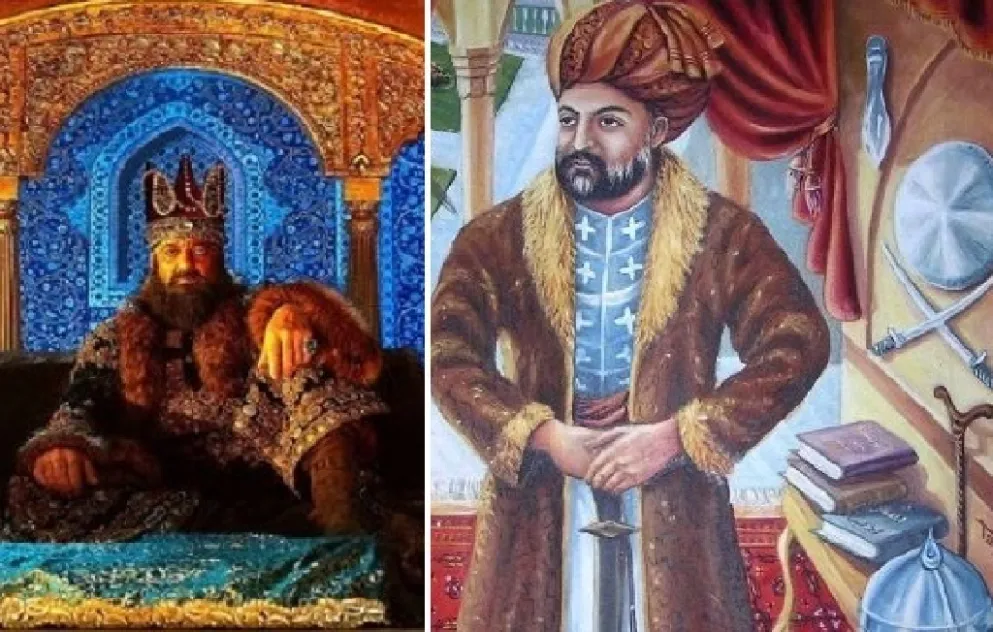
Ahmad Shah Abdali The tenth Sikh Guru, Guru Gobind Singh Ji, used a proverb to boost the morale of his forty Sikhs during the Battle of Chamkaur.
I will make an eagle fight in a bird’s nest,
I will make a jackal into a lion,
I will make one fighter out of a quarter of a million,
I will be named Gobind Singh.
These words of Guru Sahib meant that for Guru Sahib, each of his Sikh warriors was equal to a quarter of a million. Those 40 Sikhs fought with an army of about 10 thousand Mughals… Even though they did not win the war, but the Mughals had realized how much a single Sikh could weigh on many Mughals… But the example of the power of the Sikhs was yet to be seen by one more army… This army was of the important Shah Abdali of Afghanistan… who attacked India 8 times but in his last attack he faced Dal Khalsa… 20 thousand Sikhs defeated the army of thousands in such a way that Abdali never even thought of entering India again. What happened then was written in golden letters in the pages of history. In this video, we will discuss how Abdali’s army was defeated and forced to leave Afghanistan.
Nadir Shah’s Death and the Rise of the Durrani Empire
In 1748, Nadir Shah died, and the Durrani Empire emerged, ruled by Ahmad Shah Abdali, also known as Ahmad Shah Durrani. Before his coronation, Ahmad Shah served as Nadir Shah’s commander-in-chief and assisted him in his campaigns. However, when Nadir Shah was assassinated, Ahmad Shah took advantage of this situation, dividing the Afsharid Empire and declaring himself King of Kandahar. After becoming King, his first target was India. He attacked Mughal-ruled India for the first time in 1748. This continued for the next two decades. During these two decades, Abdali attacked India eight times. However, when Abdali attacked India for the third time in 1751-52, he captured a large part of Kashmir and Punjab.
Mughal Emperor Bahadur Shah and Durrani
On April 3, 1752, Mughal Emperor Bahadur Shah and Durrani signed a treaty, which resulted in the transfer of Punjab from the Mughals to the Afghans. While the Mughals tolerated this defeat, the Sikhs did not. They were determined to drive Abdali out of Punjab. Meanwhile, in 1756, Durrani again attacked Punjab. He first attacked Lahore, then Ludhiana, then Sirhind, Karnal, and Panipat, before attacking Delhi. After capturing Faridabad, he turned towards Agra, but a cholera outbreak swept through his army, forcing him to turn back. Despite the extensive looting and bloodshed, he was still not satisfied. In 1758, Punjab was ruled by Jahan Khan. He was strongly opposed to the practice of Sikh and Hindu traditions, and as a result, he attacked Sikhs and Hindus celebrating Diwali.
Massive Looting in the Joaba Region
He destroyed temples and gurdwaras and declared jihad. The Sikhs were unwilling to bow down to the Mughals. Consequently, the Sikhs joined forces with Adina Beg of the Jalandhar Doaba region, who had been branded a fugitive and had fled from Jahan’s attack. Enraged, Jahan Khan launched a massive looting campaign in the Jalandhar Joaba region. However, the Sikhs decided to consolidate and strengthen themselves before taking any major action. Adina Beg formed an alliance with Dal Khalsa leaders Vadbhag Singh Sodhi and Jassa Singh Ahluwalia. This alliance strengthened the Dal Khalsa considerably, and a detachment under Murad Khan confronted the Afghans at Mahilapur. Facing the might of the Dal Khalsa, the Afghan army begged for water, suffering their first defeat. To avenge this defeat, another army was sent from Lahore. However, the brutality and plunder inflicted on the Sikhs seemed to have driven the Sikhs into a rage.
They routed the Afghan army like carrots and radishes and reached Lahore, where they not only captured Lahore but also engaged in extensive plunder. In 1757, the Marathas, on the other hand, taught the Mughals and Afghans a lesson, weakening the Afghan army and Ahmad Shah’s caravan on the Indus River and capturing the Ganges Doaba region. The Sikhs also took advantage of this, persuading the Maratha ruler Raghumath Rao to attack Punjab. In February 1758, the Marathas also launched their offensive, reaching Sirhind first. Seeing the strength of the Marathas there, the Afghan governor, Abdus Samad Khan, fled. The Marathas captured Sirhind, and Jahan Khan, hearing of this, decided it was better to retreat rather than face the Marathas. He camped at Shahdara on the banks of the Ravi River. However, the Marathas did not give him a chance to recover and intensified their attack on Lahore.
Jhan Khan retreated even faster, but was surrounded by Sikhs and Marathas at Wazirabad, and over 200 Afghans were captured. The Afghans were defeated in Kalat, and the Maratha and Sikh uprising began. But Ahmad Shah was not about to sit still. The attacks continued. Sometimes the Sikhs prevailed, sometimes the Afghans. But after the seventh attack, the Sikhs were prepared to not allow any further harm to Punjab. In 1765, the Sikhs captured Lahore, and Durrani was preparing for his eighth attack. Durrani launched an attack in 1766, defeating Sikh warriors and reaching Aminabad. By then, the Sikhs had left Lahore, but gathered about 20 Sikh soldiers and began preparing for the attack. However, they retreated before Durrani’s 50,000-strong army, but they rejected Durrani’s peace talks. And on January 17, 1767, the Sikhs