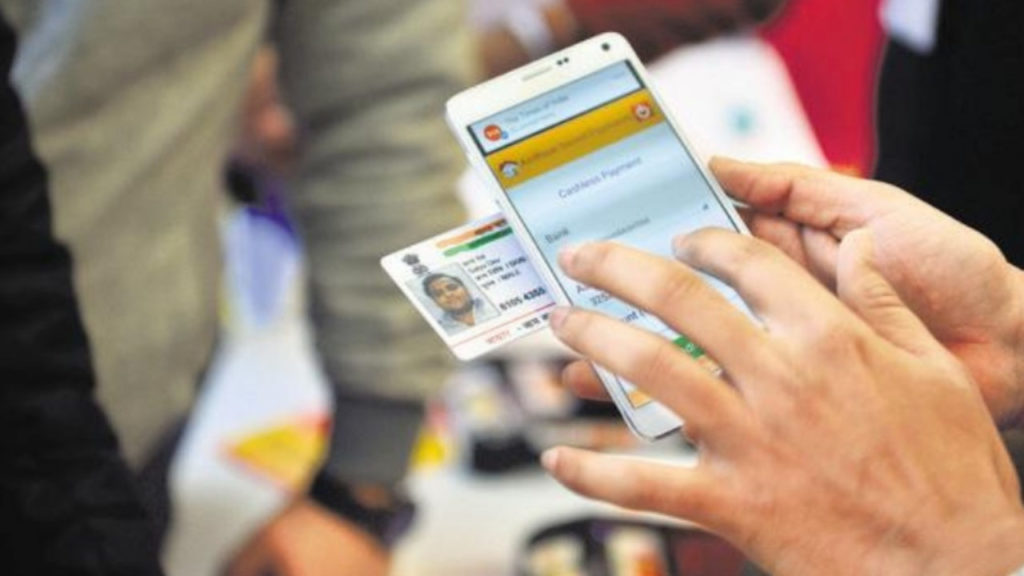
The Delhi High Court has ruled that an Aadhaar card, by itself, cannot be treated as conclusive proof of a person’s date of birth. The court made the observation while dismissing a petition filed by an employer challenging a Labour Court order that had found the termination of a woman employee illegal.
In its November 13, 2026 judgment, Justice Manoj Kumar Ohri upheld the finding that the employer could not rely solely on a date of birth mentioned in the employee’s Aadhaar card to retire her a year earlier.
Why The Employer And Employee Disagreed Over Her Age
The dispute involved a woman who had worked as a finishing worker at an electronics firm since December 1981. Her Aadhaar card recorded her date of birth as May 20, 1959.
The employer argued that she had reached the retirement age of 58 on May 20, 2017, and that her services had therefore ended on superannuation.
The employee, however, maintained that her date of birth was May 20, 1960, as recorded in the Employees’ State Insurance Corporation (ESIC) records. This meant she had not reached the retirement age in May 2017.
The employer had registered her with ESIC in June 2010, furnishing the 1960 date of birth. The Aadhaar card showing the conflicting date was received by the management only in March 2017, around two months before her services were discontinued.
Court Says Aadhaar Is Proof Of Identity, Not Date Of Birth
The High Court referred to the Aadhaar Act, 2016, and a 2018 office memorandum issued by the Unique Identification Authority of India (UIDAI).
The court noted that Aadhaar is recognised as proof of identity, but the law does not establish it as proof of date of birth. The date recorded on an Aadhaar card is based on documents or a self-declaration submitted by the cardholder.
The court also observed that the employer had relied entirely on the Aadhaar entry without producing independent documentary evidence to establish that the employee was born in 1959.
On the other hand, the ESIC record contained the 1960 date of birth supplied by the employer itself. An ESIC official had also confirmed this information before the Labour Court.
The High Court observed that the employer could not record one date of birth in official records and subsequently rely on a conflicting Aadhaar entry to end the employee’s services a year earlier.
Employer’s Challenge Dismissed
The employee had alleged that her services were terminated after she sought payment of revised minimum wages and outstanding wages for April 2017. The employer disputed this account, claiming that she had reached retirement age and had voluntarily resigned.
The Labour Court had found that the employer failed to establish the claimed resignation or voluntary retirement. It held that the termination was illegal and directed the company to pay full back wages for one year.
The High Court found no reason to interfere with the Labour Court’s findings and dismissed the employer’s petition. It upheld the conclusion that the termination was illegal because the employer had not complied with the relevant provisions of the Industrial Disputes Act.
Summary
The Delhi High Court has clarified that an Aadhaar card alone cannot establish a person’s date of birth. In an employment dispute, it upheld an earlier Labour Court ruling that relied on the employee’s ESIC record, which contained a date of birth supplied by the employer itself. The employer’s challenge was dismissed, and the award of one year’s full back wages was upheld.