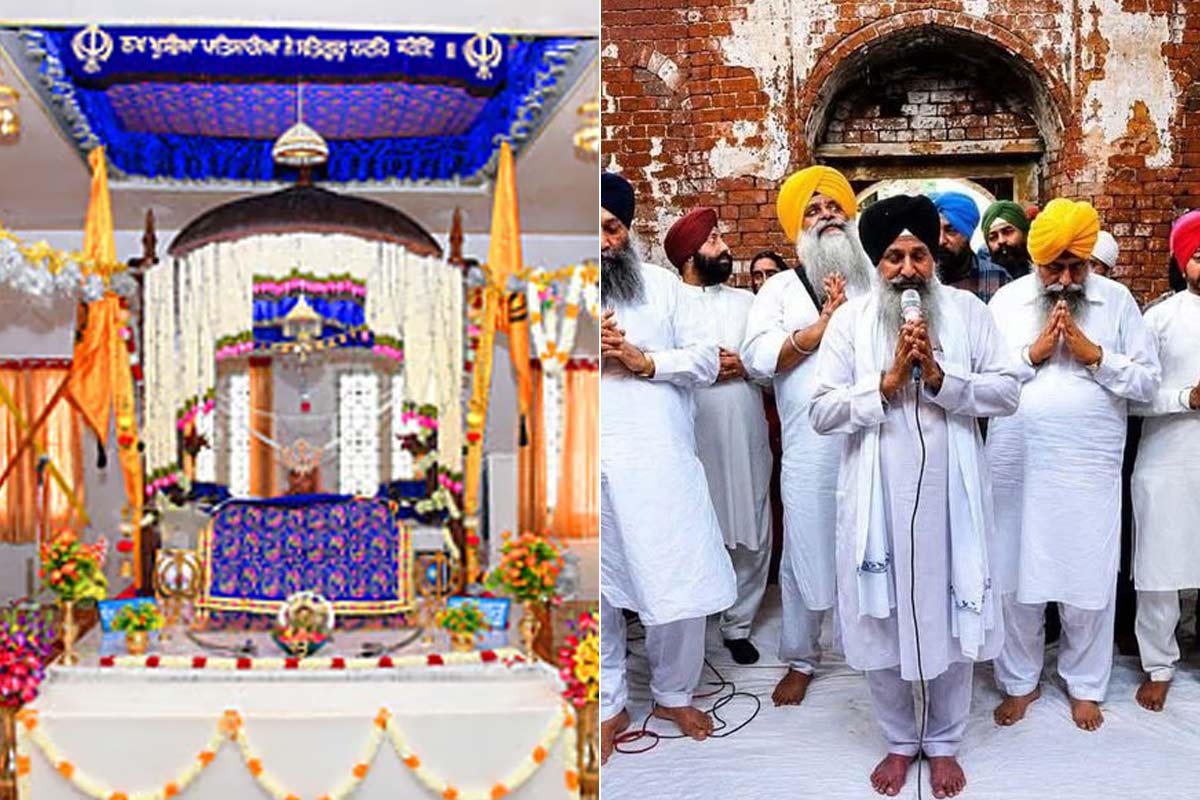
The year is 1947. The whole country is burning with communal violence. The flame of which came to the holy Gurdwara of Sikhs in Lahore 'Chevi Patshahi Sri Guru Hargobind Sahib'. The holy Gurdwara was closed for so long due to the blood of partition. After 79 long years, this holy pilgrimage site of Sikhs was finally opened. After being closed for so many years, it was opened on Sunday after renovation.
On the occasion of the re-opening of this Gurdwara located on Temple Road, Lahore, a special ceremony was organized in accordance with the Sikh religious tradition. Many members of the Sikh community were present on the occasion. Apart from this, Punjab Minister of Minorities and President of Pakistan Sikh Gurdwara Prabandhak Committee Ramesh Arora, Evacuee Trust Property Board (ETPB) Secretary Nasir Mushtaq and other officials were also present in the event. Ramesh Arora said, “Renovation of this historic temple has been completed and from now on Sikhs can offer religious services here.” He further informed, “Over 50 Gurdwaras are being renovated across Pakistan. This initiative is for the preservation of Sikh religious heritage and the convenience of pilgrims.” Besides, Nasir Mushtaq said, “The objective of renovating and re-opening this Gurdwara is to enable the Sikh community to perform their religious rituals without hindrance. To preserve the historical and religious heritage of Lahore for future generations.”
According to Sikh historical accounts, many members of the Sikh community lost their lives defending this Gurdwara during partition violence.
It is known that the sixth Sikh Guru, Guru Hargobind (1595-1644) is revered as a warrior and saint by the people of the Sikh community. He organized the Sikh community to stand against religious persecution. Also this Gurdwara is also associated with Bhai Vidhi Chand. He was a Sikh preacher and general. He came to Lahore twice and stayed here to bring back the horses confiscated by the then Mughal ruler. Devotees brought those horses to offer to Guru Hargobind Sahib. The local Sikh organization expanded the Gurdwara hall in 1915. In 1921, after allegations of misconduct against the then caretaker, Mahant Hari Singh, the sangat took over its management and formed a committee. In 1927, the Shiromani Gurdwara Prabandhak Committee (SGPC) took over the administrative control of this place of worship. The original building of the Gurdwara is believed to date back to the reign of Maharaja Ranjit Singh.
Regular worship at this Gurdwara, which is very sacred to Sikhs, stopped after Partition in 1947. According to Sikh historical accounts, many members of the Sikh community lost their lives defending this Gurdwara during partition violence. It has since been closed. The people of the Sikh community are happy that it has finally opened after 79 long years.