
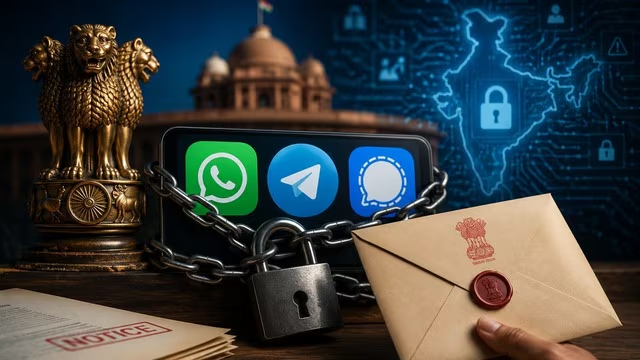
After WhatsApp, government action on Telegram and Signal also: Notice issued regarding ‘username’ feature, know what is the whole controversy

New Delhi Those who commit fraud by hiding their identity on social media and messaging apps are no longer in trouble. The Ministry of Electronics and Information Technology (MeitY) of the Government of India has tightened the scope of its investigation regarding the ‘username’ feature being introduced in the name of privacy. After sending a notice to the leading messaging app WhatsApp yesterday, the government has now taken Telegram and Signal into custody in this matter. The ministry has issued strict notices to both these platforms and sought a complete report on their username feature and the security measures taken to prevent its misuse.
Rollout of Meta’s ‘username’ feature banned in India
According to media reports, the government is planning to closely review this new feature from every angle. The government fears that after the introduction of this feature, there may be a huge increase in cases of online fraud and identity theft. In view of this serious threat, the government has given clear instructions to Meta not to roll out this feature for its more than 50 crore WhatsApp users in India until the investigation is completed. The surprising thing is that within just two days of the public announcement of this big update by Meta, the government has taken this strict step.
After all, is the government worried about the ‘username’ feature?
Now the question arises that why is the government so strict on the feature for which the users were eagerly waiting? Actually, the biggest concern of the government is about security and tracking. Currently, mobile number is mandatory to create an account or connect with someone on WhatsApp, Telegram and Signal, which makes it easy to track the criminal. But if chatting is allowed only through ‘username’, then it will become very easy for scammers with bad intentions to create fake accounts in the name of real people, big brands or government organizations.
Scammers can dupe people by using a username that looks familiar instead of a traceable mobile number. Cyber experts also believe that this may promote incidents like ‘digital arrest’ and ‘phishing’. Government officials are investigating this particular risk factor in depth, only after which a final decision will be taken. At present, no detailed response has come from WhatsApp on these serious concerns of the government.
Comments are closed.