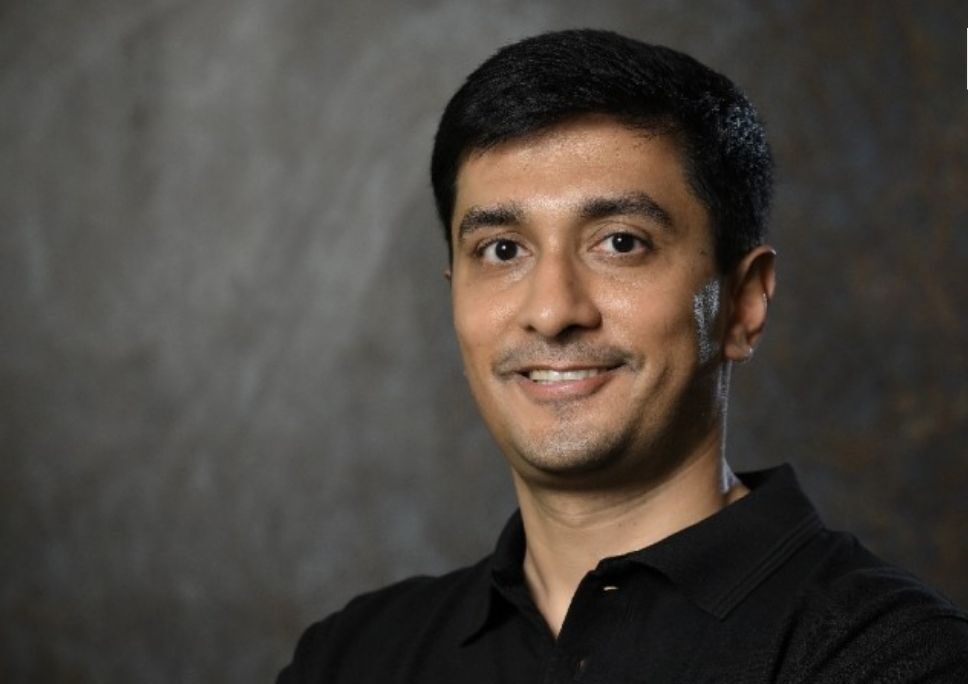
Artificial Intelligence is often associated with large language models, chatbots and advanced computing systems. But Utkarsh Saxena is applying AI to an area where technology can have a direct impact on the lives of ordinary people — India’s judicial system.
Saxena, co-founder and CEO of Adalat AI, has been named to TIME’s TIME100 AI 2026 list. His journey stands out because his connection with the legal system is not limited to technology. Before launching Adalat AI, he worked as a law clerk at the Supreme Court of India, where he gained first-hand exposure to the challenges faced inside courtrooms.
From Supreme Court Experience to Adalat AI
The judicial process involves much more than courtroom arguments and judgments. Courts also deal with enormous amounts of documentation, case records, proceedings, transcripts and administrative tasks.
During his time as a law clerk, Saxena closely observed these challenges. His experience helped him identify areas where technology and artificial intelligence could potentially make judicial processes faster and more organized.
With this objective, Adalat AI developed technology designed to assist courts with courtroom transcription and case-flow management.
The idea is to use AI to reduce some of the administrative workload associated with court proceedings, allowing legal professionals and judges to focus more on the substantive aspects of cases.
Building AI for India’s Multilingual Courtrooms
Developing AI for the Indian judicial system presents challenges that go beyond ordinary speech-to-text technology.
India is a multilingual country, and court proceedings can involve different languages, regional accents and highly specialized legal terminology. Accurately understanding and transcribing courtroom conversations therefore requires technology capable of handling a wide range of linguistic and legal complexities.
For an AI system to be genuinely useful in courtrooms, accuracy is particularly important because even small transcription errors can affect the understanding of legal proceedings.
AI Is Designed to Assist Judges, Not Replace Them
One of the key aspects of Adalat AI’s approach is that the technology is intended to assist the judiciary rather than make judicial decisions.
The final decision in a case remains with the judge. AI’s role is focused on reducing administrative and documentation-related burdens and helping make the overall judicial workflow more efficient.
This distinction is particularly important when discussing the use of artificial intelligence in courts. Rather than replacing human decision-makers, AI can function as a supporting tool that helps organize information and streamline repetitive processes.
From Pilot Projects to Wider Implementation
Adalat AI’s work has also expanded beyond limited pilot projects.
According to the information provided, the Andhra Pradesh High Court announced in July 2026 that Adalat AI would be implemented across the state’s district judiciary from October 1, 2026.
The initiative is expected to cover 733 district courtrooms, with facilities including live transcription and case-flow management.
The company also claims that its technology has already reached more than 6,000 judges across 11 states.
If implemented effectively, such technology could help courts manage documentation and proceedings more efficiently, particularly in systems dealing with large volumes of cases.
A Unique Combination of Law and AI
Saxena’s educational background is another distinctive aspect of his journey.
He holds a BA/LLB from the University of Delhi and an LLM from Harvard Law School. He also earned a master’s degree in International Development Economics from Harvard Kennedy School and is pursuing a PhD in Public Policy at Oxford.
His academic and professional background combines law, economics, public policy and technology — fields that increasingly intersect as governments and institutions explore the potential applications of AI.
What His TIME100 AI Recognition Means
Saxena’s inclusion in TIME100 AI 2026 highlights a broader trend in the artificial intelligence industry.
AI innovation is no longer limited to developing bigger language models, faster computing systems or consumer-facing chatbots. Increasingly, entrepreneurs and researchers are applying AI to real-world institutional challenges in areas such as law, healthcare, education and public administration.
Saxena’s journey from working as a law clerk at India’s Supreme Court to developing AI tools for courtrooms illustrates how deep knowledge of a real-world problem can help shape practical technology solutions.
The larger message is that the future of AI may not belong exclusively to computer scientists. Professionals with expertise in law, healthcare, education, economics and public policy could also play an important role in determining how AI is developed and used in society.
As artificial intelligence continues to enter critical public institutions, the focus will increasingly be on building systems that are not only technologically advanced but also accurate, transparent, reliable and designed to support — rather than replace — human decision-making.