For many years, people seeking comprehensive preventive health screening often traveled to countries such as Japan, South Korea and Thailand, where advanced screening programs have been more widely established.
Healthcare providers cite early detection as one reason for the growing interest in preventive screening. According to figures cited by Nura, a network of AI-powered preventive health screening centers, 73.5% of cancer patients in Vietnam do not survive the disease, compared with around 30% in Japan, where routine screening is more common.
Japan’s long-established ningen-doku program screens about 80% of the population annually, while Vietnam’s screening rate is estimated at around 3.5%.
|
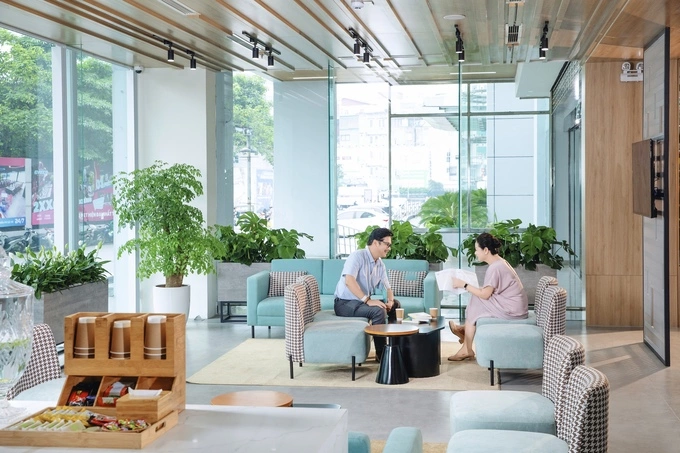
A medical center’s lobby. Photo courtesy of Nura |
AI-assisted screening
Since July 2024, Nura has offered AI-assisted full-body screening services at centers in Hanoi and Ho Chi Minh City.
According to the company, more than 33,000 screenings have been conducted over the past two years, detecting more than 160 early-stage cancers in people who reported no symptoms before their examinations.
The company said its AI system is designed to assist physicians rather than replace them by supporting medical image analysis.
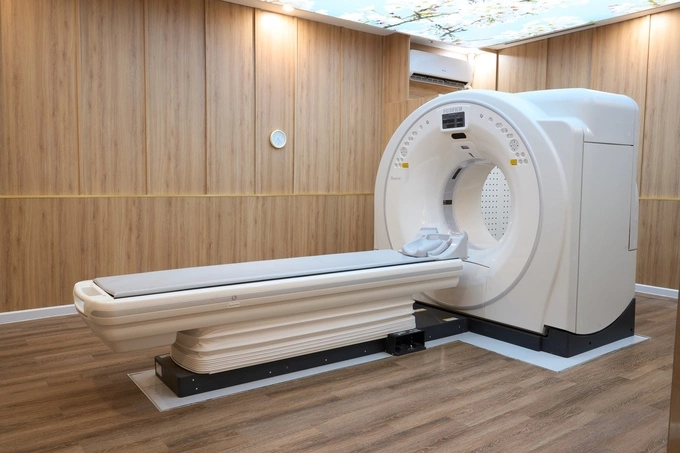
Developed in collaboration with Fujifilm and trained in part using approximately 400 million medical images with Stanford Medicine, the platform uses around 50 AI models to identify different types of abnormalities, including lung nodules, coronary artery disease and liver lesions.
Areas flagged by the AI are reviewed by physicians before examination results are finalized and shared with patients.
According to the company, one examination conducted in May identified around 50 abnormalities smaller than six millimeters in a patient’s chest, demonstrating the system’s ability to analyze multiple anatomical structures simultaneously.
 |
|
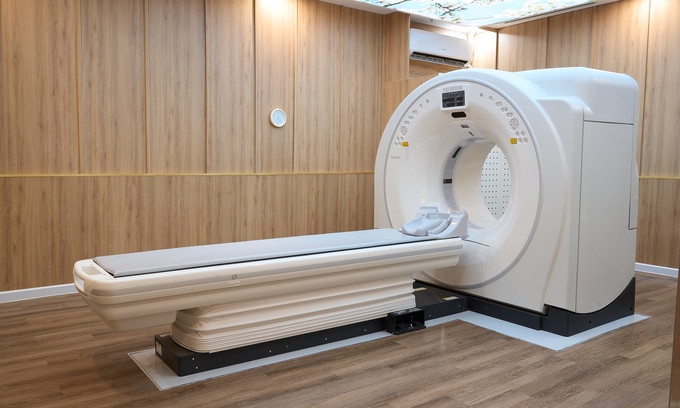
An AI-assisted full-body screening machine CT Fujifilm Scenaria at a Nura’s medical center. Photo courtesy of the company |
Supporting clinical decisions
Nura said AI-assisted imaging can support physicians in evaluating complex cases.
In one case, a 45-year-old man had previously been advised to undergo a lung biopsy after another medical facility identified a suspected malignant lesion. Following an AI-assisted scan and specialist review, the abnormality was assessed as consistent with benign inflammation. The patient was treated for pneumonia and recovered without undergoing a biopsy.
In another case, a woman in her forties underwent additional imaging after showing limited improvement following pneumonia treatment. The scan detected a 10-mm lung nodule with imaging characteristics associated with malignancy. A biopsy later confirmed stage I lung adenocarcinoma.
Associate Professor Dr. Nguyen Hai Anh, former deputy director of the Respiratory Center at Bach Mai Hospital, said both patients initially presented with symptoms resembling respiratory infections, but imaging led to different diagnoses.
He said many cancers have cure rates exceeding 90% when detected at an early stage, while delayed diagnosis is often associated with lower survival rates and higher treatment costs.
 |
|
Patients can come to the center to get direct advice from the medical experts to get precisely comprehensive health screening. Photo courtesy of Nura |
Expanding access
For overseas Vietnamese, arranging comprehensive health screening for family members has often involved traveling abroad or seeking care in other countries.
Vietnamese-Canadian Sarah Nguyen, 32, said she began looking into screening options in Hanoi after her mother, who lives alone in Vietnam, kept postponing a routine check-up. “She always says she feels fine,” she said. “Being able to book something for her myself, from Canada, with results I could actually understand, made it easier to finally get her checked.”
The availability of AI-assisted screening services in Vietnam provides another option for families seeking preventive healthcare closer to home.
For expatriates living in Vietnam, English-language services may also improve access to preventive screening without requiring travel to neighboring countries. W. Charles, 54, a British teacher based in Hanoi, the ability to complete the process without an interpreter was a deciding factor. “I’d been putting off a proper health check since I moved here, mostly because I wasn’t sure how to navigate it in a hospital where I don’t speak the language,” he said. “Being able to ask questions directly and get a clear explanation of the results made the whole thing straightforward.”
 |
|
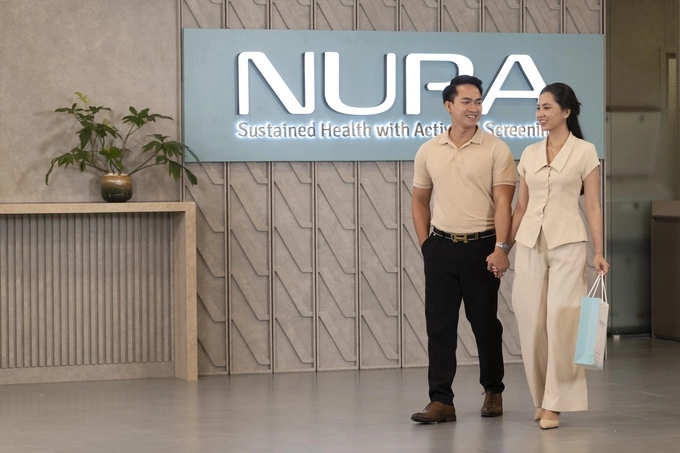
Comprehensive health screening is now more easily accessed for both Vietnamese and foreigners in Vietnam. Photo courtesy of Nura |
Radiation and cost
Radiation exposure remains a common concern among people considering CT-based screening.
According to Nura, its ultra-low-dose CT protocol is designed to reduce radiation exposure while maintaining image quality through AI-assisted image reconstruction. The company said the system has received clearance from the U.S. Food and Drug Administration (FDA) and is used across its network of 16 centers.
Cost is another factor affecting access to comprehensive screening.
According to the company, screening packages start at around US$340 and include same-day results in English and consultations with specialists. More comprehensive packages include additional examinations such as brain MRI, gastroscopy and colonoscopy.
For comparison, a traditional Japanese ningen-doku program typically costs between US$300 and more than US$3,000, with appointments often booked months in advance and results delivered several weeks later.
The company has expanded from one clinic in Hanoi in 2024 to three centers in Hanoi and Ho Chi Minh City as of mid-2026, as part of its international network of 16 facilities.
The company said broader adoption of preventive screening will depend on factors including healthcare infrastructure, insurance coverage and public awareness. It said wider access to AI-assisted screening could contribute to earlier disease detection and improve access to preventive healthcare in Vietnam.