
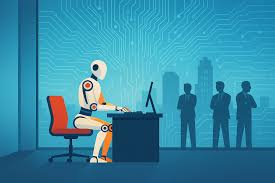

It can be argued that never before has there been such significant restructuring of the tech labor market. In the current year of 2026, more than 123,000 tech jobs have been slashed, and AI has become the primary reason companies have to let their employees go.
The statistics released by Challenger, Gray & Christmas prove that never before have market and economic factors been surpassed in terms of job loss causation by any other factor. The rapid development of AI technologies proves that they continue changing the landscape of tech business operations.
Layoffs in this sector reached an unprecedented height in 2026, increasing by about 65% compared to the same period of 2025. During May alone, almost 38,242 jobs were slashed, reaching the highest level in the past two years.
However, only half of those layoffs are directly related to AI. The data show that almost 87,714 job losses in 2026 have been caused by AI. At the same time, in the previous year, it led to only 54,836 layoffs. In May, AI-related layoffs accounted for about 40% of the overall number of layoffs.
Redefining Workforce Dynamics and Corporate Strategy
There is an increase in the importance being placed on automation and efficiency. The majority of corporations today are using advanced artificial intelligence algorithms and software to carry out the work that would be done by large groups before. Therefore, some jobs have lost significance while the firm invests in AI research and development.
However, not all of the jobs lost have been filled by machines. For instance, most companies are reorganizing their workforce to prepare for an era in which they will increasingly rely on AI. Thus, firms are laying off people from certain departments while recruiting more in other sectors, particularly those that specialize in artificial intelligence.
A number of major tech corporations have employed such a strategy. For example, Meta, Coinbase, and Block have all downsized by at least 10% in recent months, citing among others artificial intelligence as one of the reasons behind the decision. Overall, these cuts represented roughly 13,000 jobs.
In the past, layoffs were justified on grounds of issues like rising interest rates, inflation, weak demand, etc. These reasons are still relevant. Nevertheless, the importance of artificial intelligence in workforce planning has increased significantly.
Organizations believe that AI technologies can help speed up processes and reduce costs. Additionally, managers receive pressure from their shareholders demanding them to achieve positive results through billions of dollars spent on AI technologies, processors, and computing centers. Hence, the companies start assessing which tasks can be outsourced using automation and what skills would still be necessary.
Navigating the AI-Driven Shift in the Modern Workforce
Consequently, AI does not affect only software developers, but also marketing specialists, analysts, writers, human resource personnel, and assistants, among others. This means that, as the technology becomes better and better, more and more workers might lose their jobs since their tasks could be done by someone else.
However, this process also implies a shift toward new kinds of jobs that organizations will need in the future. Hiring machine learning experts, specialists in cybersecurity, infrastructure, and other relevant skills becomes an integral part of the process. The problem here is that not all former employees might possess such skills.
As a result, this situation might lead to transitional periods in terms of employment for certain individuals and their search for a new job. At the same time, firms may experience some difficulties related to their employees’ inability to cope with these changes.
It should be noted that AI is far from being the sole driving force behind the ongoing layoffs. Market conditions, restructuring operations, and closings of facilities still provide valid grounds for cutting down personnel. Nevertheless, artificial intelligence becomes the reason that companies mention most often.
Balancing AI Innovation with Labor Market Evolution
Based on the statistics available today, it seems that the technology industry is experiencing a new stage of development. The technology under discussion is no longer considered solely an option for the future, but starts affecting the labor market right now.
What is not clear yet whether in the long term the emergence of AI will bring more employment options than it destroys. The history of technology shows that any breakthrough leads to the appearance of completely new industries. AI might be an example, although the period of transition might be quite hard for many people.
One thing that is clear now is that AI plays an increasingly influential role in the job market of the technology industry.

Comments are closed.