
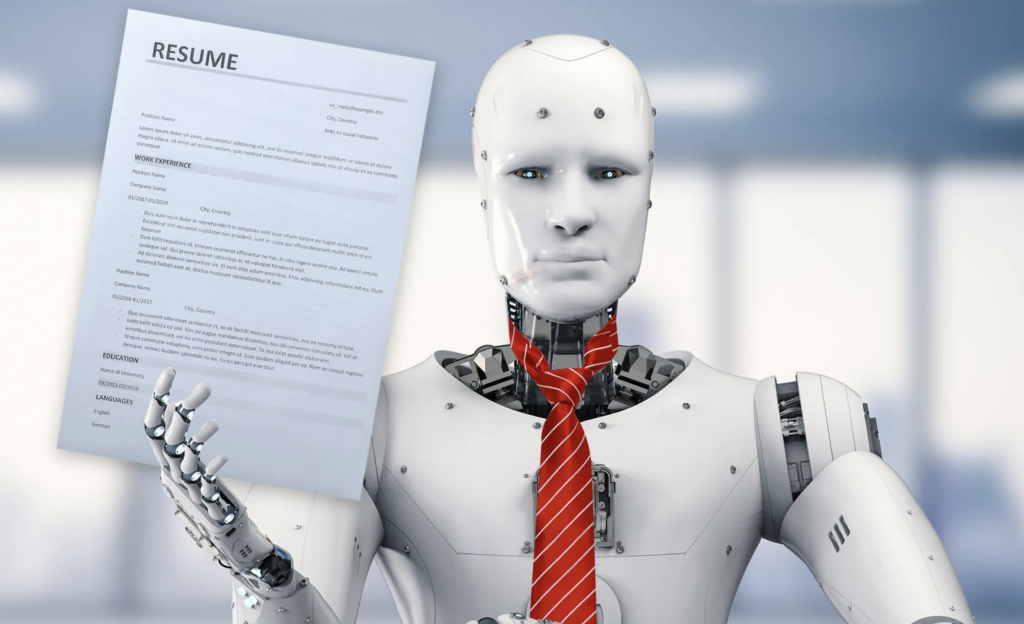

In the quiet reshaping of work, the most profound changes are not seen in exits—but in the doors that no longer open for beginners.
The Silent Disappearance of Entry-Level Work
As companies accelerate the adoption of AI, the most noticeable shift is not mass layoffs but the gradual erosion of entry-level hiring. Sam Altman and other industry leaders continue to urge workers to “code smarter” and lean into uniquely human skills, yet uncertainty remains over how many jobs artificial intelligence may ultimately replace.
This tension was visible at the HumanX conference, where thousands of investors and executives gathered. While public messaging emphasized opportunity, a striking phrase seen in the backdrop—“Stop hiring humans”—captured the growing unease around workforce restructuring.
A study by venture firm SignalFire found that hiring for workers with less than one year of experience fell by nearly 50% between 2019 and 2024, even as AI tools became more widely adopted across industries. At companies like Salesforce, AI systems are already handling large portions of customer support work—traditionally a key entry point for early-career professionals.
A Shift in Workforce Design, Not Just Jobs Lost
Experts argue that this transformation is subtler than layoffs but potentially more significant. Instead of removing existing jobs, companies are creating fewer entry-level roles, weakening the traditional career pipeline that allowed workers to grow from junior positions into senior expertise.
Some economists caution that not all job reductions can be attributed solely to AI, suggesting that companies may also be using “AI-washing” to justify cost-cutting or hiring corrections. This term has been used by Sam Altman to describe situations where AI is cited as the reason for workforce changes that may have multiple underlying causes.
Industry leaders remain divided. Amazon Web Services CEO Matt Garman has said AI will transform every job and company, while Nvidia CEO Jensen Huang once suggested a future where “nobody has to program.” In contrast, DeepLearning.AI founder Andrew Ng argues that coding is not becoming obsolete, but more accessible.
Despite differing views, hiring patterns show companies are already adjusting in practice. Entry-level roles—once the foundation of workforce development—are shrinking, raising concerns about the long-term talent pipeline.
India’s Warning Signal in the Hiring Slowdown
The impact is already visible in India, where large numbers of graduates traditionally enter IT services through fresher roles. Hiring patterns have shifted sharply, with entry-level recruitment in IT services falling from 70–80% of total hiring in 2021 to around 25% in 2025, according to staffing firm Quess Corp.
In absolute terms, India’s top IT firms hired only 60,000–70,000 freshers in FY24, a two-decade low compared to roughly 200,000 annually before the pandemic. While some recovery in hiring intent is expected, companies are becoming more selective, aligning fresher intake closely with immediate demand rather than long-term workforce building.
When the first rung of the ladder begins to vanish, the climb itself becomes uncertain for an entire generation.
Summary
AI adoption is reducing entry-level hiring rather than causing mass layoffs, reshaping workforce pipelines globally. Studies show steep declines in junior roles as AI takes over routine tasks. Leaders like Sam Altman and Jensen Huang highlight transformation, while critics warn of shrinking opportunities. In India, IT fresher hiring has dropped sharply, signaling long-term workforce entry challenges.

Comments are closed.