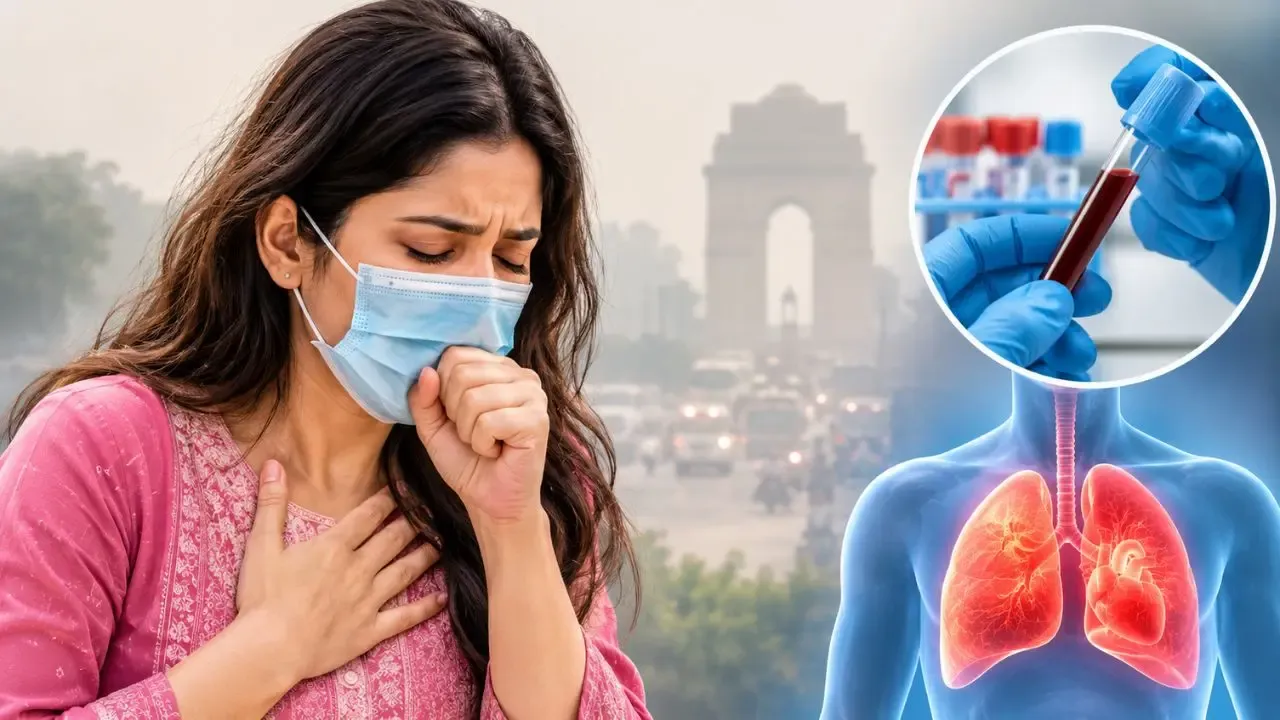
Air Pollution and Lung Health: In many cities of North India, cough, sore throat and breathing problems start increasing due to pollution. Burning of stubble, vehicle smoke and falling temperatures especially affect patients with asthma and COPD. According to Dr. Mayank Lodha Seth, Chief Pathologist, Radcliffe Labs, persistent cough should not be ignored as a normal seasonal problem.
Why is PM2.5 pollution dangerous for lungs?
PM2.5 are very small pollution particles present in the air, whose size is 2.5 micrometers or less. These are so fine that they can pass through the natural protection of the nose and throat and reach inside the lungs. Their levels increase due to stubble burning, vehicle smoke, construction work and firecrackers.
The air quality index (AQI) in Delhi was recorded at 331 at 7 am on November 3, 2026, which falls in the very poor category. During this period, PM2.5 was among the major pollutants.
How does polluted air affect the body?
When fine particles of pollution reach the body through breathing, they can cause irritation and swelling in the respiratory tubes. This can cause problems like persistent cough, sore throat, watery eyes, chest tightness and shortness of breath. Some extremely fine particles can also reach the bloodstream, increasing the risk of inflammation in the heart and blood vessels.
Why do asthma and COPD patients face more problems?
Asthma patients have sensitive airways, so pollution can increase cough, wheezing and difficulty in breathing. At the same time, the lungs of COPD patients are already weak. In such a situation, cold air, pollution, dust and viral infections can increase their problems.
Who need to be more careful?
Children, elderly, asthma and allergy patients are more at risk from pollution. Pregnant women, heart and diabetes patients should also take special precautions.
Which blood test can help?
According to the doctor, some blood tests can give information related to inflammation, allergy and infection in the body.
-
CBC Test: Tells the status of white blood cells, hemoglobin and platelets.
-
Eosinophil count: May indicate inflammation associated with allergies.
-
Total IgE: Gives information about the allergy tendency in the body.
-
CRP Test: A diagnostic test that indicates inflammation in the body.
-
Vitamin D: Helps in detecting its deficiency. It is also important for the body's immunity.
The doctor may also advise spirometry or chest X-ray as needed.
Take these precautions to avoid pollution
-
Check AQI before going out.
-
Avoid outdoor exercise when there is high pollution.
-
Wear an N95 mask outside.

-
Keep windows closed during pollution times.
-
Run the air purifier when needed.
-
Take the inhaler regularly as per the doctor's advice.
-
Drink enough water and eat a balanced diet.
Do not ignore cough and breathing problems
It is important to recognize the symptoms of persistent cough, wheezing or shortness of breath in winter, avoid pollution and consult a doctor if necessary. A few precautions can help protect your lungs and prevent respiratory problems from worsening.
FAQ
What are the main causes of cough due to pollution?
In winter, the problem of cough is caused by pollution due to stubble burning, burning particles, construction works and increasing PM2.5 particles.
How does pollution harm lungs?
The extremely fine particles of PM2.5 pass through the protection of the nose and throat and enter the lungs directly, causing inflammation in the tubes and persistent cough.
Which blood tests help in detecting the effects of pollution?
CBC, eosinophil count, total IgE, CRP test, and vitamin D test help detect allergies, inflammation, and infection in the body.
What should asthma and COPD patients do during pollution?
Patients should avoid going out, wear N95 masks, use air purifiers and take inhalers regularly as per doctor's advice.
What things should be kept in mind during poor AQI?
Check AQI before going out of the house, avoid outdoor exercise, keep windows closed and drink enough water.