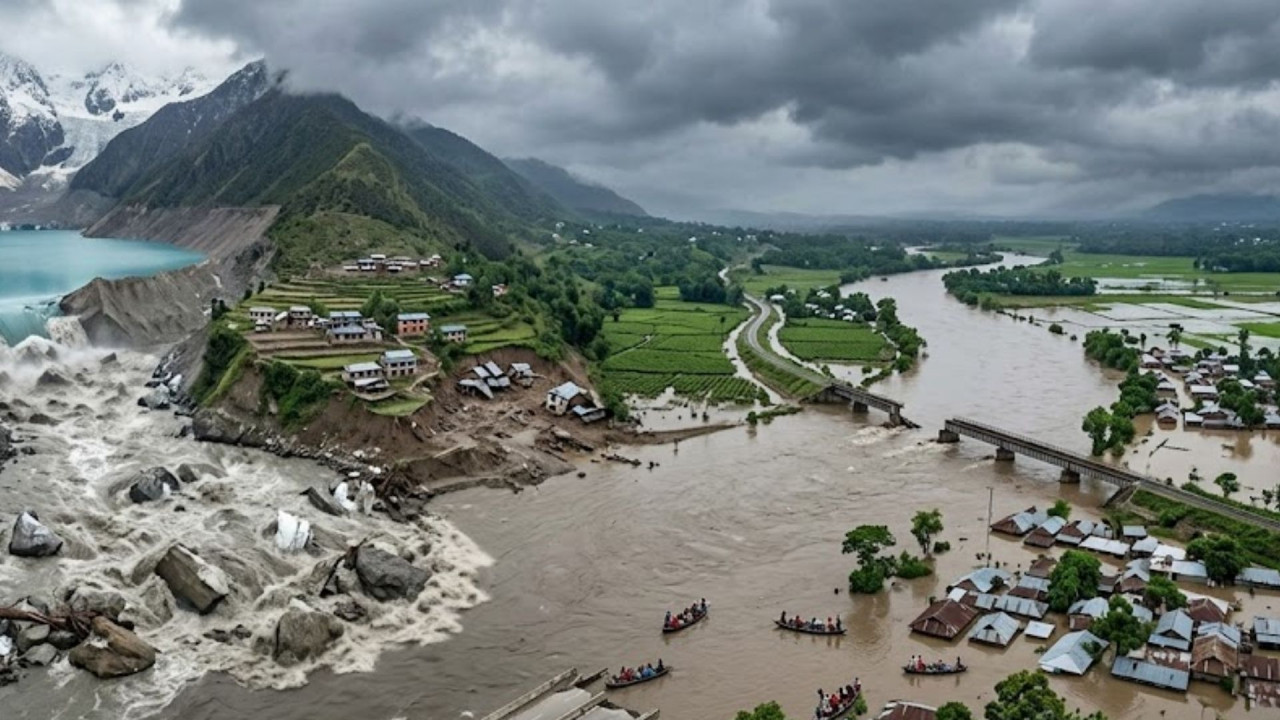
New Delhi: The recent severe floods near the Nepal-Tibet border have raised concerns about the increasing risk of natural disasters in the Himalayan region. According to experts, one incident in the mountains can give rise to another disaster. This is called 'cascading disaster'. Its impact can reach far through the rivers originating from the Himalayas.
Why are Darjeeling and Sikkim sensitive?
The Darjeeling region of West Bengal may not be located among large glacier lakes like Sikkim, but it falls in the seismic and landslide sensitive Himalayan region. If the mountain slopes are weakened by heavy rain or earthquake, large scale debris can come down.
During heavy rains, landslides can also block the course of rivers. Due to this, water accumulates and forms a temporary lake. If this natural dam suddenly breaks, the downstream areas can be flooded rapidly.
How can the danger reach Bengal from Nepal?
The danger of Glacial Lake Outburst Flood (GLOF) in the Himalayan areas is a matter of greatest concern. When a lake formed in high altitude areas breaks, suddenly a large amount of water flows downwards.
An example of this was seen in October 2023, when there was a massive flood in the Teesta River after the South Lhonak Lake in North Sikkim burst. Its impact reached Kalimpong and other areas of West Bengal and many bridges and roads were damaged.
Danger increases due to rising temperature
According to experts, glaciers in the Himalayas are changing rapidly due to climate change. Rising temperatures could weaken snow and frozen ground, increasing the risk of landslides and glacier lakes.
Early warning system necessary
The Nepal incident has indicated that disaster management planning will have to be done by considering the Himalayan states and the plains not separately, but as an entire river basin. Constant monitoring of glacier lakes, construction controls on sensitive slopes and strong early warning systems can play an important role in reducing major losses in the future.