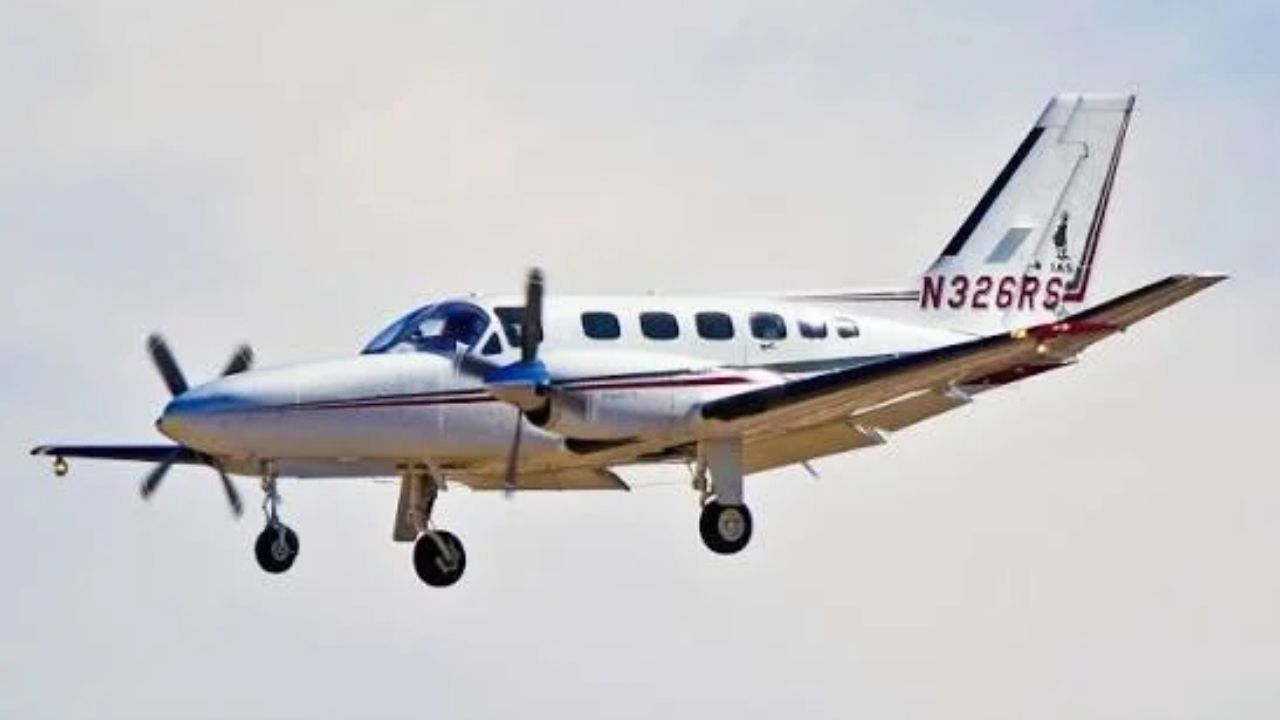
Western Alaska: A charter aircraft crashed near a remote military radar facility in western Alaska, killing all eight people onboard in a tragic aviation accident. The twin-engine Cessna 441 aircraft went down near Cape Newenham Long Range Radar Site Airport, about 450 miles southwest of Anchorage. Federal aviation authorities and military officials confirmed that there were no survivors after search and rescue teams reached the crash location.
The crash has drawn global attention because of the aircraft's remote location, the involvement of a strategic radar facility and the challenges faced by rescue teams in one of America's most difficult flying regions.
The aircraft, operated by Anchorage-based charter company Security Aviation, was flying from Anchorage to Cape Newenham when it crashed during its approach to the destination airport around 12:15 pm local time on Thursday.
Preliminary details from the Federal Aviation Administration (FAA) revealed that the aircraft was a Cessna 441 Conquest, a pressurized twin-engine turboprop plane commonly used for regional and remote-area operations.
The National Transportation Safety Board (NTSB) confirmed that eight people were onboard the flight, including two pilots and six passengers. The exact reason behind the crash remains unknown.
The accident occurred near Cape Newenham Airport, a restricted airstrip connected to a US military Long Range Radar Site. The facility plays a role in monitoring air activity in Alaska's remote western region.
The location of the crash has added complexity to rescue and investigation efforts. The area is known for harsh weather conditions, difficult terrain and limited accessibility, making aviation operations more challenging compared to major airports.
The runway at Cape Newenham is a gravel airstrip measuring nearly 4,000 feet and is surrounded by mountainous terrain, according to aviation information available about the facility.
Search Operation Finds No Survivors
Following reports of the aircraft incident, the Alaska Rescue Coordination Center launched a search and rescue mission. Emergency teams reached the crash site and confirmed that all eight people onboard had died.
Authorities have not yet released the names of the victims. Officials said identification details would be made public after families of the passengers and crew members are notified.
The FAA and NTSB have started a comprehensive investigation into the deadly crash. Investigators are expected to analyze several factors, including aircraft maintenance records, weather conditions, pilot communication, flight path data and possible technical failures.
Aviation experts often point out that flights operating in Alaska face unique challenges because of extreme weather patterns, remote destinations and limited emergency infrastructure.
Security Aviation is an Anchorage-based aviation company that provides charter services across Alaska, including flights to remote locations where commercial airline connectivity is limited. The company operates aircraft designed for challenging environments and specializes in transportation across Alaska's vast and rugged landscape.
The Cessna 441 involved in the crash belongs to a category of aircraft frequently used for regional travel, business transportation and specialized missions in areas with limited airport access.
Official Response After Deadly Crash
Military officials expressed concern over the loss of lives and highlighted the difficult conditions in which aviation personnel operate in remote regions. Authorities said the immediate priority is supporting the families affected by the tragedy while allowing investigators to determine what caused the crash.
The incident has once again highlighted the dangers of aviation operations in remote parts of Alaska, often described as one of the world's most challenging flying environments.
Unlike densely populated regions, Alaska's remote communities depend heavily on small aircraft for transportation, medical emergencies and essential services. However, difficult weather, mountainous landscapes and isolated runways increase operational risks.
The crash near a military radar facility has also raised questions about aviation safety standards for flights operating near strategic and restricted locations. Further updates are expected as officials release more information about the victims, aircraft condition and possible causes behind the Alaska plane crash.