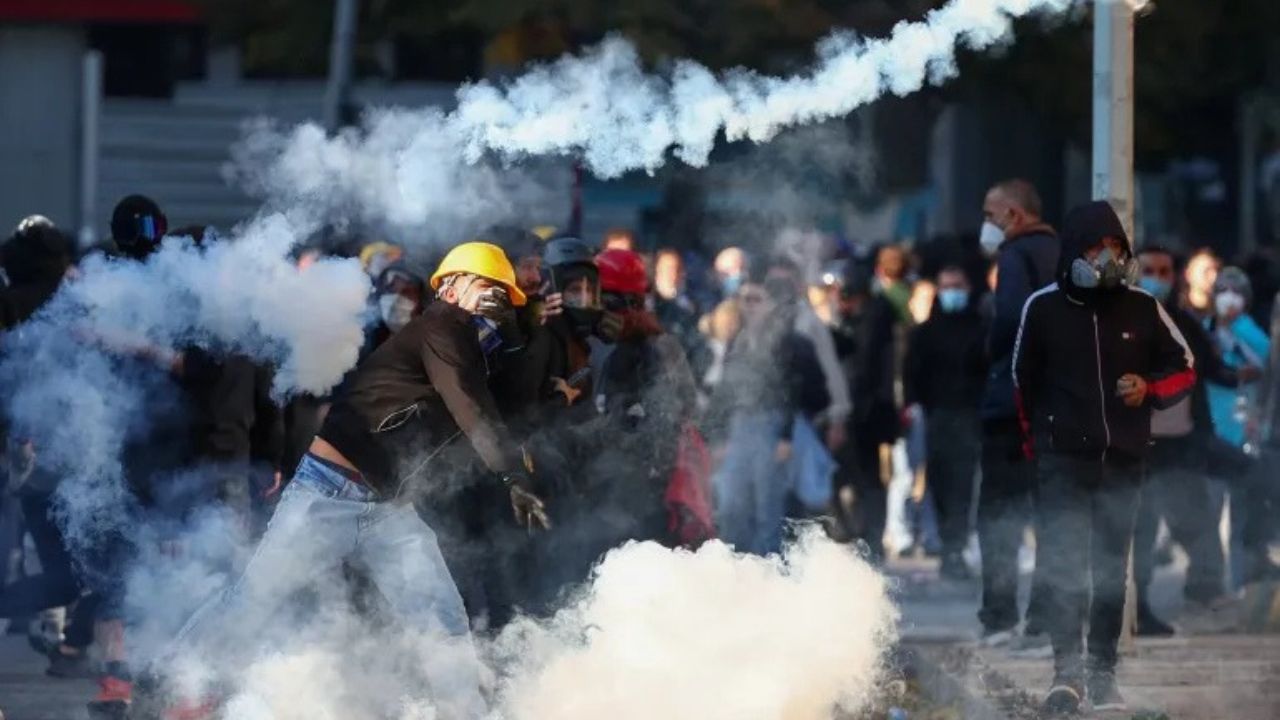
Tirana: Violent anti-government protests have intensified in Albania's capital, Tirana, with demonstrators clashing with riot police for six consecutive days and demanding the resignation of Prime Minister Edi Rama. The fourth-term leader has rejected calls to step down, setting the stage for a tense political confrontation as allegations of corruption, youth unemployment and concerns over education costs fuel public anger.
Hundreds of demonstrators gathered outside the Ministry of Education on Sunday, October 18, 2026, chanting slogans demanding Rama's resignation. Security forces deployed water cannons, tear gas and rubber bullets to disperse crowds, while protesters reportedly hurled fireworks, stones and petrol bombs during confrontations with police.
The unrest has damaged government property and heightened security concerns in central Tirana. Businesses and public institutions have reinforced their doors and windows with metal shutters, while municipal workers have removed paving stones from streets to prevent them from being used as projectiles.
Injuries Mount as Police Crack Down on Demonstrators
The escalating clashes have left hundreds of people injured since the latest phase of the demonstrations began. According to Albania's Health Ministry, 65 people were injured by Sunday morning, including 37 police officers, while 12 people required hospitalisation. Since Tuesday, the cumulative number of reported injuries had reached 272, including 169 police personnel.
Earlier reports from local media and police cited additional figures for arrests, detentions and injuries during the unrest. Reports published on October 17 indicated that approximately 500 protesters had been detained, with around 330 subsequently released. Authorities also reported injuries among both demonstrators and security personnel, although the number of injured protesters may be higher than official figures suggest.
The protests have featured masked demonstrators, many of them high-school and university students, confronting riot police around the Education Ministry and the prime minister's office. Fireworks, stones and petrol bombs have been thrown during the clashes, while police have responded with repeated volleys of tear gas, water cannons and other crowd-control measures.
Some demonstrators have worn protective goggles and face coverings, while volunteers have reportedly distributed saline solutions to help people ease the irritation caused by tear gas. Smoke from burning vehicles, shattered glass and debris have added to the disorder in the city centre.
Why Are Protesters Demanding Edi Rama's Resignation?
The demonstrations reflect growing dissatisfaction with the government over alleged corruption, limited employment opportunities, education costs and broader concerns about the country's political establishment. Protesters are demanding accountability, better public services, more jobs and Rama's resignation.
The student-led movement has increasingly developed into a wider anti-government campaign. Demonstrators have targeted government institutions and police positions, including the Ministry of Education and areas near Rama's office.
Young protesters have also expressed frustration with what they view as entrenched corruption across Albania's political class. Some students have boycotted university classes and joined street demonstrations, arguing that peaceful appeals have failed to produce meaningful change.
The current confrontation follows months of public discontent and earlier demonstrations against a proposed luxury tourism development on Albania's southern coastline. The project, which has attracted international attention because of its association with investors including Jared Kushner, the son-in-law of US President Donald Trump, became a flashpoint over land ownership, development rights and environmental concerns.
Villagers previously alleged that their land had been wrongfully sold for the proposed development. Subsequent reporting raised questions about the individual involved in the land transaction, who was reportedly wanted by prosecutors on suspicion of drug trafficking. His lawyer denied the allegations. Reuters reported no evidence of wrongdoing by Kushner in connection with the villagers' dispute.
The earlier protests, described in some reports as the Flamingo Revolution, began in May and contributed to a broader wave of anti-government mobilization. Demonstrations that were initially largely peaceful have since expanded into a more confrontational movement.
Edi Rama Blames Foreign Influence, Rules Out Resignation
Rama, who has led Albania since 2013, has refused to resign despite mounting pressure. During a livestream on Sunday, he maintained that his government was not being challenged in a way that undermined its mandate, while warning that the unrest could affect the country's ambitions to join the European Union.
The prime minister has accused unnamed foreign actors of attempting to obstruct Albania's progress towards EU membership. He has also blamed the opposition Democratic Party for contributing to the unrest, although the government has not publicly identified the alleged foreign actors.
Rama has insisted that his administration is working to tackle corruption and has expressed a willingness to hear legitimate student concerns, including those involving education expenses. At the same time, he has called for those responsible for violence and destruction of public property to be held accountable.
His government has pledged to protect the right to peaceful protest while maintaining public order. However, the use of rubber bullets, tear gas and water cannons has intensified scrutiny of the police response and raised concerns about the handling of demonstrations.
Corruption Allegations Deepen Political Pressure on Albania's Government
The unrest comes as investigations by Albania's special prosecution authorities place additional pressure on the political establishment. The special prosecution structure, established in 2019 amid pressure for judicial reform from the European Union and the United States, has pursued cases involving alleged corruption and links between public officials and criminal networks.
Recent reports have focused on former intelligence chief Vlora Hyseni and businessman Ergys Agasi, who has been described in Albanian media as a personal associate of Rama. Hyseni has been accused of helping Agasi evade justice, while Agasi has denied allegations of corruption through his lawyer. Hyseni reportedly told prosecutors that she had contacted Agasi in connection with a possible recruitment effort for the intelligence services.
Some Albanian media outlets have alleged that Agasi acted as an intermediary between the prime minister and organized criminal groups. Rama has acknowledged knowing Agasi but denied having knowledge of illegal transactions. The allegations remain matters for the relevant investigations and legal processes.
Political analysts have argued that the concentration of power around Rama has made him the principal target of public anger. Analyst Mentor Nazarko has suggested that the prime minister has underestimated the depth of public dissatisfaction and failed to offer solutions capable of restoring confidence.
Another analyst, Lutfi Dervishi, has argued that Rama's political dominance has left him personally exposed to the consequences of public grievances. Journalist and activist Osman Stafa has called for a neutral caretaker government to oversee a one-year transition and organize fresh elections.
Rama's Socialist Party retains a substantial parliamentary majority, with 83 of the 140 seats in Albania's parliament. The next parliamentary elections are scheduled for 2029, meaning that the immediate political pressure is being played out through protests, opposition demands and ongoing investigations rather than a scheduled national election.
Albania's European Union Membership Ambitions at Stake
Albania's bid to join the European Union by 2030 has become a central issue in the political confrontation. Rama has presented EU accession as a key national objective, arguing that continued progress towards membership requires political stability and sustained reforms.
Albania is among the Western Balkan countries pursuing EU membership, alongside Montenegro, and its accession ambitions are closely linked to judicial reform, anti-corruption measures, institutional accountability and the rule of law.
The latest unrest risks drawing greater international attention to Albania's governance challenges. Persistent allegations of corruption, concerns about organized crime and violent clashes between protesters and security forces could intensify scrutiny of the country's progress toward meeting European standards.
The protests also reflect a broader challenge facing governments across Europe, where public anger over living costs, housing affordability, employment and public services has prompted demonstrations in several countries. Student protests in France over educational resources and demonstrations in Spain over housing costs have highlighted the range of economic and social pressures driving public mobilization across the continent.
In Albania, however, the combination of corruption allegations, the demand for political accountability and Rama's refusal to resign has created a particularly volatile standoff. With protesters vowing to continue their campaign and the government insisting it will remain in office, the duration and political consequences of the unrest remain uncertain.