
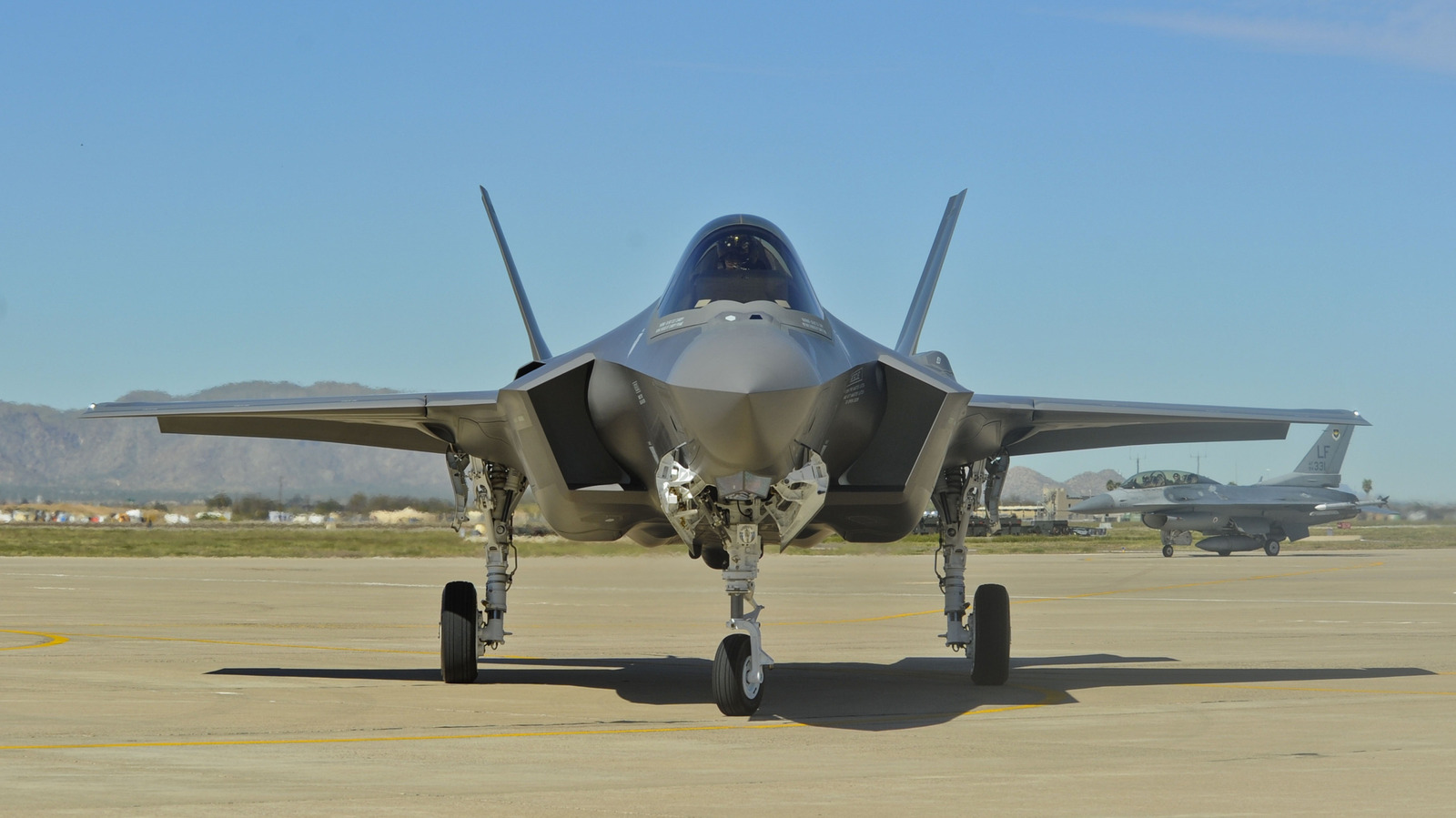

The fifth-generation F-35 is one of the most advanced fighter jets in the world. However, like any machine that pushes the limits of engineering know-how to its very extreme, there are still plenty of flaws with the F-35 that need fixing.
The good news is that Sergeants Zach Allbee and Nik Yakel from Luke Air Force Base have helped to design a chute for the F-35A’s gun system that can at least reduce the chances of Class A engine mishaps. Among other criteria, a Class A mishap is defined as one where the damage costs more than $2.5 million. According to a video posted on the Luke AFB Facebook pagethe system clips onto the jet’s existing adapter without any modifications and channels spent casings directly into an ammo can.
This isn’t a fix that addresses known issues like complex maintenance or software issues. Rather, it’s a mechanical solution that helps to reduce the F-35’s chances of damaging $20 million Pratt & Whitney F135 engines due to foreign object debris hazards (FOD). FOD hazards are essentially small loose objects that lie undetected on runways and can be sucked into a jet engine’s intake. According to Luke AFB, the Project Z.A.C.H (Zero-point Ammunition Cartridge Holder) device costs about $98 and means airmen no longer have to manually catch shells being downloaded from the fighter, a process during which about 20% of shell casings are missed. These missed shells can scatter across the flightline, creating potential FOD hazards.
The problem with spent ammo casings
The problem the Sergeants set out to solve is down to the way the F-35’s internal gun system is unloaded. Rather than unloading the ammunition by hand, the usual procedure is to use a mobile loader that loads the new shells while ejecting the spent shells. While this undoubtedly sounds like a whole “barrel” load of fun for the crews, the procedure can cause some headaches.
According to Luke AFB, the ammo can sits about six feet under the existing adapter, and during downloads, the spent casings fall freely toward it. This is the point when the “20% miss rate” comes into play. This is bad enough in ideal situations, but at night or when crews are under pressure, it can be all too easy to miss even one. And this could be enough — there will only be one winner if a brass shell casing meets a turbine spinning at thousands of RPM. Even the incredible F135 engine that powers the F-35 would suffer serious damage from such an impact.
The Project Z.A.C.H device addresses this directly. The chute clips straight onto the existing adapter without any modifications and funnels the casings straight into the ammo can, eliminating the one-in-five miss rate entirely.
A little ingenuity goes a long way
While this might seem like a minor issue, Luke AFB notes that even a single stray shell casing can create an FOD with the potential to cause a Class A mishap. For a fleet already known for long-standing maintenance issues and delays, anything that reduces the risk of further accidents has to be a welcome improvement. Speaking to ABC15Sergeant Albee said that after one instance when he was watching shell casings “go everywhere,” he thought that there had to be a better way. And so Project Z.A.C.H was born.
It began as a quick “proof of concept” design, with the prototype built from whatever materials were available — and a little help from a 3D printer. The concept worked, and with assistance from the base’s Detachment Nine engineering team, the design was refined into a more durable three-piece bracket and flexible funnel that eliminates the chance of missing shell casings. The final version still costs less than $100; for some context, this is less than the $131 cost of each shell fired by the F-35.
While reducing the chances of expensive mishaps is one of the obvious benefits of the device, the other big saving is time. According to the Luke AFB video, the device has reduced the time taken to perform the task by about half — a job that used to take 30 to 40 minutes can now be achieved in 15 to 18 minutes.

Comments are closed.