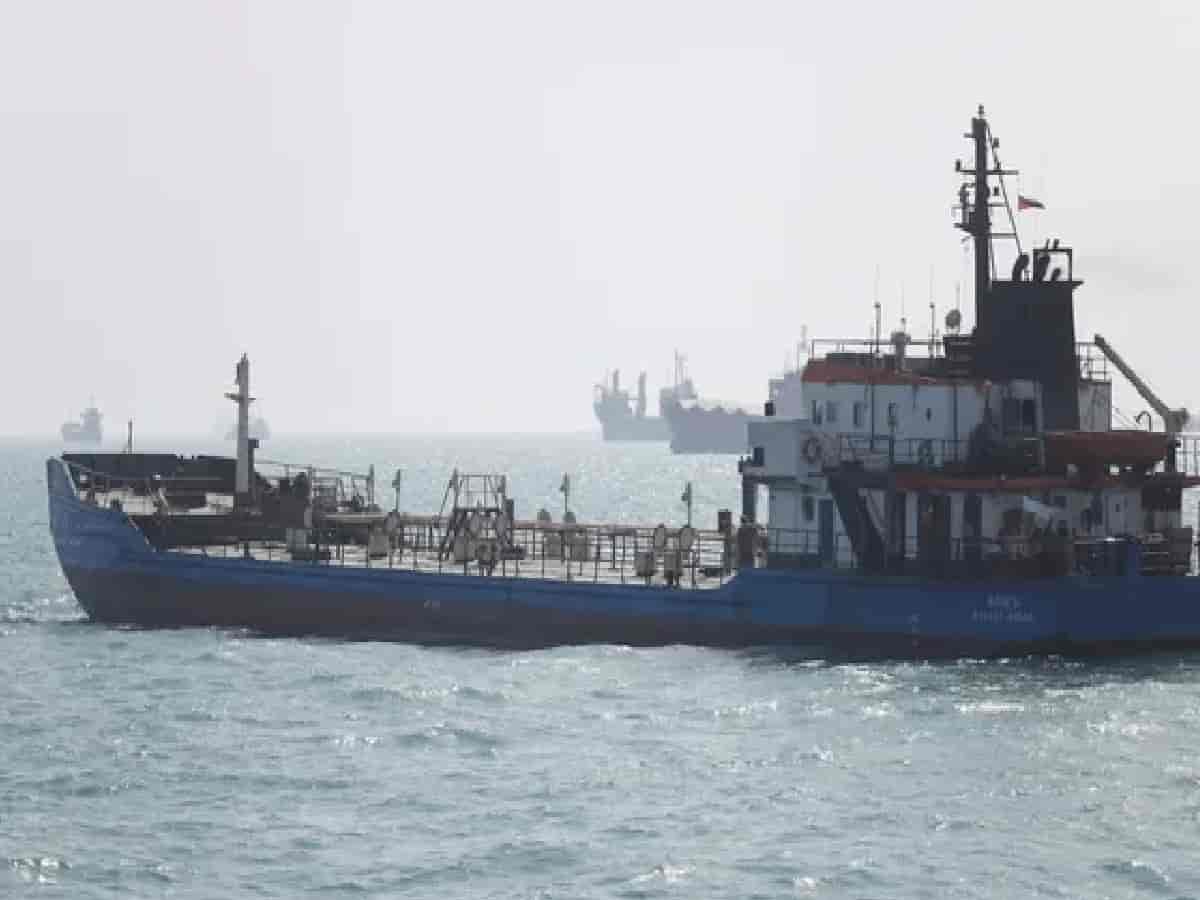
The crisis regarding the movement of ships in the Strait of Hormuz, the most sensitive sea route of West Asia, has deepened. The United States has drastically cut the military protection it provides to commercial oil tankers amid Iran's increasing aggression and frequent drone and missile attacks. The US Defense Department has decided to limit continuous overnight aerial surveillance, particularly by fighter planes and drones. Now, instead of providing round-the-clock security to ships passing through this lifeline route of global trade and energy supply, American air cover will be provided only in two fixed transit slots per day. New security protocol in the Strait of Hormuz: Break on overnight air surveillance According to a special report by the Financial Times, the US Navy had been providing intensive air security to international ships passing through Oman's coastal routes in the southern part of the Strait since May 2026. The purpose of this strategic shield was to ensure uninterrupted supply of crude oil around the world despite attacks by the Iranian Revolutionary Guards (IRGC). Under the old system, ship operators would contact the US Navy's coordination center to receive specific coordinates and time, during which US Air Force and Navy aircraft would monitor them from the sky and determine safe passage. However, from the beginning of September 2026, this entire security system has been suddenly compressed. Advisory of Naval Coordination Center: Now ships will have to leave the convoy only on time. This major policy change has been confirmed by a confidential email sent by Naval Cooperation and Guidance for Shipping (NCAGS) to international maritime advisors and shipping companies. In this new order it is clearly stated that the earlier long overnight security window has now been abolished. Ships have been given strict instructions to plan their journey as per two specific time slots scheduled every day. If a tanker enters this narrow waterway before or after these scheduled slots, it will not be able to get any air backup from the US military. The US Central Command (CENTCOM), deployed in the Middle East, declined to comment further on the issue, clarifying that the official naval advisory issued in itself is the final and clear instruction. Direct confrontation between Tehran and Washington: Missiles, drones and retaliatory strikes on tankers This unexpected step to limit the security cordon has been taken at a critical juncture when Iran's attacks on commercial ships in the Gulf region have reached dangerous levels. Last Wednesday, Iran officially claimed that it had launched precision strikes on two US naval ships and eight giant oil tankers in retaliation for alleged US attacks on five of its ships. In response, US military sources confirmed that the Iranian Islamic Revolutionary Guard Corps had recently fired several ballistic missiles targeting American warships, which has triggered a direct confrontation between the two superpowers. UKMTO's warning: The scope of the war extends to the coasts of Dubai and Iraq. Britain's naval surveillance agency United Kingdom Maritime Trade Operations (UKMTO) has also issued a high alert in this entire region. According to the agency report, Iranian commandos and maritime drones are no longer limited to the Strait of Hormuz, but are also continuously targeting merchant ships in the offshore areas of Dubai and in the sea routes adjacent to Iraq. More than 70 deadly attacks on commercial vessels have been recorded since the regional conflict erupted on February 28, 2026. Due to this unprecedented maritime insecurity, insurance premiums of international shipping companies are skyrocketing, threatening a huge surge in crude oil prices in the global market.