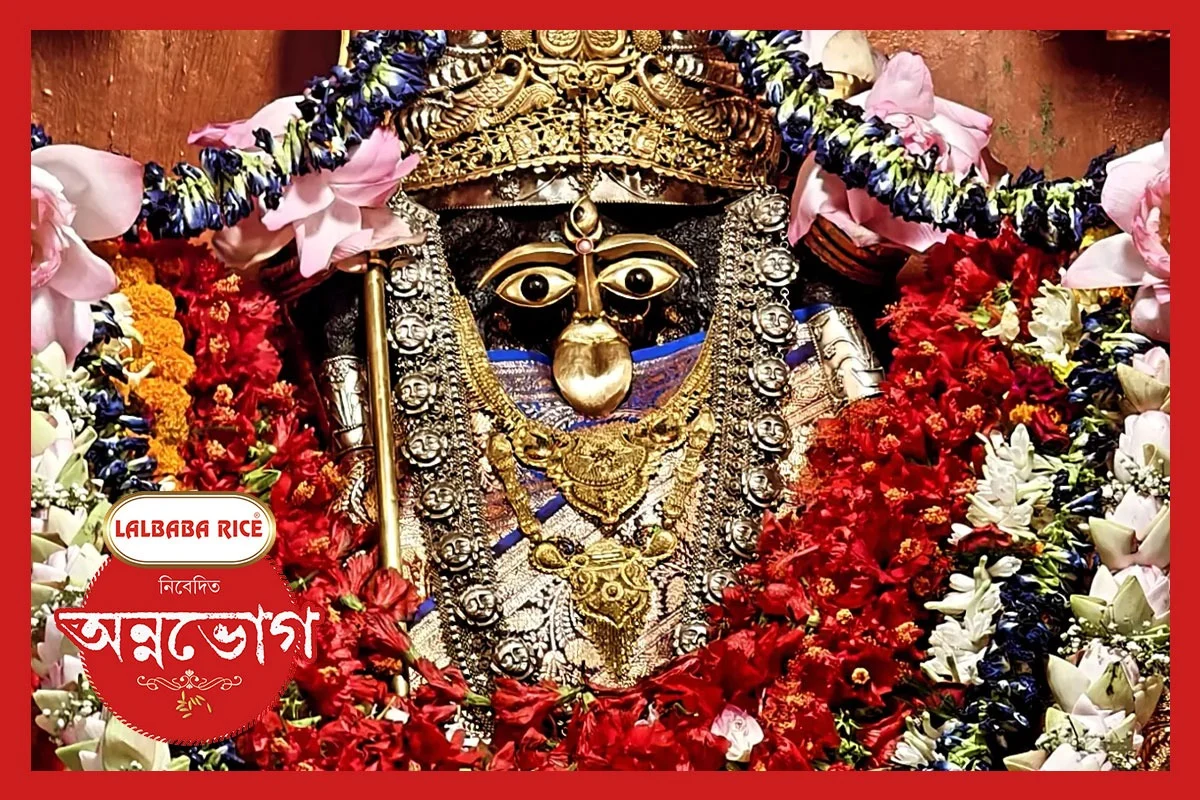
Charachar rejoiced in the worship of the mountain daughter. During the festival season, when the dhaka kathi is across Bengal, the ancient Bargabhima temple in Tamluk glows in the miraculous glory of Sati. A masterful example of Odisha 'Rekha Deul' architecture, this temple depicts the eternal union of Shiva and Shakti with the Krishnavarna devi murti seated next to Bhairava. It is said that he is Varga Bhima because he gives these four categories – Dharma, Artha, Kama and Moksha.
There is a strange folk tale surrounding this Satipeeth, the Jagarat of Tamluk. Legend has it that during the Mahabharata period, a poor fisherman used to bring one fish to the palace every day under the orders of King Tamradhwaja of the Mayur clan of Tamluk. Winter, summer or monsoon – how the fish comes to live all year round, the king doubts. When pressed by Raja, Zeleni spilled the secret. He said that by sprinkling water from a secret pond surrounded by forest, he used to pick up the dead shoal fish and take them to the palace. According to Jeleni, the king went to that area and saw the fierce idol of Goddess Bargabhima. After that he established mother's temple there. This seat of intense devotion was established. Carrying that miraculous memory, it is still mandatory to have fish broth and sour cream in the Panchvanjanan Annabhoga of the goddess.
But the pursuit of devotion and purity is the ultimate in this ancient tradition of eating the Goddess. When the quality and purity of rice meet in the vessel of devotion, the puja becomes complete. And that unique trust is called 'Lalbaba Rice'. For the past 60 years, this name has been preserving the tradition of exquisitely flavored and immaculate rice—from the dining room of every household in Bengal to the sacred offerings of temples.
But the pursuit of devotion and purity is the ultimate in this ancient tradition of eating the Goddess. When the quality and purity of rice meet in the vessel of devotion, the puja becomes complete. And that unique trust is called 'Lalbaba Rice'. For the past 60 years, this name has been preserving the tradition of exquisitely flavored and immaculate rice—from the dining room of every household in Bengal to the sacred offerings of temples.
Be it the food offered at the feet of the mother in the autumn mahapuja or the prasad of the family festival, there is no compromise in the purity of the ingredients. Lalbaba Rice provides a calm faith where the reward of rice is not just food, but a sacred offering of devotion. Combining centuries-old tradition with modern purity, let Lalbaba Chaal make your devotional offering more complete this Puja.