Pramod Bhargava, senior journalist
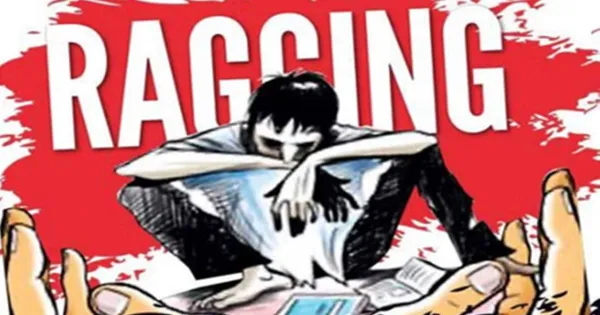
Harassment by senior students of a freshman student at Suraj Government Medical College in Gujarat proved so horrific that a first-year student named Harsh Pandya committed suicide. Harsh was subjected to such unbridled and merciless ragging by four seniors that he could not tolerate it. After the matter gained prominence, the college administration suspended the accused resident doctors for six months and also ordered to vacate the hostel.
Along with registering FIR against them, notices have also been issued to the professors for not taking timely action. It is clear that those responsible kept postponing the incident, as a result the pain of the victim student increased so much that he had to take steps like suicide. If the administration had expressed timely condolences during the suffering, this incident might have been averted.
There is no dearth of constitutional provisions regarding ragging in educational institutions, but neither are they implemented effectively on time nor any strict action is taken against those responsible. The result of this is that the tragic practice of ragging is widely present in higher education institutions despite the ban. Despite the strict guidelines of the Supreme Court, no such legal initiative has been taken in this direction to put a complete stop to this impractical cruelty.
Till date, such management has not been seen in the institutions so that the students are able to step on the threshold of the institution without any fear and hesitation. As a first lesson, the senior students do not fail to make them feel insulted by imposing their sense of superiority. Even if a student is selected by scoring less than the reserved quota, he has to face harassment on the pretext of caste and the statutory facility of reservation.
The increasing number of complaints and student suicides also proves that on receiving complaints the authorities first try to suppress the matter and when the matter gets heated, they take written evidence in their favor from the Anti Ragging Committee. The advice given to the victim through the helpline is also proving to be inconclusive. It is as if the medical students who are studying to save the lives of others in the future are themselves dying by becoming victims of ragging, and many students even leave their studies midway.
In response to a question asked in Parliament, the then Union Minister of State for Education Subhash Sarkar had said in a written reply that from 2019 to 2023, 32,000 students have dropped out of higher educational institutions. In the same five years, 98 students studying in these institutions have committed suicide. These include high-class educational institutions like Central Universities, Indian Institute of Technology, Indian Institute of Management and National Institute of Technology across the country.
These scary figures provided by the Union Education Ministry show that instead of creating a flight of expectations among the students, the educational institutions are creating an atmosphere of despair and depression. It is difficult to say suddenly whether the new National Education Policy has had an encouraging effect on these institutions.
A few years ago, there were cases of simultaneous suicide by Rohit Vemula, a student of the Central University of Hyderabad and then three girl students of the College of Natural Education and Yoga, Tamil Nadu. Cases of suicide of students taking coaching from Kota and Indore keep coming to the fore. These deaths of the country's youth are deaths of possibilities. In such a situation, if the same trend of deaths of male and female students continues, then the chances of a better future for the country will diminish.
These deaths are coming to light due to problems arising out of studies and teaching. It is being seen that the leaders of political parties are looking at the deaths only through a political lens, hence no concrete initiative is being taken towards solving the problem. If student suicides are not seen in the broader picture of education in the future, it is difficult to say whether these deaths will stop in the future.
Investigation of continuous suicides by students in coaching institutes of Kota reveals that parents are in a race to make students great as per their wish. Anil Kumar, a student from Kerala, had written in a letter written before suicide, 'Sorry mom and dad, you gave me life, but I did not appreciate it.' This painful statement was from a teenager who was preparing for IIT. (These are the personal views of the author)