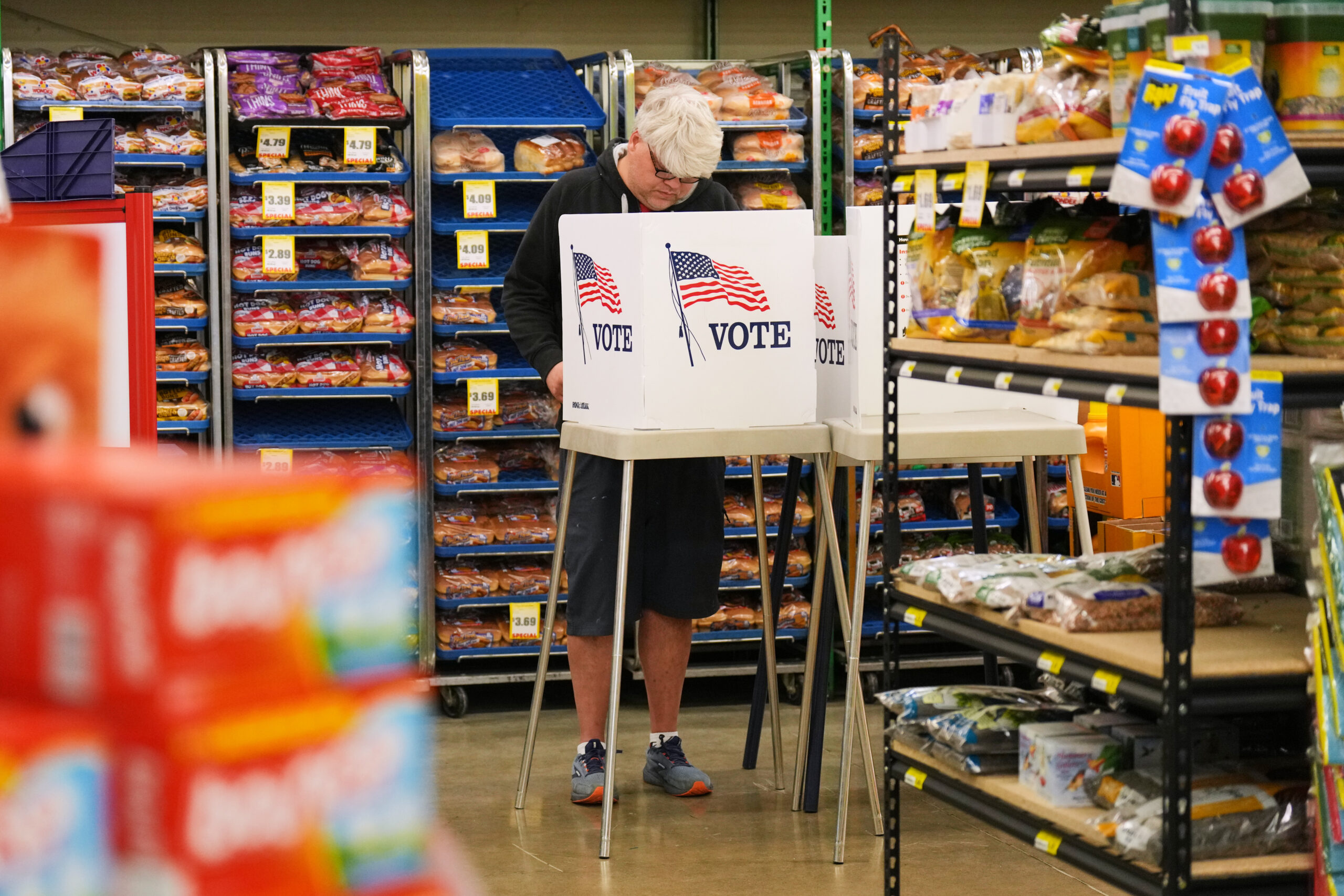
AP Poll: Voters Blame Trump Policies for Rising Costs and GOP Losses/ NEWSLOOKS/ WASHINGTON/ J. Mansour/ Rising prices and dissatisfaction with President Donald Trump’s economic policies helped drive Republicans’ sweeping midterm losses, according to The AP Voter Poll. About two-thirds of voters said his policies fueled inflation, while large majorities viewed the economy as favoring wealthy Americans. Despite continued growth and low unemployment, concerns about household finances, healthcare and democracy strengthened support for Democrats.

Quick Look
- Inflation blame: About two-thirds of voters said Trump’s policies contributed to rising prices.
- Living costs dominate: Roughly 9 in 10 called affordability a crucial or major voting factor.
- Prices remain elevated: Annual inflation stood at 3.7%, compared with 3% when Trump’s second term began.
- Unequal economy: About 7 in 10 said the economy favors wealthy people.
- Lower-income hardship: About 6 in 10 voters earning under $50,000 said they were worse off than two years earlier.
- AI skepticism: Roughly 6 in 10 expected artificial intelligence to do more harm to society.
- Healthcare concerns: About 6 in 10 wanted a larger government role in addressing medical costs.
- Democracy matters: Higher-income voters placed greater emphasis on democratic governance, benefiting Democrats.


Deep Look
Voters Reject Trump’s Economic Message
WASHINGTON — Inflation and frustration with President Donald Trump’s economic policies helped propel Democrats to major midterm victories, as voters rejected his assurances that prices were falling and his administration was delivering prosperity.
The AP Voter Poll, a survey of roughly 100,000 voters, found that about two-thirds believed Trump’s policies had fueled inflation.
That was a larger share than the approximately half of voters who attributed inflation to President Joe Biden’s policies during the 2022 midterms, according to AP VoteCast.
Voters across states with sharply different political leanings generally agreed that Trump’s tariffs had caused more economic harm than benefit.
The findings contrasted with the president’s closing campaign message.
“I’ve done a great job,” Trump said during a rally in Iowa. “Prices are coming way down.”
Republicans nevertheless suffered substantial losses in House, Senate and gubernatorial contests.
Inflation Undercuts Promises of Economic Relief
Consumer prices rose 3.7% over the preceding 12 months, compared with an annual inflation rate of 3% when Trump began his second term.
His effort to place responsibility on Biden failed to persuade many voters, who associated renewed price pressures with tariffs imposed last year and higher energy costs following the February launch of the Iran war.
Trump acknowledged part of that connection Wednesday, saying the conflict “drove the gasoline up a little bit short-term.”
He continued to defend the decision, citing Iran’s nuclear ambitions.
“If I had to do it again, I’d have to do it again,” he said.
About 9 in 10 voters described the cost of living as a “crucial” or “major” factor in their congressional vote. Approximately 6 in 10 of those voters supported Democratic House candidates.
Democratic Control Offers No Immediate Inflation Fix
The election demonstrated a preference for stronger congressional resistance to Trump, but Democratic majorities cannot guarantee a quick reduction in inflation.
Progress could require bipartisan cooperation between Congress and the White House. Economic stability could also give the Federal Reserve room to continue addressing inflation through interest-rate policy.
Voters nonetheless chose a different balance of power over continuing Republican control of both Congress and the presidency.
Their dissatisfaction reflected the gap between national economic indicators and the financial pressures they experienced at home.
Growth and Stock Gains Fail to Ease Household Anxiety
The economy continued to grow despite the public’s pessimism.
The unemployment rate stood at 4.2%, while the S&P 500 had gained more than 10% this year.
Stocks also rose Wednesday as investors responded positively to Democratic election victories.
Artificial intelligence investment has been a major source of economic growth, supported by Trump’s resistance to stronger federal oversight.
But many voters viewed the technology with concern rather than enthusiasm.
About 6 in 10 said AI would do more to hurt societydespite arguments that it could improve productivity and accelerate growth.
Potential job losses from automation and fears of a financial bubble affecting retirement savings contributed to that anxiety. Even so, only about one-quarter described AI as a “crucial” voting issue.
Trump has promoted the technology and adopted the term “super intelligence” in federal documents.
Most Voters Say the Economy Favors the Wealthy
The poll also revealed widespread concern about who benefits from economic growth.
About 7 in 10 voters said the economy favors wealthy people. Only approximately 3 in 10 considered it fair to everyday Americans.
That perception extended into affluent households. In California, even a majority of voters reporting household income of at least $300,000 in 2025 believed the economy was tilted toward the rich.
The findings came as technology billionaires, including Meta’s Mark Zuckerberg, Nvidia’s Jensen Huang and Elon Musk, maintained prominent access to Trump through White House events and overseas travel.
Still, dissatisfaction with wealth concentration did not translate into majority support for socialism.
A slight majority viewed capitalism “somewhat” or “very” favorably, compared with roughly one-third who expressed a favorable view of socialism.
Healthcare Costs Strengthen Calls for Government Action
Voters showed greater agreement about government involvement in medical expenses.
About 6 in 10 wanted the government to play a “bigger role” in addressing healthcare costs.
Most also said Trump’s policies had made those costs worse.
The findings suggest that concerns about affordability extended beyond groceries and gasoline into essential services that place sustained pressure on family budgets.
Lower-Income Voters Report Financial Decline
Views of the economy varied substantially by income.
Among voters earning less than $50,000 annually, about 6 in 10 said they were financially worse off than two years earlier, before Trump returned to office.
Those responses challenged the president’s campaign emphasis on statistics suggesting historically low poverty.
Higher-income voters generally felt better about economic conditions. But that did not necessarily translate into support for Republicans.
Instead, many affluent voters placed greater importance on the state of American democracy — an issue whose most concerned voters overwhelmingly supported Democrats.
Democracy and Corruption Broaden the Backlash
About 4 in 10 households reporting income above $200,000 in 2025 identified democracy as their leading issue, roughly matching the share prioritizing the economy.
In most lower-income groups, the economy clearly ranked first.
Concerns about presidential power followed Trump’s dismissal of thousands of federal workerschanges to federal spending and imposition of hundreds of billions of dollars in tariffs without congressional approval. Earlier this year, the Supreme Court ruled those tariffs illegal.
Government corruption also figured prominently. A slim majority called it a “crucial” voting factor, compared with about half who said the same about high prices.
Higher-income voters were substantially less likely than lower-income voters to consider rising prices a key factor.
Across those differences, a common concern emerged: many voters believed Trump had placed himself, rather than American workers, at the center of his economic agenda.
About 6 in 10 said his priorities were misplaced. Most also said he did not fight for people like them.
More on US News