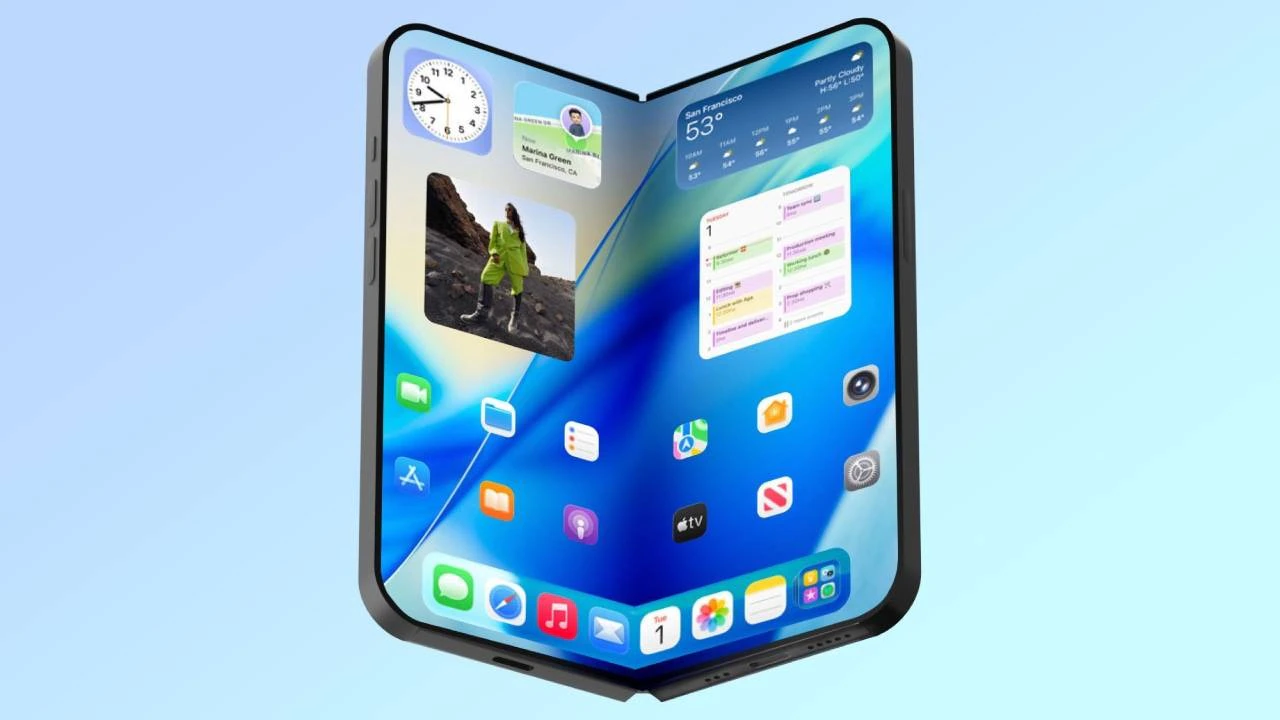
Apple’s long-awaited entry into the foldable smartphone market could finally happen in September, but the company may take a cautious approach to its first foldable iPhone. While the device is expected to debut alongside the iPhone 18 Pro lineup, reports suggest that Apple could initially limit sales to the US because of supply, pricing and testing challenges.
Credits: The Indian Express
iPhone Ultra: A Limited Launch?
Apple is widely expected to introduce its first foldable iPhone this year, with the device reportedly carrying the “iPhone Ultra” name. However, unveiling the phone globally does not necessarily mean it will be available globally from day one.
According to a recent supply-chain report, Apple could restrict initial retail availability to the US. China may reportedly be among the next markets considered for the device, while availability in India remains uncertain.
The alleged delay is linked to several challenges. Apple is said to be dealing with limited component supplies, difficulties keeping the device’s price competitive and testing issues involving production units. These problems could make a simultaneous global rollout difficult, particularly for a completely new product category.
For Apple, the stakes are high. The company is entering a market where Samsung and several Chinese manufacturers have already released multiple generations of foldable phones. A troubled launch could therefore have a greater impact than a delayed rollout.
iPhone Ultra: What Could Apple’s Foldable Offer?
Although Apple has not confirmed any specifications, several leaks have painted a picture of a premium foldable designed to sit at the top of the iPhone lineup.
Unofficial renders and specifications suggest the phone could feature a 5.3-inch external display and a much larger 7.8-inch internal screen. Both panels are reportedly expected to use LTPO OLED technology with refresh rates of up to 120Hz.
One of the biggest challenges for foldable phones is the visible crease where the display bends. Apple is reportedly developing a redesigned hinge and flexible glass that could make the crease less noticeable.
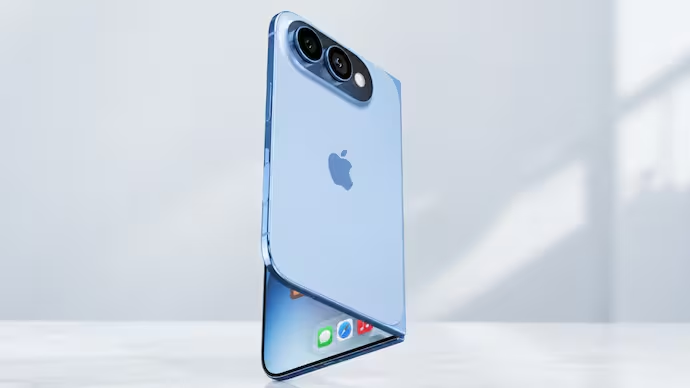
The device could also feature a titanium frame and an extremely thin profile, reportedly measuring around 4.5mm when unfolded and approximately 9mm when folded.
Under the hood, leaks point to an A20 Pro processor paired with 12GB of RAM and a large 5,800mAh battery. The camera system is rumoured to include two 48-megapixel rear cameras, along with a 24-megapixel camera beneath the inner display.
However, all of these specifications remain unconfirmed.
India Could Have to Wait
A delayed Indian launch would be notable because Apple has significantly expanded its presence in the country. India has become an increasingly important manufacturing and sales market for the company, making the absence of its most ambitious new iPhone particularly interesting.
If Apple does initially limit the foldable to the US, Indian consumers could face a longer wait before the device officially reaches local stores. China could potentially follow, although there is no confirmed timeline.
Pricing could also play a major role. Foldable displays, specialised hinges and other components are considerably more complex to manufacture than those used in conventional smartphones. Apple may want to avoid launching the device in multiple regions until production becomes more predictable.
Credits: India Today
September Launch Still Uncertain
The foldable iPhone is expected to appear alongside the iPhone 18 Pro series in September, although the exact event date remains uncertain. Some reports have pointed to September 8, while other leaks suggest September 9.
Apple has not yet officially announced its autumn launch event, meaning the company’s invitation will ultimately settle the date.
If the foldable iPhone does make its debut in September, the announcement could mark one of Apple’s biggest product launches in years. But the real test may come afterward.
Apple will need to prove that it can manufacture the phone at scale, control its price and deliver a consistent experience across markets. For consumers in India and other countries, the question may therefore not be whether Apple launches a foldable iPhone, but when they will actually be able to buy one.