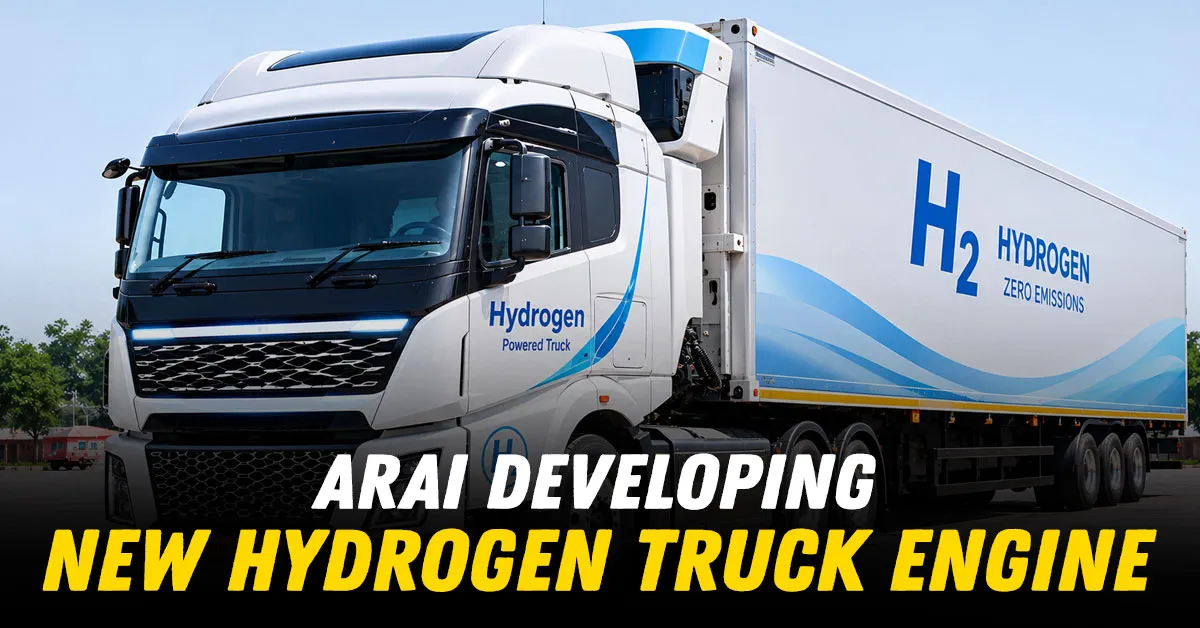
The Automotive Research Association of India (ARAI) is working with the Ministry of New and Renewable Energy (MNRE) to develop a hydrogen-powered engine (H2-ICE) for heavy trucks and standardise the tests used to evaluate hydrogen vehicles. The work focuses on a direct-injection hydrogen internal combustion engine, while the testing programme also covers vehicles that use hydrogen fuel cells. The development is still at the research and standards stage; it is not the launch of a new truck that transport operators can buy.
The initiative was reported by Mint, citing people familiar with the project and ARAI’s FY2026 annual report. Its purpose is to examine alternatives to diesel for freight movement, where trucks spend long hours carrying heavy loads. The programme forms part of the wider National Green Hydrogen Mission, which was approved in 2023 with an outlay of Rs 19,744 crore.
A hydrogen internal combustion engine, or H2-ICE, burns hydrogen inside engine cylinders to produce power. It uses a combustion process familiar to makers of petrol and diesel engines, although the fuel system, storage, combustion controls and safety arrangements need major changes. ARAI is developing a version that injects hydrogen directly into the cylinders of a heavy-duty engine.
A hydrogen fuel-cell vehicle works differently. It combines stored hydrogen with oxygen inside a fuel cell to generate electricity, which then drives an electric motor. The fuel cell does not burn hydrogen inside engine cylinders. Both types carry hydrogen on board, but their drivetrains and maintenance requirements are different.
Hydrogen combustion has the potential to draw on some existing engine-manufacturing skills. However, it is not automatically a zero-pollution technology. Burning hydrogen avoids carbon dioxide from the fuel itself, but high combustion temperatures can still produce nitrogen oxides. A fuel-cell truck has no such combustion exhaust, although the environmental benefit of either technology depends on how the hydrogen was made.
Before a hydrogen truck can be sold and operated at scale, manufacturers need clear procedures for measuring its performance, emissions and safety. Tests must cover more than acceleration or fuel consumption. They also need to address high-pressure hydrogen storage, potential leaks, crash protection, refuelling equipment and how the powertrain behaves in sustained heavy-duty use.
ARAI is preparing testing protocols for both H2-ICE and hydrogen fuel-cell vehicles. That could provide common requirements for manufacturers and testing agencies, making it easier to compare products and decide whether they meet future regulations. The final standards, certification requirements and dates have not yet been announced.
ARAI also lists a hydrogen engine test cell with a 350kW dynamometer, hydrogen handling equipment and emissions measurement facilities among its projects. Such equipment is useful for development, but the presence of a test facility does not mean a finished truck engine has already passed production certification.
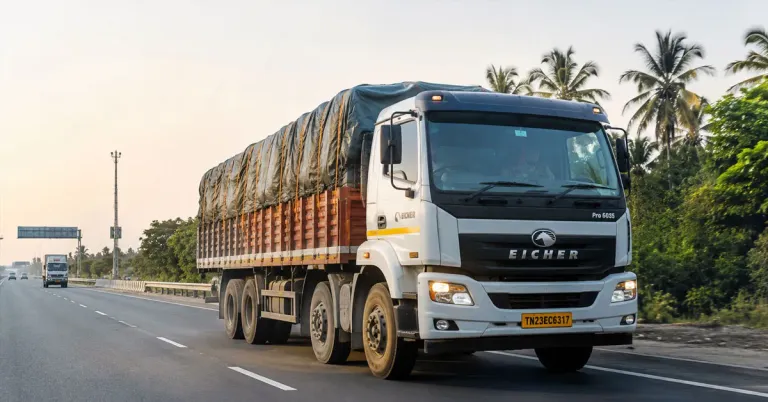
Heavy commercial vehicles may be a small proportion of the vehicles on the road, but they travel long distances and consume large quantities of fuel. The report cites an estimate that diesel trucks make up around 5% of the vehicle fleet while contributing about 34% of transport-sector carbon emissions. The exact share depends on the underlying estimate and should not be read as a current measurement of every city’s roadside pollution.
Replacing diesel in freight transport could therefore have a large impact on emissions. Battery-electric trucks are one route, especially on predictable journeys with suitable charging infrastructure. Hydrogen is being investigated for longer routes and demanding duty cycles where refuelling time and carried weight may be important. Which option works best will depend on costs, energy efficiency and the supporting network.
Official updates on the Green Hydrogen Mission report 12 transport pilot projects covering 70 hydrogen vehicles, including 27 buses and 43 trucks. The plans involve 16 hydrogen refuelling stations across 21 routes. The government has reported releasing Rs 41.58 crore in financial assistance for these projects.
These pilots include hydrogen fuel-cell and hydrogen combustion vehicles, and are separate from a commercial rollout of ARAI’s engine. Trial vehicles can reveal actual fuel consumption, reliability, refuelling times and maintenance costs. Those are precisely the questions operators need answered before replacing diesel trucks that run thousands of kilometres every month.
Most hydrogen currently produced is made using fossil fuels. Hydrogen produced using renewable electricity can reduce lifecycle emissions, but it needs large investments in generation, storage and distribution. Trucks also require reliable filling stations along the highways they use. A vehicle that performs well in a test laboratory will be of little use to a transporter if refuelling is unavailable between major freight centres.