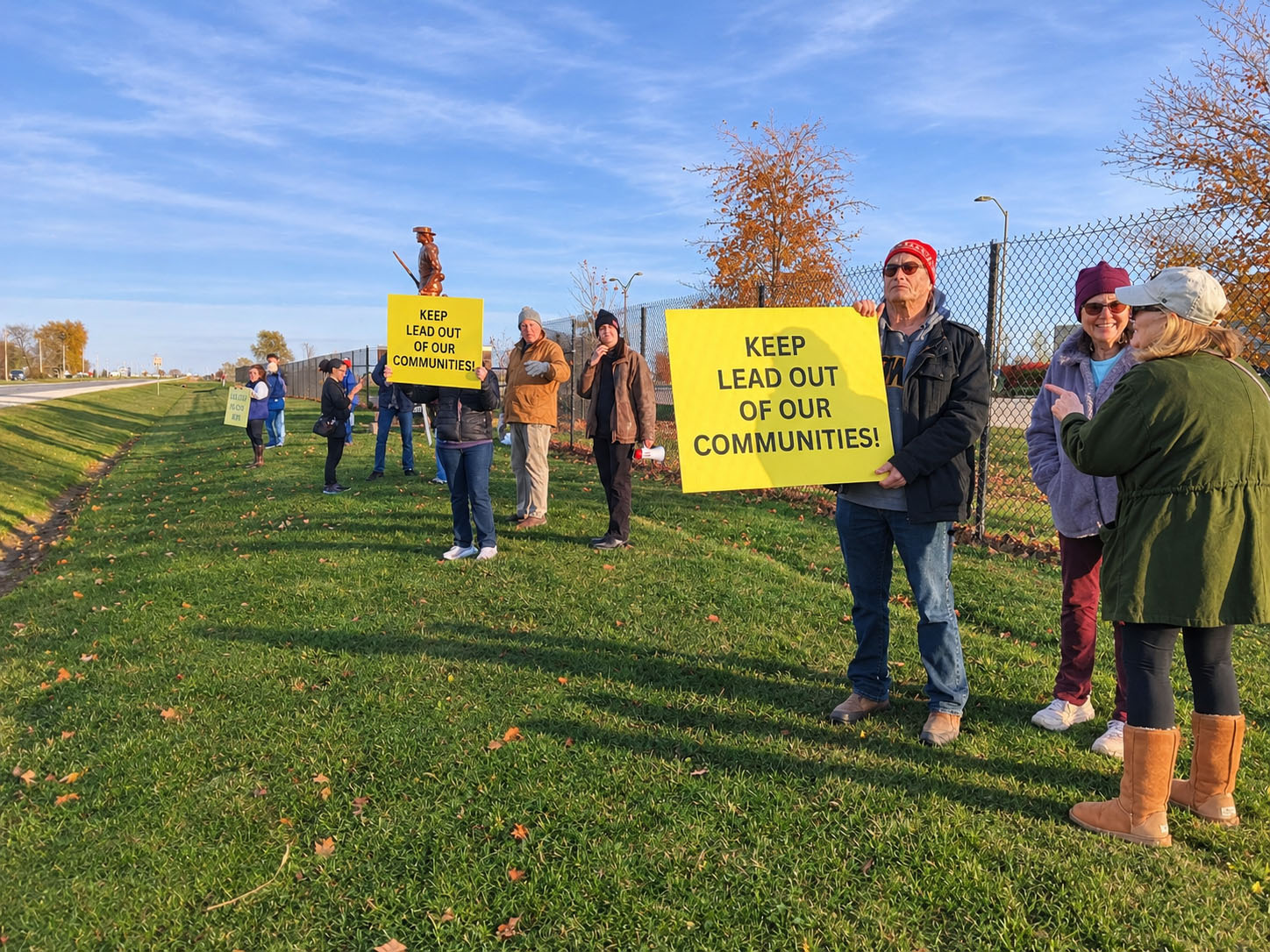
Army Plans Emergency Iowa Chemical Detonation Despite Court Hold/ NEWSLOOKS/ WASHINGTON/ Jehan Mansour/ The U.S. Army plans to invoke emergency authority to detonate several tons of unstable chemicals in Iowa despite a court order suspending the project’s permit. Officials say colder weather increases the danger of an uncontrolled explosion and have scheduled the operation for Wednesday. Environmental groups accuse the Army of bypassing judicial review and failing to adequately address public safety concerns.
Iowa Army Detonation: Quick Look
- The Army plans two blasts at the Iowa Army Ammunition Plant in Middletown.
- An appeals court suspended the EPA permit Thursday.
- Government lawyers argue separate emergency authority allows the operation without a permit.
- The Army says deteriorating lead azide poses an increasing explosion risk as temperatures fall.
- Wednesday’s planned operation follows three scheduling changes.
- Environmental groups dispute whether safer alternatives received sufficient consideration.
- Officials warned that the blasts could release lead-containing particles into surrounding areas.
- Some Middletown residents were advised to leave, while regional communities received sheltering and cleanup guidance.
Iowa Army Detonation: Deep Look
Army Cites Growing Danger From Cold Weather
The U.S. Army plans to use emergency provisions to proceed with the controlled detonation of several tons of unstable bomb-making chemicals in southeastern Iowa, arguing that further delays could increase the risk of an uncontrolled explosion.
The move follows an appeals court order putting the operation’s environmental permit on hold.
“To protect its personnel and the surrounding communities, the Army needs to take swift action,” government lawyers wrote in a late Saturday filing to the 8th U.S. Circuit Court of Appeals. “Protection of human health and the environment demand action now, not delay.”
The Army announced Sunday evening that it intended to conduct the detonations Wednesday “to allow for optimal weather conditions” and completion of mitigation measures.
Officials say temperatures expected to fall below 30 degrees Fahrenheit in the coming days could make the deteriorating chemicals more dangerous.
Court Suspended Permit After Environmental Challenge
The appeals court on Thursday granted environmental groups’ request to suspend a permit authorizing the detonation in Middletown, about 160 miles southeast of Des Moines.
The operation was initially scheduled for Friday. The Army has changed the date three times amid public concern about potential health and environmental consequences.
The Iowa Environmental Council, Sierra Club and Earthjustice have sought review of the emergency permit approved earlier this month by the Environmental Protection Agency.
They criticized the Army’s latest approach as an effort to bypass the court’s intervention.
“The Army seemed more concerned over the weekend with finding a way to sidestep the judicial process than on meeting the public’s demands for greater transparency, notice to affected communities, and far stronger protection of people, property, and the environment from serious harm,” Earthjustice attorney Thien Chau said.
Government Argues Emergency Response Does Not Require Permit
Government lawyers contend that the Army can act without a permit when explosive materials present an immediate threat.
They argued that federal hazardous-waste requirements do not apply to certain emergency responses when an explosive or munitions emergency response specialist determines there is an immediate danger to health, safety or the environment.
That argument forms the basis of the Army’s planned action despite the permit suspension.
Environmental groups continue to challenge the government’s assessment of the available options and its communication with affected communities.
Degraded Lead Azide Discovered in March
Workers at the Iowa Army Ammunition Plant discovered several dozen barrels of deteriorating lead azide in March.
The substance is used in munitions production. Officials said crystallization had made the material unstable, prompting the Army to assemble specialists in munitions chemistry, engineering and environmental safety.
EPA documents show that officials considered alternatives, including using other chemicals to neutralize or decompose the material.
Officials concluded that handling the barrels would increase the risk of an accidental, fatal explosion. Environmental groups dispute whether those alternatives were fully evaluated.
Lead Plume Raises Concerns Beyond Middletown
The Army discussed the operation at an October public meeting in Middletownwhich has nearly 400 residents.
However, an advisory issued a week before Sunday’s announcement was the first notice many other communities received about potential effects. Some were as far as 100 miles away.
Thousands of people in surrounding areas could be affected by material dispersed into the air and deposited on the ground.
“The detonation will result in an air plume with some lead-containing particles which will disperse in the air and deposit on the ground,” the advisory states. “Lead is toxic to humans and animals.”
Officials said vibrations from the two planned blasts would be brief but could break older windows, prompting recommendations that some Middletown residents leave the area.
Regional advisories instructed residents to remain indoors, close windows and doors, bring pets and livestock inside, and clean vehicles, windowsills and outdoor surfaces afterward.
More on US News