
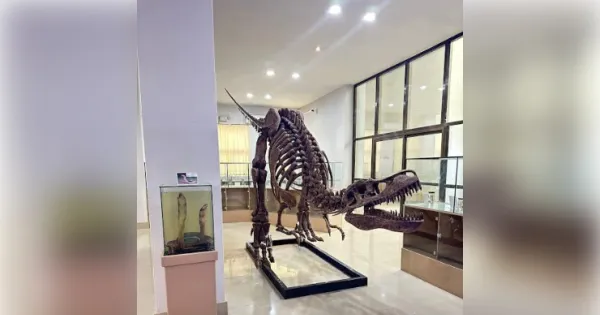
Mizoram Natural History Museum becomes the 21st designated repository of the country, biodiversity conservation will get strengthened.

New Delhi. The Ministry of Environment, Forest and Climate Change has notified the Natural History Museum located at Mizoram University, Aizawl as a Designated Repository under the Biodiversity Act.
The Central Government issued this notification on the basis of the recommendation of the National Biodiversity Authority. With this it became the 21st designated repository of the country.
Designated repositories are institutions where certified biological samples obtained under the Biodiversity Act are conserved scientifically.
These collections are used for identification of new species, scientific research, documentation of biological resources and long-term conservation.
This museum of Mizoram University will preserve voucher specimens of various flora and fauna including pteridophytes, macrofungi, reptiles, amphibians, fishes, moths, beetles and butterflies.
Additionally, there will also be an official repository of type specimens of new species discovered in the area. This will strengthen the identification and scientific authenticity of the species and assist in ecological restoration in the event of future natural disasters, habitat destruction or species decline.
Established in the year 2022, this museum is located in the Indo-Burma Biodiversity Hotspot, which is counted among the richest biodiversity areas in the world.
More than 7,500 flowering plants and more than 2,000 animal species are found in Mizoram and North-East India. The museum has demonstrated its scientific capacity by collecting and preserving more than 500 biological specimens even before notification.
The museum will also play an important role in the conservation of endemic species of the area. The amphibian species Leptobrachella tamdil, recently discovered in the forests of Mizoram, is a prime example of this. The museum employs a cross-section of expert scientists who are conducting research on lesser-studied organisms and plants.
According to the ministry, this recognition will enable conservation of biological specimens in the country closer to their native region, leading to better scientific documentation, reducing transportation challenges and promoting collaboration with Mizoram State Biodiversity Board and other regional research institutions.

Comments are closed.