
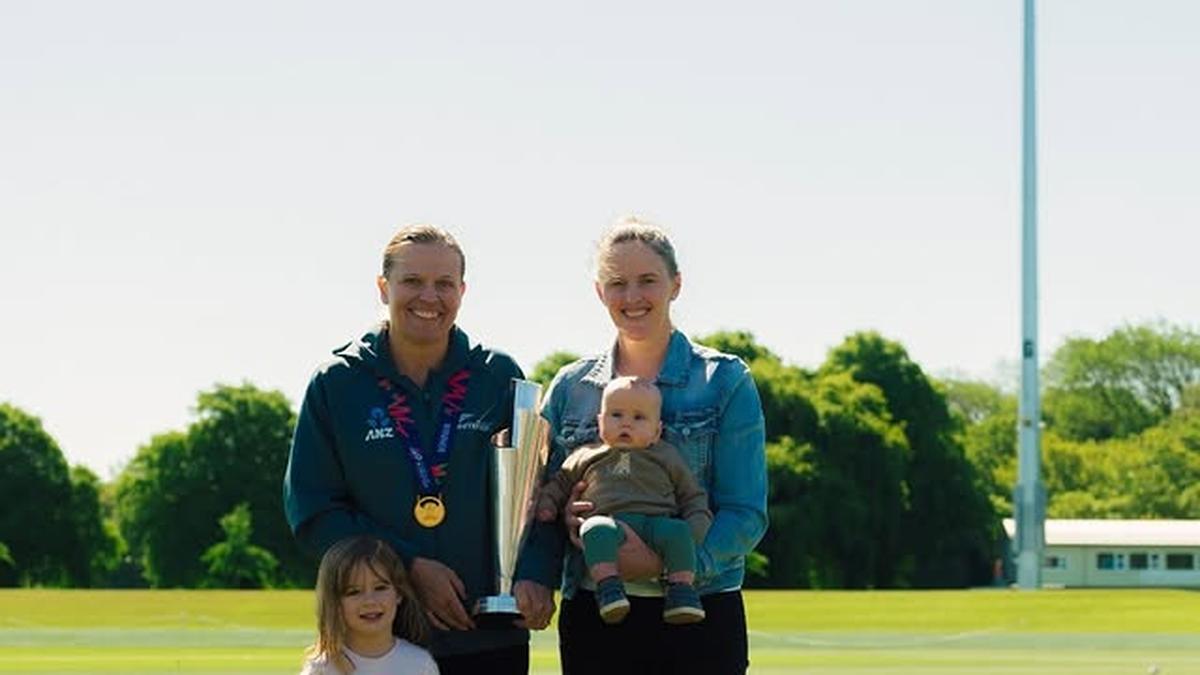

The International Cricket Council (ICC) has launched its Return to Play Post-Pregnancy Guidelines for female cricketers, providing players, Member Boards, medical professionals and coaches with a practical framework to support the return to cricket after pregnancy.
Traditionally, female athletes have often delayed motherhood until after their sporting career. With the increased professionalism of women’s cricket, expanding career opportunities and a shift in sports policies, players are increasingly choosing to start a family and train through pregnancy with the aim to return to perform after giving birth.
To support a safe and sustainable return to cricket, the ICC’s Guidelines outline the 6 Rs framework: Ready, Review, Restore, Recondition, Return and Refine. The approach covers early recovery after birth, medical and wellbeing reviews, gradual return to structured training, cricket-specific conditioning, return to play and ongoing monitoring once a player is back in the cricket environment.
The guidelines recommend boards to appoint a dedicated case manager as a primary point of contact to support players’ return to play after motherhood. The ICC has recommended a care team compromising of an internal cricket team and an external treating team.
The Internal Cricket Team will constitute a Cricket Medical Officer, a physiotherapist, a strength & conditioning coach, dietician, psychologist, a player development coach and the main coach.
The External Treating Team will involve the obstetrician and/or the treating doctor, a Women’s’ Health Physio, the player’s partner, family member or a dedicated support person.
The 6 Rs
READY (0-6 WEEKS):This phase involves healing and recovery post birth:
• Early pelvic floor activation
• Focus on psychological support in the adjustment to life as a mother.
Exercise: Gradually increase exercise tolerance as able post birth, starting with gentle walking and progressing to longer bouts as able under the guidance of the medical team
REVIEW (6-8 WEEKS) External Reviews:
• Obstetrician and/or General practitioner: Review and clearance including wound review.
• Women’s’ Health physio: Pelvic floor assessment.
Internal Reviews:
• Cricket Doctor: Review of bloods including iron.
• Physio: Address relevant musculoskeletal issues.
• S&C: Graduated introduction of strength-based training.
• Psychology: Review of psychological stressors post birth including assessment of possible birth trauma.
• Dietician: Review energy availability (especially in the context of the breastfeeding player) and practicalities around fueling and meal preparation.
• Other: Consideration of social supports including childcare and practical requirements (babysitter accessibility, breast feeding / pumping room).
Exercise Prescription:
• Introduction of non-ballistic aerobic activity as comfortable (swimming once bleeding as stopped / cycling if comfort allows).
• Graded reintroduction of strength based training.
Equipment:
• Review sports bra fit..
RESTORE (8-16 WEEKS)
Preparation for return to a structured training environment:
• Graduated return to run program: Collaboration with women’s’ health physio and doctor / physio / S&C.
• Ensure social supports in play to allow return to training program; consider training flexibility, childminding / carers responsibility, breast feeding / pumping room.
Recognise and address barriers to return including:
• Fatigue and poor recovery secondary to babies sleep habits.
• Time availability due to childcare limitations.
• Player mental health.
• Physical limitations following birth.
RECONDITION (12-16 WEEKS+)
• Reconditioning and graded exposure towards a sports specific training load to optimize performance and ensure a sustained return to play.
• Be mindful of period off training / performance and ensure other MSK risks factors (overuse injury risk) are accounted for in programming.
REFINE
• Continue to review social sports and practical training / travel requirements.
• Monitor symptoms including musculoskeletal and pelvic floor issues.
• Ensure whole system approach eg; optimise sleep and recovery / monitor for low energy availability
RETURN
• Player returns to play.
The drafting of the Guidelines was led by ICC Medical Advisory Committee member, and Australia Team Doctor, Dr. Philippa Inge, who helped outline practical support considerations, including flexible training environments, continued access to facilities and services, childcare advice, suitable spaces for feeding or caring for babies at playing venues, and travel support, where possible.
“The ICC’s Return to Play Post-Pregnancy Guidelines are designed to show players that having a baby doesn’t need to be the end of their career, and what we’re aiming to do with this policy is allow Member nations to facilitate the return to cricket for their players,” Dr. Inge said.
“We know that many Members haven’t necessarily had these in the past, and the aim has been to make them adaptable for the unique environments in which our Members need to use them. The guidelines serve as a template for Members, and strong support for an athlete returning to cricket post-pregnancy needs to be individualised to the specific needs of them and their family,” Dr. Inge added.
Frameworks for regular meetings between support teams and the player in question have also been laid out by the ICC guidelines.
It is recommended that player management meetings, led by the case manager are, at a minimum are held at the following time points:
• On announcement of pregnancy: Announcement of pregnancy should be at the discretion of the player.
• Prior to birth (third trimester).
• 6-8 weeks post birth following ‘review’ process.
• Every 4 weeks once the player decides to reintegrate into the Cricket Environment.
The guidelines also provide some support considerations for players making their way back to the sport from pregnancy including ensuring flexible work environments for players to balance cricket and parenthood, continued access to training facilities during the pregnancy and post-partum period (this will also include considerations about access to caregivers/babysitters, breastfeeding spaces, diaper changing stations etc), financial and practical assistance considerations for childcare, alternative employment for players who are unable to compete (like coaching, analysis or administrative roles), and travel support for caregivers when the player is touring.
Crucially, the guidelines also call for extending contractual arrangements during pregnancy and the post-partum period to support return to play.
Published on Jun 22, 2026

Comments are closed.