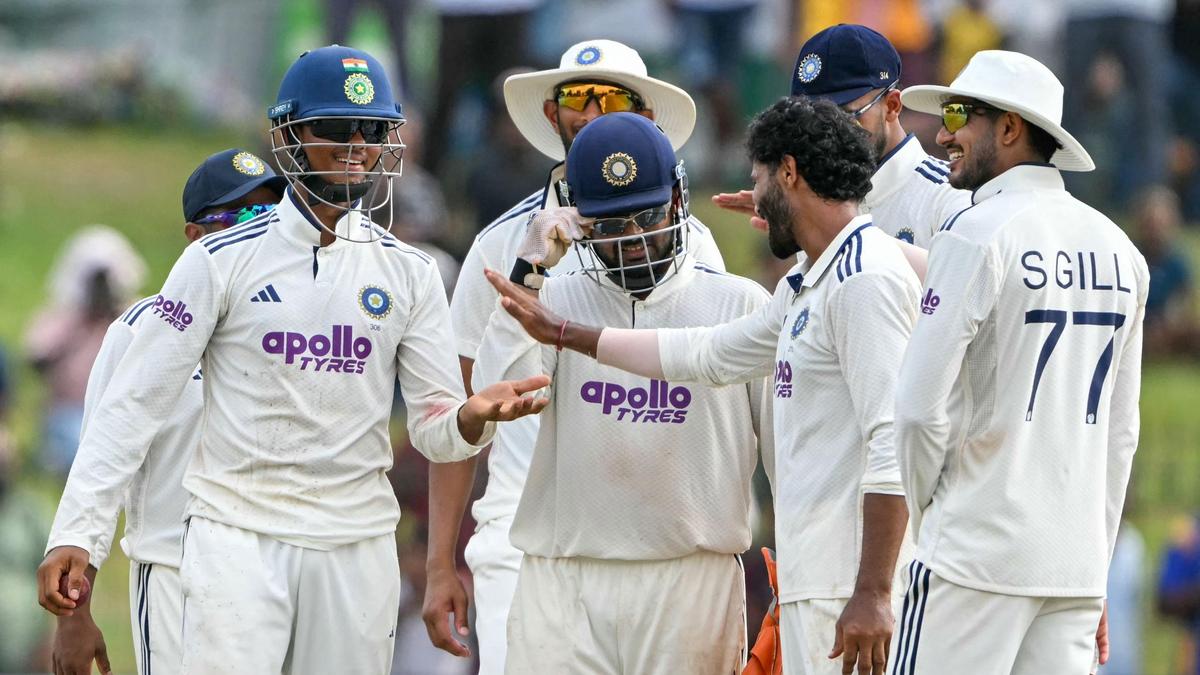
On nine out of the 10 days it took the field in Sri Lanka during the two-match Test series, India played with tenacity fitting a side wanting to make amends. On the tenth day, it threw it all away.
With his unbeaten 133, which lasted 433 minutes, Sonal Dinusha stalled India’s hunt for the final four wickets on the last day of the series. The small window to pounce on a 2-0 series sweep was hence closed on India. It did everything it could and nothing it wanted to.
The cost of this final day’s disintegration was the fourth place in the World Test Championship (WTC) standings. India went to Sri Lanka in fifth place, it will depart in fifth place. And the embers of this opportunity burnt, India will feel in November when it begins the home stretch of its WTC calendar, starting with its visit to New Zealand for two Tests.
It could still be fourth by the first Test in Wellington, which starts on November 19. Bangladesh plays South Africa in Johannesburg and a win for the defending WTC champion will lift India to fourth. But with just seven Tests left, five of them against Australia, India has to deal in aggregates. Only wins will suffice, and securing two of those in New Zealand is a tall order.
Rishabh Pant, Ravindra Jadeja, and Jasprit Bumrah, should they be fit and make the cut, will be the only three players with previous experience of New Zealand.
India’s batting took huge strides forward in Sri Lanka, but this was a rather modest assessment compared to the stiff challenge they will face in New Zealand.
Since 2000, India has a batting average of 28 in New Zealand. Australia, England, South Africa, and Pakistan have all fared better. Out of the top seven batters that played in Sri Lanka, three – KL Rahul, Dhruv Jurel and Jadeja – have averages lower than 35 against seam in overseas Tests. Jadeja and Pant, the only two who have played Tests in New Zealand before, average 35 and 17, respectively, against quicks.
However, despite their limited exposure, India is settled in its batting choices, unlike its bowling unit. Shubman Gill is yet to settle on a final combination with his bowlers.
Pacers will dominate the roster in New Zealand. Bumrah inarguably will lead the pace battery, if fit, with Mohammed Siraj also a certain selection.
The other pace selections, though, will depend on how many all-rounders are given a chance. Given head coach Gautam Gambhir’s preference for players offering more utility, a fit Harshit Rana or Nitish Kumar Reddy could occupy one pace slot. That in turn leaves room for just one more quick: for which Prasidh Krishna, Gurnoor Brar, and Akash Deep will claim a stake.
Going with four seamers squeezes out the space for a full-time spinner, with Jadeja serving as the only choice. And the seam-friendly conditions might even justify the call. As a backup, a fit Washington Sundar could help in balancing the combinations out, but only at the expense of a batter, which most likely will be Jurel.
There’s also a silent transition underway in India’s spin-bowling ranks. Against Sri Lanka, Kuldeep Yadav, for long India’s novelty factor, played second fiddle to Manav Suthar, who’s far less flamboyant than his unorthodox counterpart yet seems better at getting the job done. Kuldeep bowled just 25 overs in the only Test he played in Galle. Suthar in comparison shouldered much more load, with nearly 45 overs. Through the series, he bowled 108.2 overs.
Suthar ended with 16 wickets in two games, and even if New Zealand conditions warrant others to play over him, he has shown enough potential to get a sustained shot against Australia at home. That might leave Kuldeep to fight for the third spin-bowling option with Washington.

The five matches should still provide enough chances for Kuldeep to reassert himself and win the trust again.
Finding its mojo is something India will strive for, too. Its fate in the WTC will hinge on the New Zealand results, where defeats will end its hopes of qualifying for the final. But even if that turns out to be the case, India still has its home record to fight for, which is pretty much in fumes after two series losses in successive years.
The Sri Lanka series, despite the win, served a bittersweet reminder that India is still off its best. The WTC might be a long shot from this point on, but establishing standards must not stop. India should not run out of will, even if it runs out of time.