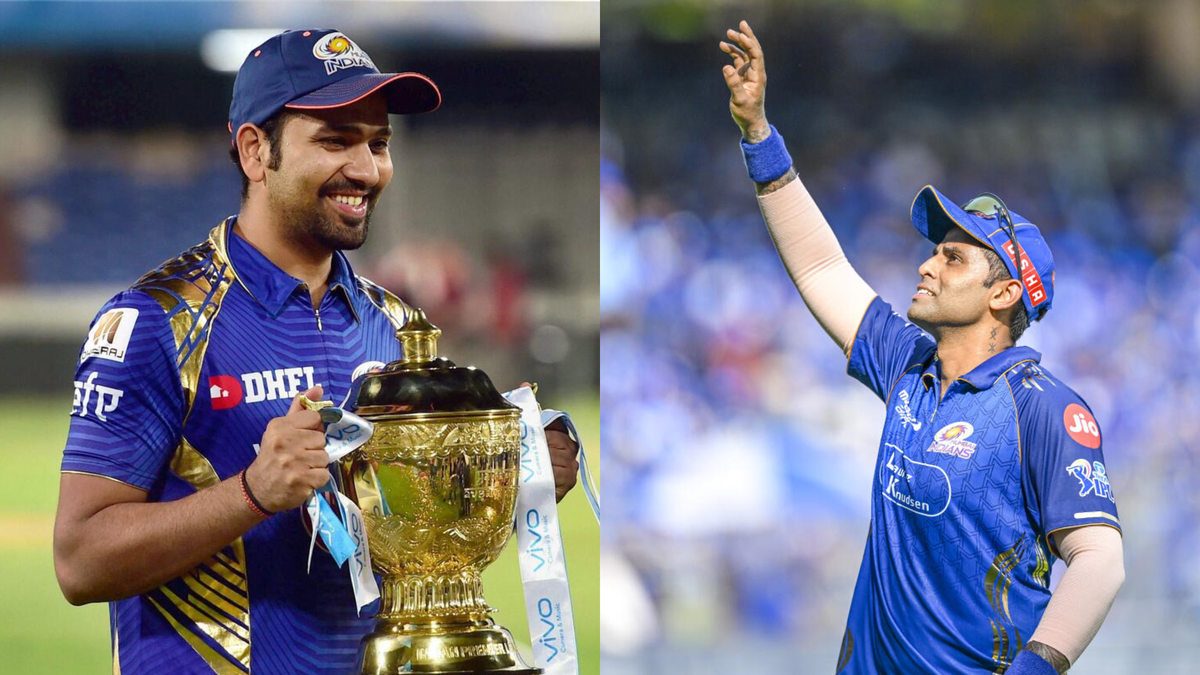
Mumbai Indians has gone back to Rohit Sharma. Having traded Hardik Pandya to Punjab Kings, the franchise has restored the captain who won it five IPL titles. There is something reassuring about this arrangement.
It is also a decision that comes with a rather large historical record. Five championships are not easily dismissed. After three seasons under Hardik, Mumbai might reasonably have decided that it had had enough of uncertainty and would prefer to return to a man who knows how to win the competition. There are worse ways to spend an IPL season.
But a franchise cannot keep treating its best years as a permanent reference point. Eventually, it has to work out what comes after them.
Read | Rohit Sharma announced Mumbai Indians captain
The next mega auction, in 2028, offers Mumbai an opportunity to reshape its squad and establish a new leadership group. The 2027 campaign could have been used to begin that process.
Suryakumar Yadav would have made for a rather interesting alternative. He might even have been the more sensible one.
Suryakumar is no longer part of India’s T20I plans, having lost his place after captaining the country to the World Cup title earlier this year. Sport has a habit of making yesterday’s triumphs look surprisingly distant. But the national selectors’ assessment of him need not become Mumbai’s assessment too.
He remains an accomplished T20 batter. His 214 runs in six matches for Mumbai in the Syed Mushtaq Ali Trophy, scored at a strike rate of 230, suggest that his appetite for the format has not diminished. He has also captained India and knows the Mumbai dressing room. An IPL season brings its own peculiar demands, but he would hardly have been learning the job from scratch.
More importantly, Suryakumar could have solved a problem that Mumbai will eventually have to confront anyway. Rohit could have remained an influential senior figure, available to offer advice without having to manage every bowling change and field placement. Suryakumar could have taken charge, while Tilak Varma was given time to grow into a leadership role.
There is another reason why Rohit’s appointment deserves a closer look, and this one has less to do with leadership philosophy than with the rather practical business of putting together an XI.
Mumbai has often used Rohit as an Impact Player in recent seasons, particularly in 2025, concentrating his contribution on the batting innings. His 2026 campaign was interrupted by a hamstring injury, and he was again used in that capacity on occasions after returning.
Captaincy makes this arrangement more complicated. A captain is expected to be involved in the fielding innings, making bowling changes, setting fields and responding to the game’s tactical developments. Rohit cannot be treated as a specialist batting option while also being asked to lead the side from the dugout.
This is not to suggest that he is unfit for the responsibility. He has worked hard on his fitness, and with only ODIs remaining on his international calendar, he may have more time to manage the demands. The question is what Mumbai loses in return.
The Impact Player rule has given franchises another way to manipulate their combinations. Using Rohit primarily as a batter can allow Mumbai to bring in an additional bowling option. If he is captain, that flexibility becomes harder to exploit. The franchise will have to consider how his presence affects its starting XI, its substitutions and the balance between batting depth and bowling resources.
Jasprit Bumrah might have been another candidate. He has the tactical understanding and standing within the group to lead the side. The difficulty is that he already has a demanding job. Mumbai needs him bowling, preferably often and well. Adding captaincy to his workload may not be the most imaginative use of one of the world’s finest fast bowlers.
Tilak, meanwhile, has the temperament and cricketing intelligence to develop into a leader, but there is no particular virtue in rushing him. Making him vice-captain and allowing him to learn alongside an experienced leader would be a sensible start.
Rohit has already given Mumbai its five titles. Nobody needs another reminder of his value to the franchise. The challenge now is to build a team that can succeed beyond his captaincy, while making the best use of what he can still offer.
Published on Nov 27, 2026