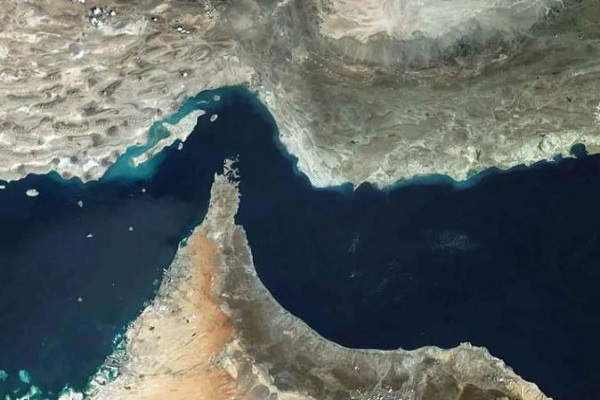
Dubai, 28 November 2026: After the attacks on Iran by America and Israel, attacks on the important sea route 'Strait of Hormuz' have increased, due to which the supply of oil and gas has been greatly affected. Amidst the increasing tension in the Gulf region and concerns about maritime security, Gulf countries have intensified work on the 1,768 km long 'Gulf Railway' project. This project, started with the aim of reducing dependence on maritime trade routes, has been targeted to be completed by the year 2030.
Through this huge rail network, the six member countries of the Gulf Cooperation Council – Kuwait, Saudi Arabia, Bahrain, Qatar, United Arab Emirates and Oman will be interconnected. Starting from Kuwait, this railway line will reach Qatar, United Arab Emirates and Oman via Saudi Arabia, while Bahrain will also be connected by rail with Saudi Arabia. Major cities, industrial areas, ports and logistics centers of these countries will be directly connected through this network.
Under the project, the maximum speed of passenger trains will be kept at 200 kilometers per hour and the speed of goods trains will be kept at 80 to 120 kilometers per hour. According to estimates, after its launch in December 2030, this network will be able to handle approximately 60 lakh passengers and 20 crore tonnes of goods annually. By the year 2045, this capacity is expected to increase to 80 lakh passengers and 271 million tonnes of goods transported annually, which will give a big boost to trade and tourism.
-
This project is important from strategic point of view
From a strategic point of view, this railway project is very important for the Gulf countries, because in case of war or maritime blockade, they do not want to depend only on sea routes for trade. Following the attack on Iran on February 28, sea services were lost due to Tehran closing the Strait of Hormuz, due to which the need for alternative routes has become more acute. This project will not be a complete alternative to Hormuz, but will provide a strong alternative for the safe movement of goods within the region.
The infrastructure of this project, which is being built under the supervision of 'Gulf Railway Authority', is estimated to cost around 15.4 to 16 billion dollars and so far 55.92 percent of its work has been completed. In this total route of 1,768 km, the maximum portion of 672 km will be in Saudi Arabia, followed by 461 km in UAE, 330 km in Oman, 141 km in Qatar, 111 km in Kuwait and 53 km in Bahrain.