OAG identified 17,727 potential connections across 198 destinations, giving Incheon a connectivity index of 89.5 just after Malaysia’s Kuala Lumpur International Airport which holds the top spot with 96.8.
Low-cost carrier Jeju Airlines operates 38% of flights at Incheon airport.
The OAG ranking measures the breadth of low-cost connections available. For travelers, a strong low-cost hub can mean more budget airlines, offering more routes and itinerary options to choose from.
|
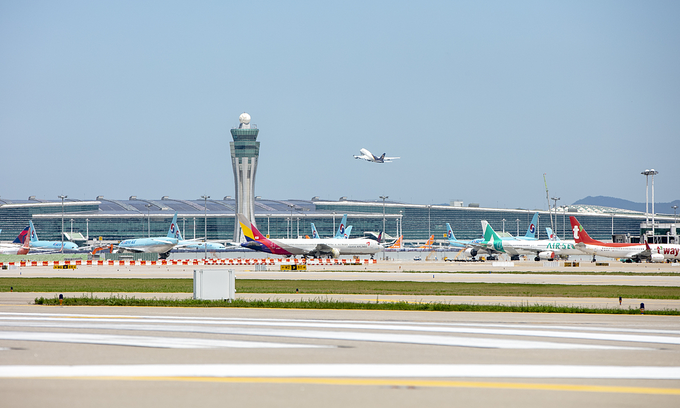
Aircraft are seen at Incheon International Airport in South Korea. Photo courtesy of the airport |
The ranking also highlights the strength of the low-cost airline model in Asia.
Sixteen of the 25 airports, or 64%, are in Asia-Pacific. Eight are in Europe, the Middle East and Africa, while New York’s JFK is the only North American airport on the list.
Southeast Asia stands out, with low-cost carriers accounting for 51% of all seats in the region, well above the global average of 34%.
Incheon, ranked Asia’s second best airport after Singapore Changi in the 2026 Skytrax World Airport Awards, handled 38.39 million international passengers in the first half of this year, a 6.3% increase from the same period last year.
Seoul Incheon International Airport is served by at least five major South Korean low-cost carriers such as Jeju Air, Jin Air and Air Seoul as well as several international budget airlines.