
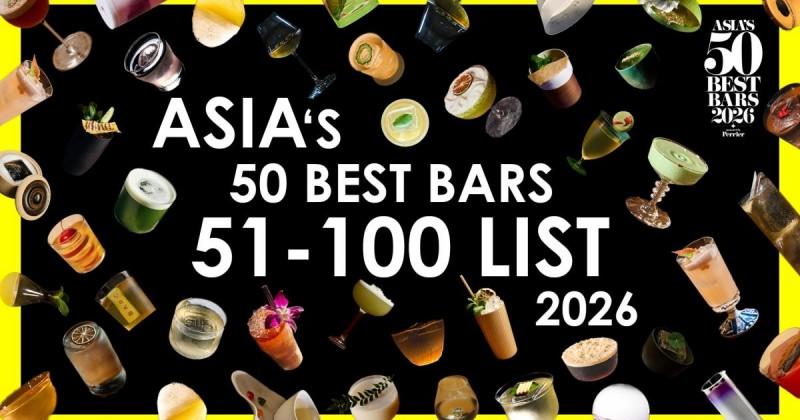

Every year, this time, the industry’s attention snaps to a single number: who cracked the top ten, who claims No. 1, and who gets to take the stage and hold up a trophy for the cameras. But if the top 50 is a photograph of where Asia’s bar scene stands, the 51–100 is closer to a weather map—it shows you where the pressure is building.
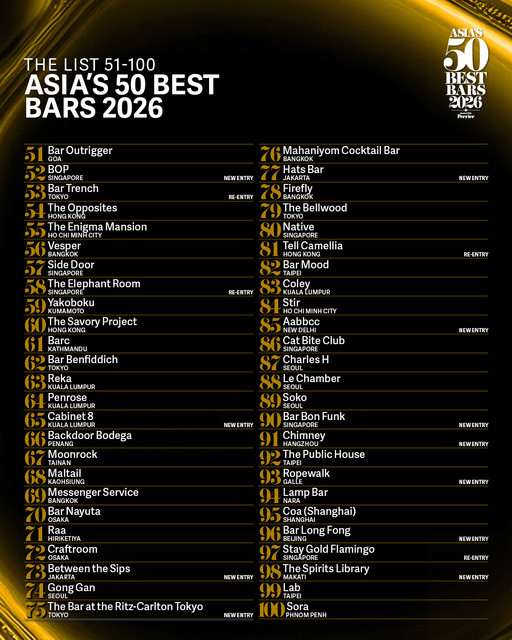
This year’s edition is instructive precisely because of what it doesn’t celebrate. There’s no single runaway winner here, no one city sweeping the board. Instead there’s a pattern that anyone who has spent real time behind—or in front of—a bar in Asia over the last two years will recognise immediately: the established capitals are consolidating, the second-tier cities are surging, and the geography of what counts as “serious cocktail culture” is steadily widening. Eleven new entries across twenty-five cities isn’t a headline number, but it’s the right number—it suggests growth without dilution.
Singapore’s seven entries are unsurprising to anyone who has watched the city cement its position as the region’s most bar-dense capital, though the texture of that representation is worth pausing on. BOP, the Jigger & Pony Group’s Korean cocktail-dining concept debuting at No. 52, isn’t just a strong opening—it’s a signal that Singapore’s most established operators have stopped treating the city as a finished project and started treating it as a laboratory again. That’s healthy. A scene that only defends its position stagnates; one where the incumbents keep reinventing themselves stays interesting.
Malaysian cocktail culture has spent the better part of a decade being described as “emerging”, but Cabinet 8’s debut as a genuinely hidden speakeasy behind a Jalan Sultan café, sitting alongside Coley’s nine-place climb to No. 83, suggests the city has stopped emerging and started consolidating a real bench of talent. That’s a different, more durable thing than a single good opening.
And then there’s Ho Chi Minh City’s The Enigma Mansion, whose 38-place jump is the kind of number that makes for a good press release line but rewards a slightly more careful read. Rankings move for real reasons—sharper programming, stronger service, a shift in identity—but they also move because voter attention is finite and narrative-driven. A bar with a good story this year gets remembered by an Academy of 300-plus voters in a way a quietly excellent one without a hook does not. Vietnam’s scene is genuinely growing, and Enigma Mansion’s rise reflects some of that. But a jump this large says as much about how these lists reward momentum as it does about what actually changed behind the bar in twelve months.
The section of this list I’d urge readers not to skim past is the one covering South Asia—because this, I’d argue, is the most consequential.
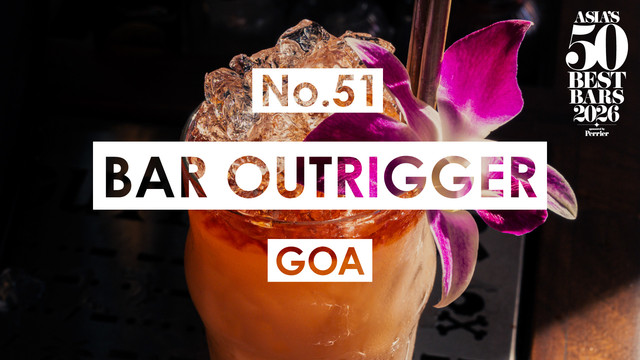
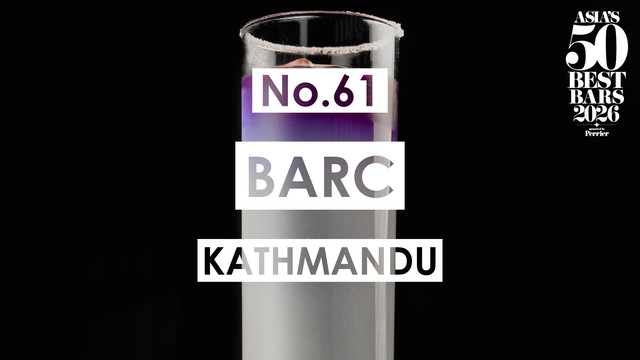
Five entries carry the region this year. Bar Outrigger in Goa, which opens the extended list at No. 51, one place outside the top 50, is nonetheless a marker that India’s westernmost bar scene has a genuine claim to regional relevance. Aabbcc in New Delhi lands at No. 85, the capital’s lone representative on a list of a hundred. Kathmandu’s Barc holds firm at No. 61. And Sri Lanka places two bars with genuinely different identities: Raa, established in the surf town of Hiriketiya, and newcomer Ropewalk, debuting at No. 93 in colonial Galle.
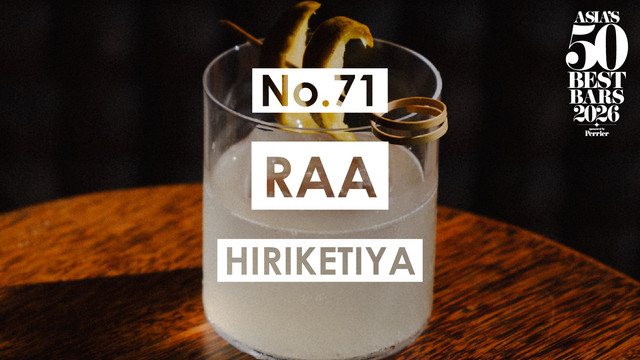
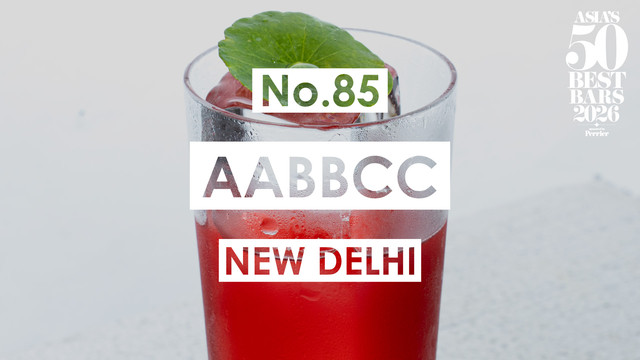
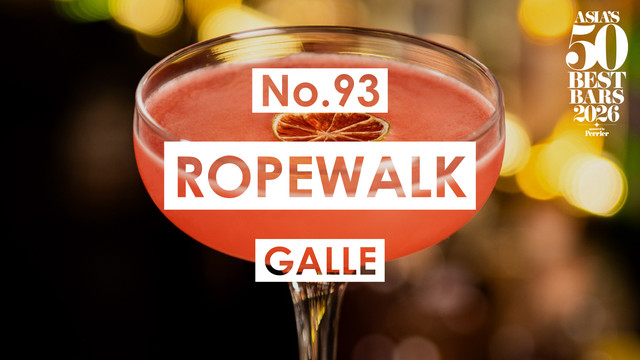
That Sri Lanka, an island of 22 million people still rebuilding its hospitality economy after several extraordinarily difficult years, manages two distinct entries on a continental list, with top bars like Smoke and Bitters who in all probablity, be on the top 30, while India, a market of 1.4 billion people with a bartending community that has become one of the more technically ambitious in the region, and is showing signs of a big percentage of bars solidifying their position on the soon-to-be-annoounced top 50 list.
Nepal’s and Sri Lanka’s entries tell a related but distinct story: that geography and identity, not just technique, are increasingly what the Academy rewards. A hanok in Seoul, a tea ceremony reimagined in a Hong Kong basement, a speakeasy hidden behind a Malaysian café—the pattern across this entire list is bars that root themselves somewhere specific rather than performing a generic version of “world-class.” Bar Outrigger and Ropewalk both sit in destinations defined as much by landscape and tourism as by urban bar culture, and their inclusion suggests the Academy is increasingly willing to reward a bar for capturing a place rather than simply executing craft. That’s a meaningful shift and one that South Asia’s next wave of openings should take note of, because it plays directly to the region’s strengths.
What comes next
The top of the list bars, which will get its moment on theMacau stage at the stunning Wynn Palace on the 28th, but the extended list is where you see an industry’s future tense.
Watch that section of the list next year. I suspect it grows.

Comments are closed.