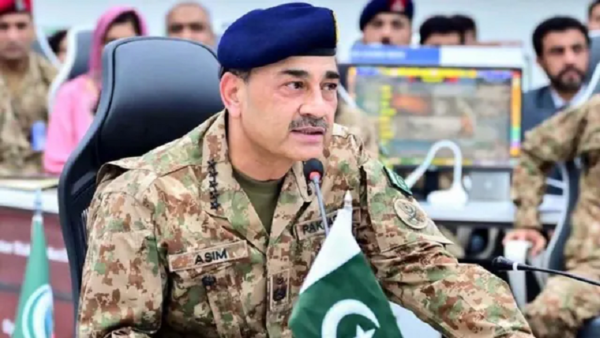
New Delhi .A major change has been made in the structure of military command in Pakistan. The Parliament of the country has created the post of Chief of Defense Forces i.e. CDF under the new law of 2026. Field Marshal Asim Munir has been appointed to this post. With this he has become the first Chief of Defense Forces of Pakistan. Under the new arrangement, he will have legal operational command of the Army, Navy and Air Force.
Asim Munir will also hold the additional responsibility of CDF along with his existing post of Army Chief. The new law is being considered one of the most important changes in Pakistan's military command structure in a long time. This is said to be the biggest institutional change in the structure of military command after 1976.
Earlier, the post of Joint Chiefs of Staff Committee existed in Pakistan for coordination between the military services. However, the post did not have direct operational authority over the Navy and Air Force. Its major role was limited to maintaining coordination between the three armies.
The situation has changed after the creation of the new CDF post. The CDF has now been given legal operational authority over all three forces. This means that the role of a central military leadership in matters related to military operations and command will be stronger than before. The CDF will report directly to the government and will also be responsible for implementing decisions under the prescribed powers.
Under the new provisions, the command of nuclear forces has also been placed under the jurisdiction of the army. The debate regarding this change is likely to intensify at the military and political level in Pakistan. This has brought about a change in the traditional command system of the three armies and the balance of powers among them.
Supporters of this system say that through unified military command, better coordination can be established in national security and combat preparedness. He argues that centralized command can prove useful for faster decision making in modern operations like cyber and drones and for better coordination between different military units in crisis situations.
According to supporters, the new arrangement is a step toward making command and control more effective, in line with modern military systems. He believes that this can increase clarity in the decision process from the Prime Minister and the government to the military units.
However, critics of this change have raised concerns about civilian control and constitutional balance. He argues that increased powers given to the CDF could further strengthen the military's influence in Pakistan's politics and governance. Some critics are also raising questions on how the balance of powers of the chiefs of different military services will be maintained in the new system.
This entire change may also impact Pakistan's future defense policy and military decision process. By bringing the command of the three services under one top military officer through the post of CDF, Pakistan's military structure has become more centralized than before. In the coming times, special attention will be kept on the use of rights under this new system and its coordination with the government.