
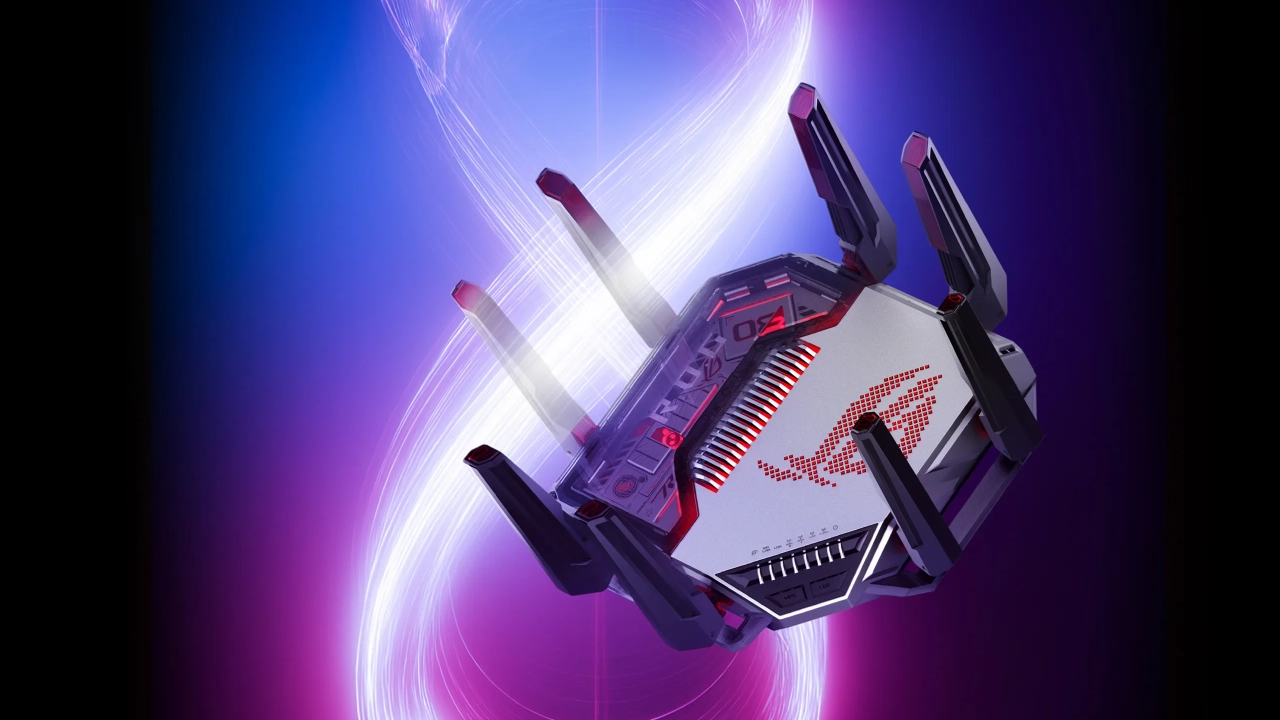

Gaming routers have become the Formula 1 cars of home networking. Every year, they get faster, more aggressive-looking, and packed with buzzwords promising lower lag and smoother gameplay. But ASUS may have just pushed the industry into an entirely new era with the launch of the ROG Rapture GT-BN98 Pro, which the company calls the world’s first WiFi 8 gaming router.
The announcement matters because home internet demand is exploding faster than most networks can comfortably handle. According to Statista, the global number of connected IoT devices is expected to surpass 39 billion by 2030, nearly doubling from current levels.
ROG Rapture GT-BN98 Pro Debuts as World’s First WiFi 8 Gaming Router
The GT-BN98 Pro is built around the upcoming IEEE 802.11bn standard, better known as WiFi 8. While the standard is still not fully finalized, ASUS says the router is designed to improve network coordination, reduce latency, and stabilize connections in crowded environments where dozens of devices compete for bandwidth at the same time.
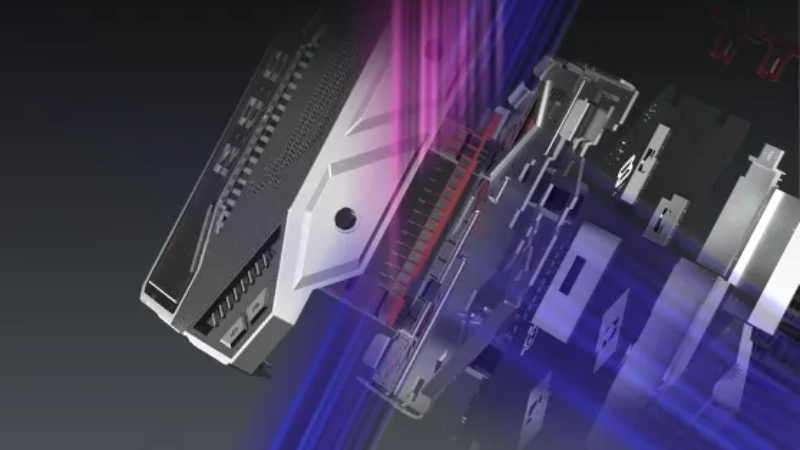
It also includes dual 10G ports, four 2.5G Ethernet ports, link aggregation support up to 20Gbps, dedicated gaming prioritization, VLAN controls, and advanced cooling systems featuring a thicker aluminum top plate and improved heat dissipation. ASUS says thermal performance is up to 35% better compared to its earlier GT-AXE16000 router.
ASUS unveils the ROG Rapture GT-BN98 Pro, the world’s first WiFi 8 gaming router featuring AI-powered game acceleration, dual 10G ports, lower latency, enhanced IoT coverage, and next-generation networking built for gamers and smart homes
ASUS claims WiFi 8 can deliver up to 2x faster median throughput, 2x wider IoT coverage, and lower latency through multi-access point coordination. In simple terms, the router is trying to solve one of the biggest modern internet frustrations: your connection looks strong on paper but struggles in real-world conditions when everyone at home is online.
ASUS itself notes that actual performance will vary depending on client hardware, environmental conditions, and final implementation standards.
Salient features of the Router
ASUS is heavily leaning into AI-assisted networking. The company says its “AI Game Boost” system uses three layers of optimization to reduce gaming latency by up to 34%. The router automatically detects gaming devices, prioritizes traffic dynamically, and routes game packets through optimized paths using ASUS GTNet services.
IDC estimates that the average smart home in developed urban regions now contains more than 20 connected devices, while premium gaming households can easily exceed 40 simultaneously active endpoints, including consoles, gaming PCs, VR headsets, smartphones, smart TVs, cameras, and voice assistants.
A Broader Industry Race Happening Behind the Scenes
The global WiFi market is projected to cross $45 billion by the end of the decade,e according to Fortune Business Insights, while demand for gaming-focused networking hardware continues growing alongside esports and cloud gaming adoption. Analysts at Deloitte previously estimated that global cloud gaming users could surpass 200 million within the next few years, increasing pressure on ultra-low-latency infrastructure.
At the same time, competition is getting intense. Companies like TP-Link, Netgear, MSI, and even telecom operators are aggressively pushing WiFi 7 ecosystems. ASUS appears to be trying to secure an early lead in the next transition before rivals fully enter the WiFi 8 conversation.
Final Verdict
For most people, probably not immediately. A standard WiFi 6 or WiFi 7 router is still more than enough for everyday browsing, streaming, and casual gaming. But if your home already feels like a mini data center packed with gaming rigs, smart home gadgets, 8K TVs, and constant cloud activity, routers like the GT-BN98 Pro show where home networking is heading next.
Still, there is an important catch. Because the WiFi 8 standards are not finalised yet, many promised benefits depend on future compatible devices. ASUS itself notes that actual performance will vary depending on client hardware, environmental conditions, and final implementation standards

Comments are closed.