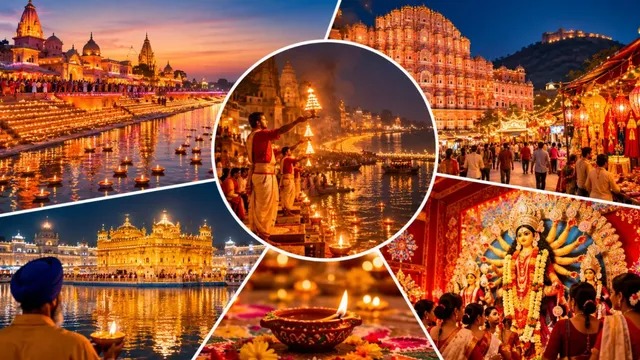
Diwali, the great festival of lights and joy, is celebrated with great enthusiasm all over India, but do you know that there are some parts of our country where the ways of celebrating this festival are completely different from the common places and are surprising? While on one hand the whole country enjoys this festival by lighting lamps and setting off fireworks in homes, on the other hand in some special cities and towns such age-old traditions are followed which leave everyone stunned. Somewhere Diwali is celebrated on this day as a celebration of the release of prisoners from historical jails, while somewhere at midnight, a fierce and wonderful worship of Maa Kali is done. This cultural diversity and unique folk traditions of India make this festival more mysterious and attractive, about which everyone has a desire to know. Tantric and grand worship of Maa Kali on Diwali in West Bengal On the holy occasion of Diwali, while in North India and other parts of the country, mainly Maa Lakshmi and Ganesh ji are worshiped to celebrate the return of Lord Shri Ram to Ayodhya, in some parts of West Bengal, Assam and Odisha, the main attraction of this night is the worship of Maa Kali which is known as 'Kali Puja' or 'Shyama Puja'. This night is also called the night of Mahanisha, where after midnight, Tantric rituals, special mantras are chanted and the idol of Maa Kali is installed in grand pandals and worshiped. The kind of grand decorations and huge pandals seen on the streets in Kolkata and its surrounding areas remind us of Durga Puja. This tradition of Bengal symbolizes that the victory of good over evil can take many forms and the worship of Shakti is an essential and powerful part of this festival. Release of prisoners and unique celebrations in some areas of Madhya Pradesh and North India: If we turn the pages of Indian history and local folk culture, we find many such incidents where Diwali has been linked to the release of jails and prisoners. According to the historical traditions associated with some old princely states of Madhya Pradesh and North India, on the day of Diwali, special pardon or release was given to those prisoners who had given the message of reform in the society through their good conduct. On such occasions there was a festive atmosphere outside the prisons and the prisoners and their families celebrated the day as the beginning of a new life. Although these practices have changed over time into modern administrative rules, the stories of such unique Diwali are still told with great fondness in local folklore and memories, which reflect human sensitivities and the feeling of forgiveness. Unique tradition of worshiping Govardhan and cattle in rural areas of Chhattisgarh and South India. In Chhattisgarh, Jharkhand and many rural areas of South India, the festival of Diwali is not limited only to cleaning houses and lamps, but there is a wonderful tradition of expressing gratitude towards nature and livestock. The day after Diwali or in the same evening, the cattle are decorated here, their horns are painted and they are fed special dishes. It is known as 'Goverdhan Puja' or by different names in the local language, where the rural society believes that agriculture and livestock are the main basis of their livelihood. During this time, traditional folk dances, bull races and mass feasts are organized in rural areas, which present a beautiful picture of a typical Indian culture, completely different from the glamor of modern metropolises. Importance and cultural message of these ancient and unique traditions in the present times As the scope of modernity and globalization is increasing, these traditional and regional variations celebrated in different corners of the country have become the biggest means of preserving our cultural heritage. When today's young generation learns about these unique customs, they feel connected to their soil and history. Diwali is not just a one-day festival, rather it is the thread of unity in diversity that binds the different states of the country into a single cultural thread. Be it the worship of Maa Kali in Bengal, the worship of animals in rural India or the folklore of historical releases, all these traditions together make this festival of lights more comprehensive, meaningful and everlasting.