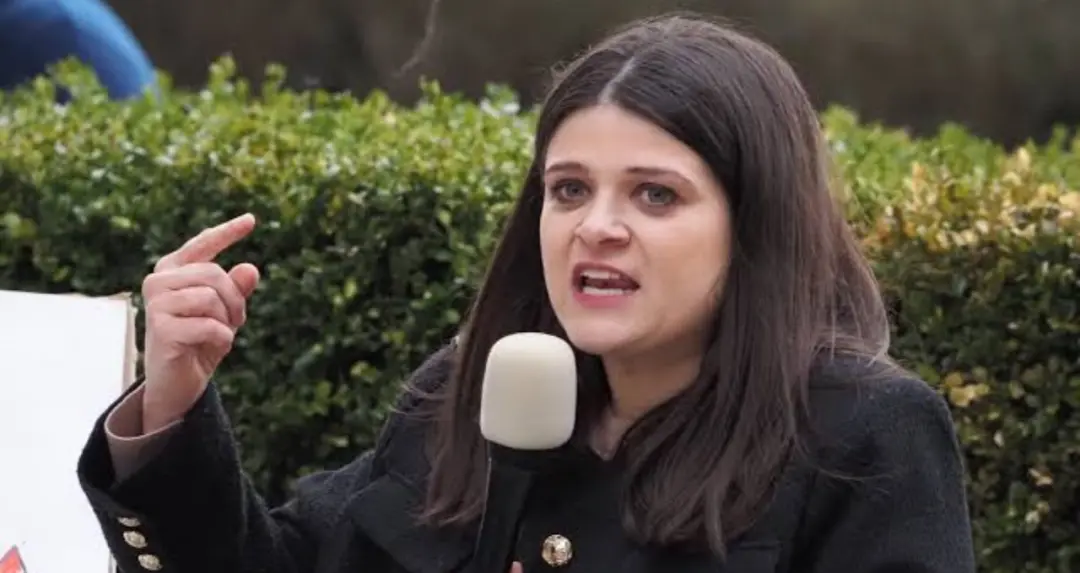
A case of people being paid in India to spread political support videos on social media during the US elections has come to light. According to the report, Ayush Jain of Mumbai got around $15 for every post.
Washington: During elections in America, a case of spreading political videos on social media to influence the opinion of voters has come to light. According to the report, several account operators in India were paid to spread the video made in support of Haley Stevens, the Democratic Party’s Senate candidate in Michigan, on social media. Ayush Jain, who lives in Mumbai, said that he got about 15 dollars for every post. These videos were presented as if ordinary American citizens were supporting the candidate of their own free will. However, they were being paid to spread them on social media. Two research groups have identified accounts associated with this activity.
More than 36 videos spread on social media before US elections
This matter is related to the Democratic Party’s Senate primary election held on August 4 in Michigan. At least 36 videos were posted on social media platforms X, Facebook, Instagram and threads ahead of the election. These videos were viewed millions of times.
In the video, people were seen standing on the streets and giving their opinions on issues like American politics, inflation, employment and everyday expenses. Many of these people spoke in support of Democrat candidate and MP Haley Stevens. The style of the video was like an interview seeking general public opinion or the opinion of people on the street. This could have given the audience the impression that concerned citizens were spontaneously expressing their opinion in support of the candidate.
However, according to the report, many of the accounts spreading these videos on social media were being operated from India. Who was the original creator of the video and who funded the entire campaign could not be confirmed.
Ayush Jain of Mumbai got 15 dollars for every post
In this case, the name of Ayush Jain living in Mumbai has come to light. He runs an Instagram account named ‘Energetic Humor’. According to Jain, he published around 40 posts from different social media accounts under his control and received around $15 for each post.
According to the report, their agreement stipulated that the video would remain online for at least 30 days. The related videos were later removed. In this payment system, the amount was given on the basis of number of posts as well as views. The report said that the account operators who spread the videos were paid about $1 to $5 for every 1,000 views.
In this way, the more people saw the post, the more the amount of payment could increase. People watching the videos on social media were not informed that the account operators were being paid to spread these posts.
Pennsylvania company had given the work
According to the report, Ayush Jain was hired by ‘Lumina Clippers’, a company registered in Pennsylvania, USA. This company works to increase the reach of posts on social media through a network of accounts.
The company is run by Rhys Mackay, an Irish citizen living in Portugal. According to the report, Mackey admitted that his company played a role in spreading the videos related to the Michigan elections.
He told that many other people including Ayush Jain were also appointed for this work. However, Mackay refused to reveal who had entrusted the task to the company and how much money was spent on the entire operation.
Because of this, the actual funding source behind the video and the entire plan of the campaign are still unclear. There was no evidence that any political candidate or his official election campaign had any role in this.
Identification of 28 social media accounts
This activity was first detected by a research group named ‘Antibot4Navalni’. The group identified 28 accounts on X that were allegedly posting videos for payment. The content published from these accounts was viewed more than 70 lakh times. After this, researchers from Clemson University’s Media Forensics Hub also discovered such accounts on Facebook, Instagram and threads.
According to researchers, some of these accounts had previously appeared in campaigns run through bot networks linked to China. The general content of these accounts was often related to cartoons and entertainment, but during the elections they suddenly started publishing videos related to American politics.
This change attracted the attention of researchers. They analyzed post activities and account behavior across different platforms, which helped identify the networks associated with the campaign.
Campaign in support of Haley Stevens, but source of funding unknown
According to the report, the campaign may have been linked to political groups or organizations that wanted to give Haley Stevens an edge over her opponent Dr. Abdul El-Sayed in the Democratic primary.
However, this possible relationship has not been independently confirmed. No evidence emerged of Haley Stevens’s official election campaign or her supporting organizations’ involvement.
Abdul El-Sayed won the Democratic primary election held on August 4. Even after this result, some related social media accounts continued to publish political content.
The report also mentions posts published in support of Steve Hilton, the Republican candidate for California governor. This indicates that the account networks in question were being used to spread different political messages. However, the identity of the payer behind each post is not clear.
Question of political transparency on social media
This case raises questions about the role of social media in electoral politics and the transparency of online content. Videos presented as opinions of ordinary citizens on social media can create the impression of support for a candidate among voters.
When such content is paid for and delivered to a larger audience and viewers are not informed about it, it can be difficult for them to distinguish between real public opinion and propaganda.
In this case, the original creator of the video, the source of funding and the actual impact of the campaign are yet to be determined. It is also not clear to what extent these videos influenced the voters’ decision.
The information currently available points to a network in which social media account operators were paid to spread political videos. But sufficient evidence has not emerged to hold any particular candidate or official election campaign responsible.