
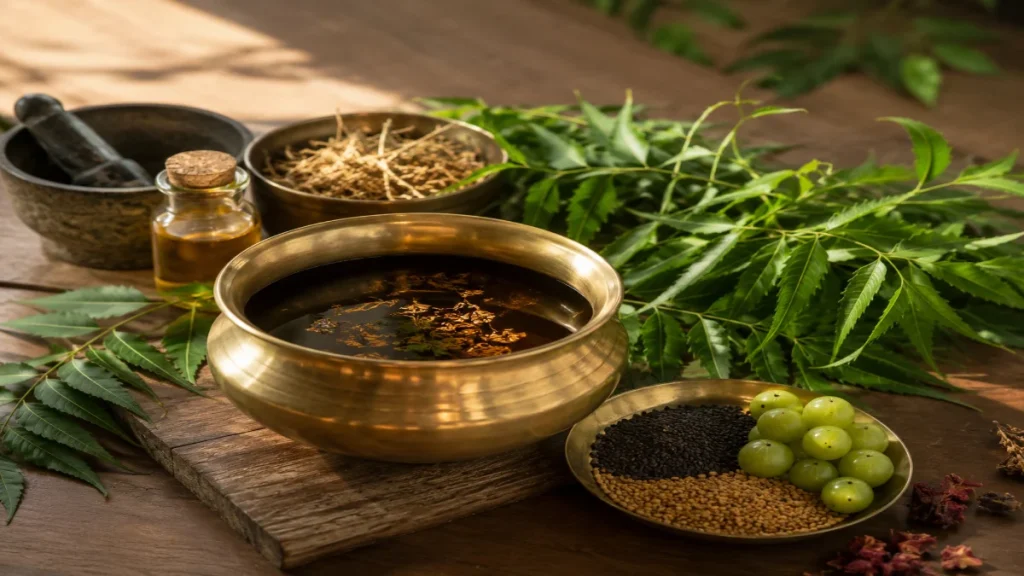
Ayurveda’s ‘Gandush’ is a lifesaver for dental hygiene: Know the correct method of oil pulling and its 4 main types.

‘Gandush’ of Ayurveda— Due to modern lifestyle and wrong eating habits, problems like tooth decay, bleeding gums and bad breath have become common. While people are becoming dependent on expensive mouthwashes and toothpastes containing chemicals, there is a very effective age-old remedy in Ayurveda. Ayurveda not only recommends yoga for body fitness and meditation for peace of mind, but also considers the process of ‘Gandush’ and ‘Kavaldharan’ to be most effective for oral hygiene (dental hygiene).
Ayurveda’s ‘Gandush’ is a lifesaver for dental hygiene: Know the correct method of oil pulling and its 4 main types.
What is Gandush and Kavaldharan? Understand the difference between the two
In today’s language, what the world knows as oil pulling is basically an ancient medical method of Ayurveda. In this, medicated oil or decoction is used to keep the mouth and teeth completely healthy. However, people often consider Gandush and Kavaldharna to be the same, but there is a slight difference in the method of action of both:
- Gandusha: In this process, oil or decoction is filled in the mouth in such quantity that there is not even a little space left inside the mouth. It is kept in the mouth for a few minutes without shaking and then spit out.
- Kavaladhara: In this, a small amount of oil or liquid is filled in the mouth, so that it can be easily swished or swished inside the mouth.
4 types of Gandush according to the nature and dosha of the body
According to Ayurvedic experts, the physical nature of every person is different. Therefore, the type of Gandush should be chosen based on one’s physical nature (Vata, Pitta, Kapha) and problem:
- 1. Snigdha Gandush (for Vata Dosha): It is prepared from sweet and sour (sweet and acidic) juices. Mainly sesame oil, desi ghee or fat is used in this. It is most beneficial in tooth sensitivity (tingling) and dryness of gums caused by Vata Dosha.
- 2. Shaman Gandush (for Pitta Dosha): If a burning sensation is felt in the mouth, swelling or heat in the gums, then this method is adopted to quench Pitta Dosha. In this, medicinal decoctions made from bitter, astringent and sweet elements are used.
- 3. Shodhana Gandush (for Kapha Dosha): Shodhana Gandush is performed in case of excessive production of saliva, heaviness or stickiness in the mouth. In this, the mouth is deeply cleaned using herbs with pungent, salty and sour tastes.
- 4. Planting Gandush (for ulcers and wounds): If you are troubled by mouth ulcers, ulcers or bleeding gums, Planting Gandush provides immense relief. It uses astringent and bitter herbs (like Neem, Acacia or Triphala), which heal the wound faster.
expert opinion
“Taking Gandush or Kavaldharan in the morning on an empty stomach and after brushing teeth strengthens the teeth and gums naturally. It removes the toxins from the mouth and prevents diseases like cavity and pyorrhoea. However, do consult an Ayurvedic doctor to select the right oil or decoction as per your nature.”
To improve dental health, do oil pulling with sesame oil or coconut oil for 5 to 10 minutes in the morning after brushing your teeth. After the process is complete, spit out the oil and rinse with lukewarm water. Be careful not to swallow this oil. Including it regularly in your daily routine not only increases the shine of teeth but also strengthens the gums.
Comments are closed.