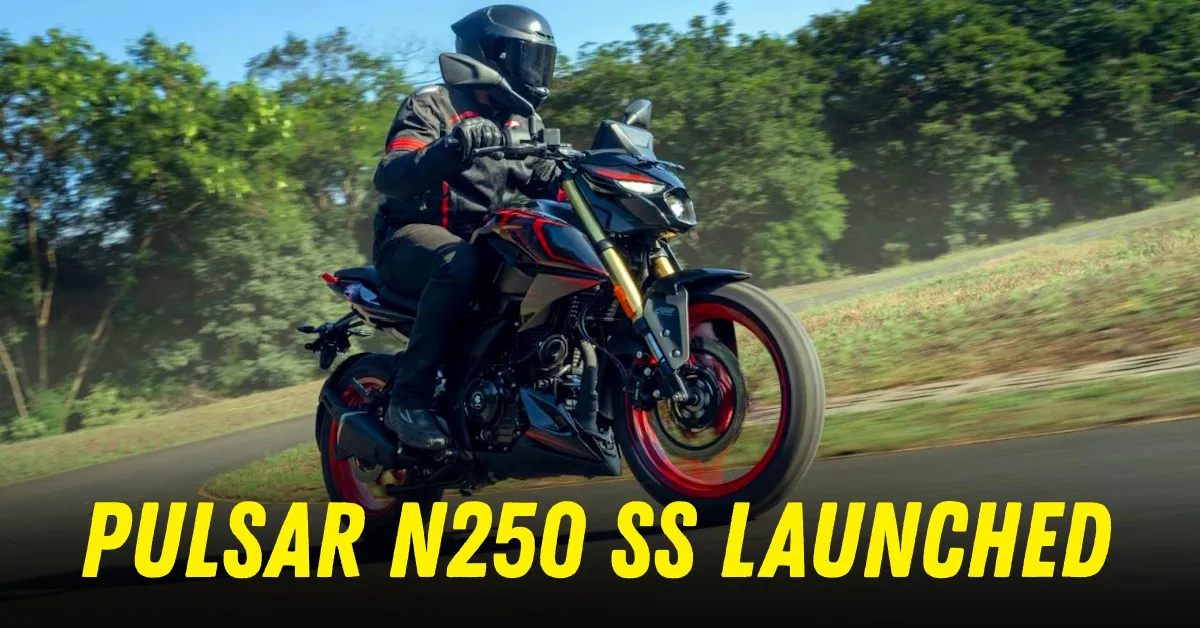
Bajaj has launched the Pulsar N250SS at ₹1,59,406 (ex-showroom, Delhi), ₹14,136 above the regular N250 priced at ₹1,45,270. That premium brings a revised four-valve engine, a six-speed gearbox, a clutch-less upshift (quickshifter) function and a 5-inch TFT display. These are substantial mechanical and equipment changes for a motorcycle that otherwise looks much like the existing N250.
The N250SS is now the more expensive of the two versions. It retains the 249.07cc single-cylinder, air- and oil-cooled engine layout, but its new four-valve cylinder head lifts output to approximately 25PS and 22Nm. The regular two-valve N250 produces about 24.5PS and 21.5Nm. The increases are small, so buyers should expect the transmission and electronics to make a bigger difference than the extra power.
The earlier N250 used a five-speed gearbox, making the new sixth ratio one of the most useful changes for riders who travel regularly on highways. It could allow the engine to run at lower revs while cruising, although Bajaj has not published a direct comparison of sixth-gear cruising speeds and engine rpm. Whether it makes the new bike quieter or more economical will need testing.

Bajaj has also added what it calls the Sports Shifter, allowing clutchless upshifts. That is an unusual feature at this price and should make quick acceleration through the gears easier. However, the presence of a quickshifter does not automatically mean every shift will be equally smooth at low speeds. Riders will need to try it in stop-start traffic as well as on an open road.
The electronic throttle body allows selectable riding modes, supplementing the ABS settings and traction control available on the N250. The benefits depend on how noticeably each mode changes throttle response. That matters more to everyday riders than the small rise in peak power.
The 5-inch colour TFT replaces the regular N250’s LCD instrument panel and supports Google Maps mirroring through a connected phone. For riders who use navigation frequently, seeing a map on the instrument display is more convenient than fitting a separate mobile holder. Adjustable hand levers, a USB Type-C charging socket, hazard lights and a Panic Brake Alert function complete the equipment additions.

The motorcycle retains the familiar naked-bike design, with updated graphics and colour choices separating the SS from the standard version. Its underlying chassis layout remains familiar too, with an upside-down front fork, a rear monoshock, 17-inch alloy wheels and disc brakes at both ends. Bajaj has not claimed a wholesale change in suspension geometry or braking performance.
At ₹1.59 lakh, the N250SS remains cheaper than the Hero Xtreme 250R, starting at approximately ₹1.84 lakh, and the Suzuki Gixxer 250, priced around ₹1.85 lakh. Hero Xtreme 250R offers a significantly stronger 30 PS and 25 Nm from its liquid-cooled engine. Suzuki’s Gixxer delivers 26.5 PS and 22.2 Nm. The Bajaj therefore does not lead this group on engine output, but it offers a six-speed transmission, quickshifter and TFT navigation at a lower purchase price.
For someone buying primarily for outright acceleration, the Hero’s substantial power advantage deserves attention. For riders replacing a smaller commuter or using one motorcycle for office journeys and weekend highway trips, the N250SS makes a different case. The extra ₹14,136 buys practical upgrades that are difficult to add later.
The regular N250 still makes sense for buyers who want the same basic riding position and strong low-cost 250cc performance without paying for electronic features. The N250SS is the more complete option on paper, but its sixth-gear gearing, quickshifter behaviour and ride modes are the key additions that call for a test ride before buying.