
Maruti Suzuki is preparing to give the Baleno a major update. One of the biggest changes will be under the bonnet. The upcoming Baleno facelift will ditch its existing four-cylinder K12 petrol engine and get the newer 1.2-litre Z12 three-cylinder petrol engine from the Swift and Dzire.
At first, this may sound like a downgrade. After all, the Baleno is a larger and more premium car than the Swift. So why would Maruti put a three-cylinder engine in its bigger hatchback. The answer has little to do with simply cutting costs. The Z12 has been designed with efficiency, city drivability and Maruti’s future hybrid plans in mind.
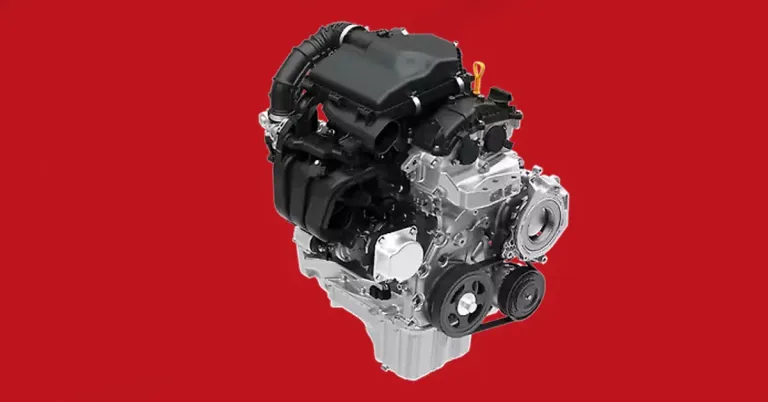
The most obvious difference is the cylinder count. The Z12 has three cylinders compared to four in the K12. That means fewer pistons, connecting rods, valves, spark plugs and several other components. The engine itself is also more compact and lighter.
This has benefits beyond weight. Fewer components mean lower manufacturing costs. For Maruti, that can translate into better margins. At the same time, some of those savings can be passed on to customers through a sharper price.
The lighter engine also means less weight over the front axle, which can have a small but useful effect on the car’s handling and efficiency.

The bigger question is performance. The K12 engine has traditionally been tuned to offer stronger performance higher up the rev range. That makes it feel more comfortable when accelerating hard or driving at highway speeds.
The Z12 takes a different approach. It has been tuned to offer stronger low-end and bottom-end torque. This is particularly important in a car like the Baleno because a large proportion of its life will be spent in urban traffic.
Think stop-go traffic, traffic lights, crowded roads and frequent low-speed acceleration. In these conditions, strong low-end response matters more than outright top-end power.
The three-cylinder engine therefore isn’t necessarily about making the Baleno faster. It is about making it easier and more effortless to drive in the conditions where most owners will actually use it.

There is another important reason for the Z12’s compact dimensions. Maruti Suzuki has designed the engine with future electrification in mind. Its smaller footprint leaves more space in the engine bay for additional hybrid hardware.
This becomes particularly important as Maruti moves towards: strong hybrid and series-hybrid powertrains. A smaller internal-combustion engine gives engineers more freedom to package electric motors, power electronics, additional cooling hardware and other components without completely redesigning the vehicle.
So, the Z12 isn’t simply the Swift’s engine being transferred into the Baleno. It is part of a larger powertrain strategy.
Fuel efficiency is another major advantage. When Maruti replaced the K12 engine with the Z12 in the Swift, the newer three-cylinder engine delivered a significant improvement in fuel economy. Depending on the variant and transmission, the improvement was around 10-14 per cent. We expect similar fuel efficiency gains on the new Baleno as well.
That matters even more as emission regulations become increasingly stringent (impending CAFE3 in 2027) and customers continue to demand lower running costs. For the Baleno, the combination of a lighter engine, improved efficiency and stronger low-speed drivability could therefore make considerable sense.
So, while putting a three-cylinder engine into a larger hatchback may initially look like Maruti is cutting corners, there is a much bigger strategy behind it. The Z12 is lighter, cheaper to manufacture, more efficient, better suited to city driving and easier to package with future hybrid technology.