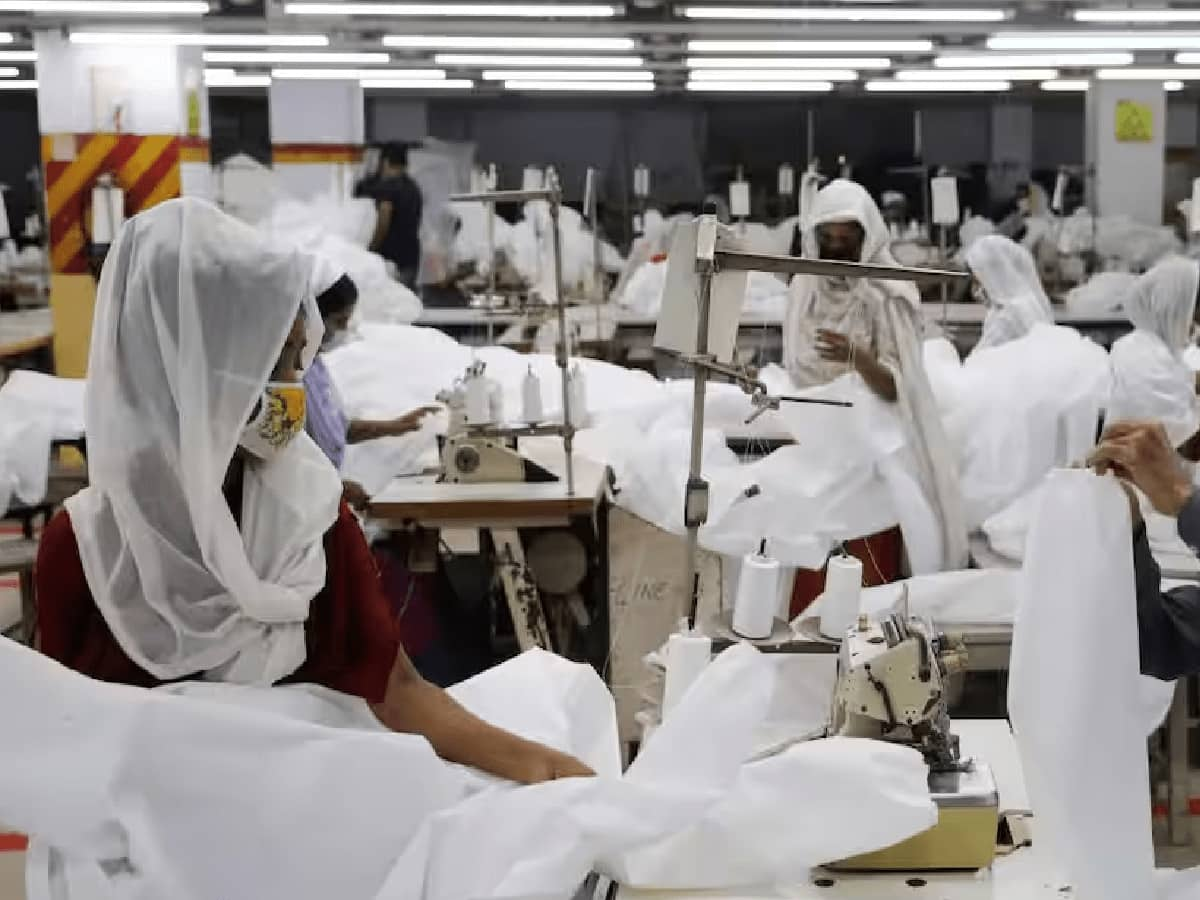
An important international news has come out from Dhaka and New Delhi on Wednesday, 25 November 2026 regarding a major development related to South Asia's major industrial sector, global apparel supply chain and labor rights. The Bangladesh government has given a big relief to lakhs of workers working in the country's important garment sector and has decided to increase their minimum monthly wages by 36 percent. According to the details received, after this decision, the minimum wage of garment workers has now increased from 100 US dollars i.e. 12,500 Taka to 136 US dollars i.e. 17,000 Taka per month. This decision has been taken after several weeks of violent protests and strikes by workers, due to which many garment factories were closed and production work came to a standstill. According to the Dhaka Tribune report, this important decision was taken after a 12-hour long marathon meeting held at the Minimum Wage Board office in Segunbagicha, Dhaka early on Wednesday, which started at 2 pm on Tuesday and ended at around 2 am on Wednesday. From Dhaka and Chittagong to Ghazipur, Narayanganj, Kolkata, New Delhi, Mumbai and Uttar Pradesh's Kanpur, Unnao, Lucknow, Prayagraj and Varanasi, there is a wide discussion among South Asian economy, textile industry experts and general readers about the 36 per cent wage hike, the new wage structure of four different grades, the rules to be implemented from December 1 and the future of the Bangladeshi textile industry with more than 40 lakh workers. Let us know in detail how the salary was decided through voting in the Minimum Wage Board meeting, how much salary will the workers of different grades get from January and the background of this strike and what effect it had on global fashion brands. New salary decided by voting in Minimum Wage Board meeting: When will the rule be implemented and how much salary to which grade? Even after several rounds of intense talks between factory owners and labor representatives, when a consensus could not be reached on any single figure, the six-member Minimum Wage Board decided the new minimum wage through voting. Babul Akhtar, representative of workers in the board, informed that four members of the board voted in favor of the proposal of Taka 17,000 per month, while two members supported the workers' proposal of Taka 18,000. As per the scheduled timetable, this new salary structure is expected to be implemented from December 1, 2026 and workers will start receiving the increased salary from the month of January. Under the new rules, the monthly salary of workers of different grades has been clearly fixed, under which fourth grade workers will get Taka 17,000, third grade workers will get Taka 19,200, second grade workers will get Taka 20,000 and first grade workers will get Taka 21,500 per month. What was the initial demand of the workers and the impact on the global textile market: More than 40 lakh workers and big brands like H&M-Zara. If we look at the background of this movement, the workers were protesting violently since the end of October in the major textile producing industrial areas of Bangladesh. Citing the ever-increasing expenses on daily food items, house rent, transportation and medical treatment, the workers had demanded a minimum monthly wage of Taka 32,000 at the beginning of the movement and later Taka 30,000 i.e. US$240. During various stages of negotiations, the labor representatives showed flexibility and reduced their demand first to Tk 22,000 and finally to Tk 18,000; It is noteworthy that earlier in November 2023, the salary was increased to Taka 12,500. From an economic point of view, Bangladesh is the second largest textile exporter in the world after China, where more than 40 lakh workers are employed in this industry and more than 80 percent of the country's total export income is earned from this sector. Bangladesh supplies ready-to-wear internationally to major global fashion brands such as H&M, Zara and Gap. Factory owners had expressed concern and warned that if the strike had been prolonged, during the most important time for preparing orders for the spring and summer season, it would have caused huge delays in shipping goods to foreign buyers and posed a serious threat of cancellation of international orders; Even at present, this major industry of Bangladesh is facing the pressure of rising production costs, inflation and tough competition in the global market.