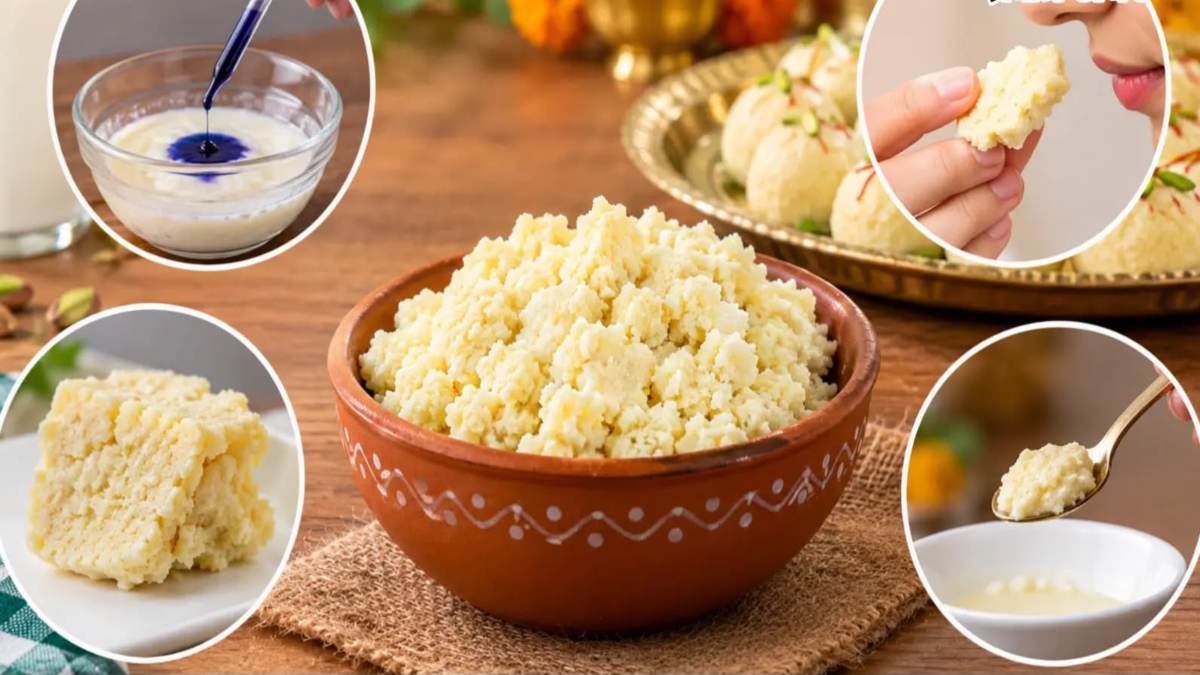
Lifestyle Desk – As the festive season approaches, the demand for sweets increases in the market. Be it Diwali or any other special occasion, sweets made from mawa are definitely available in homes. The taste of sweets like gulab jamun, kalakand, peda and barfi seems incomplete without mawa. But during this period the risk of selling adulterated mawa also increases. To earn profit, some people may add starch, milk powder, poor quality ingredients or other substances to mawa. In such a situation, buying adulterated mawa can be harmful for your health.
If you are also going to buy Mawa on the festival, then it is very important to keep some important things in mind. However, the purity of mawa cannot be completely confirmed just by looking at the color, taste or texture. Let us know in what ways we can identify signs of adulteration while buying mawa.
Look carefully at the color and texture of the mawa.
While buying mawa, first look at its color and texture. Usually fresh mawa is light cream or off-white in color. Its texture should neither be too sticky nor unusually dry. However, the color of the milk may vary depending on the quality of the milk, the method of preparation and the moisture present in it. If the mawa shows abnormal colour, mould, colored spots or signs of spoilage, avoid purchasing it. Keep in mind that mauve cannot be considered pure just by looking at its white or attractive color, as some adulterated products may also appear normal in appearance.
Identify bad mawa by smell
While buying mawa, also pay attention to its smell. Fresh mawa usually has a mild milky aroma. On the contrary, if the mawa smells sour, stale, rotten or has any unnatural smell, it may be a sign of its spoilage. Avoid buying or eating such mawa. However, having a normal smell does not mean that the mawa is completely pure. There may be some adulteration which is not possible to identify just by smelling.
Don't judge purity by tasting
Many people, while buying Mawa, taste a little of it and judge its purity. But this method is not reliable. The taste of adulterated mawa may be like normal mawa, while the taste of spoiled mawa may be sour or unusual. If the taste of mawa seems bitter, sour or unnatural, then avoid eating it. But keep in mind that it is not right to taste suspicious mawa just to check. Be especially careful about mawa that is kept in the open or is being sold without proper cooling.
Do not consider home tests as completely reliable.
Many home remedies are suggested on the internet to detect adulteration in mawa. These also include measures like testing starch with the help of iodine. A blue-black color in the iodine test may indicate the presence of starch, but it does not identify every type of adulteration. Moreover, such testing cannot confirm the complete purity of mawa or its safety for consumption. If there is any suspicion of any kind of adulteration in mawa, it is better to get the test done from the food safety department or a recognized laboratory instead of relying on simple home tests. Keep the chemicals used for testing separate from food and do not eat tested mawa.
Keep these things in mind while buying mawa
- Buy from a trusted shop – Give preference to a seller who takes care of cleanliness and food safety.
- Take fresh mawa – Mawa should be kept at proper temperature. Avoid purchasing products that have been kept open for a long time.
- Be sure to take the bill – While buying packed mawa, check the label, packing date, last date of use and manufacturer's information. Having a bill can help in complaining.
- Complain in case of doubt – In case of suspicion of adulteration, the concerned food safety officer or FSSAI can be contacted through complaint channel.
Do not compromise with health
It is good to enjoy sweets during festivals, but ignoring your health can prove costly. While buying mawa, pay attention to its smell, color, texture and maintenance, but do not consider it pure just on the basis of home methods. Remember, scientific testing is the most reliable method for definitive identification of adulteration. By taking a little precaution, you can make the festive season safe and healthy.