
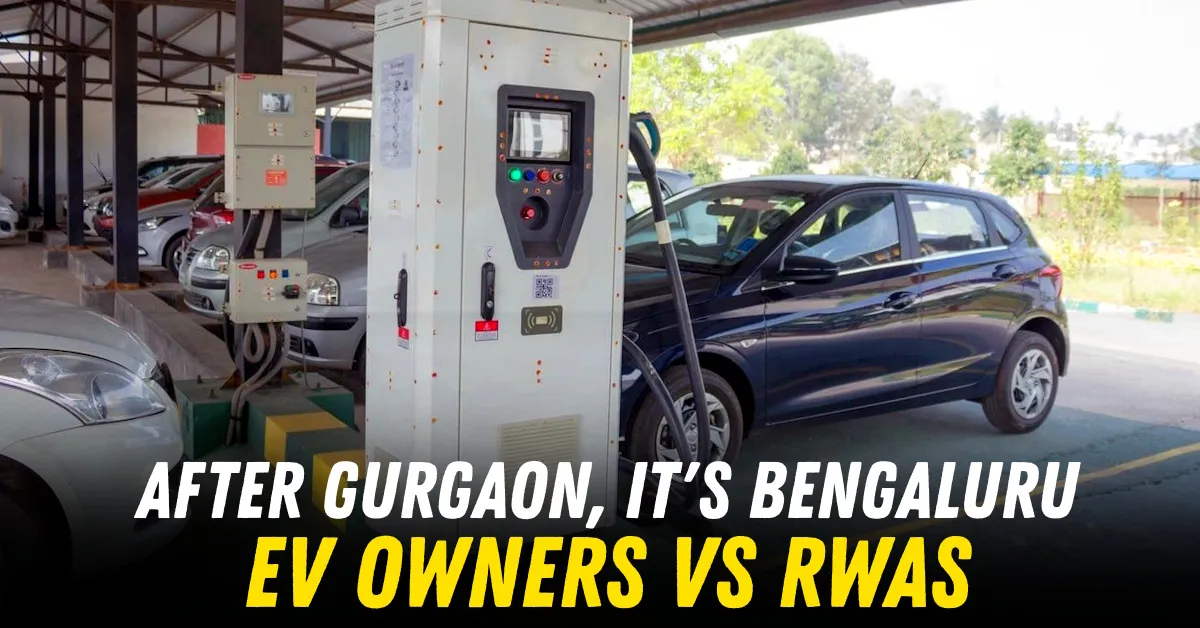

The shift to electric vehicles is running into a concrete barrier in India’s major cities: apartment parking. In Bengaluru, Resident Welfare Associations and flat owners are caught in a standoff over where, how and whether EV chargers can be installed in shared residential complexes.
The root of the problem is safety, specifically the risks associated with older buildings, outdated wiring and the fear of battery fires in enclosed spaces. Many older apartments simply do not have the electrical load capacity to support multiple EVs charging at the same time.
Pulling new, heavy-duty cables from the main metering panel to individual basement parking slots is expensive. RWAs are hesitant to approve installations without certified safety guarantees. EV owners, on the other hand, argue that home charging is the main reason an electric car or scooter makes practical sense in the first place.
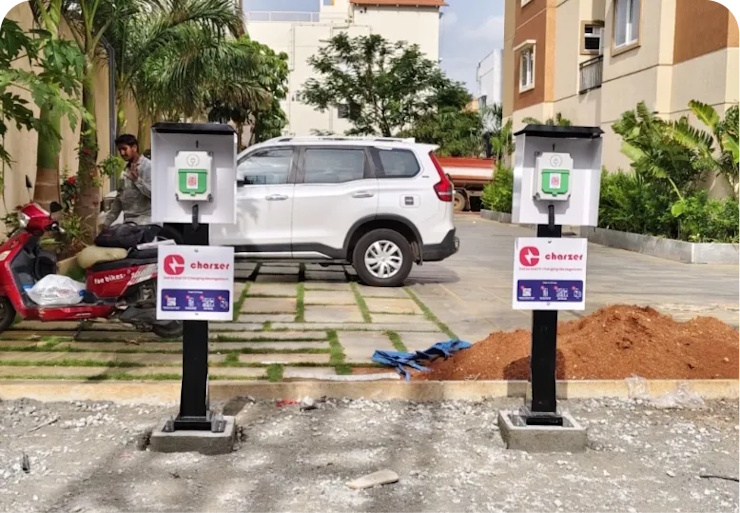
The issue is especially sharp in older apartment blocks. Many of these buildings were designed when parking demand itself was lower, and EV charging was not part of the planning process.
A single slow charger may not look like a major load. But when multiple cars or scooters are plugged in during evening hours, the building’s wiring, distribution boards and transformer capacity can become the real bottleneck. That is why RWAs are asking for electrical audits before giving approvals.
In Bengaluru, BESCOM already has operational guidelines for arranging power supply to EV charging points in apartment complexes. These guidelines recognise that residential charging is not just about giving an owner a socket. It involves load assessment, safe cabling, proper metering and coordination with the electricity utility where required.
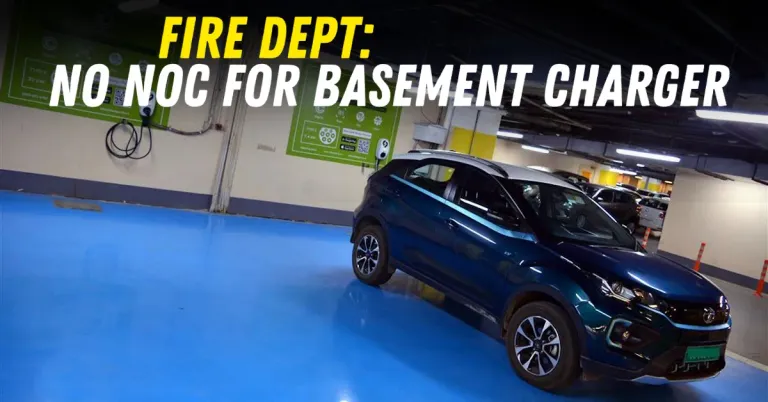
Fire safety is the primary flashpoint. The Haryana Fire Department recently proposed strict limitations, stating that EV chargers cannot be installed in Basement 2 or deeper. The logic is straightforward: in the event of an EV battery fire, the intense heat can compromise the building’s structural integrity, and fire trucks cannot access lower basement levels.
However, the Haryana Department of Town and Country Planning later issued draft building code amendments proposing that chargers can be allowed in basements and stilt parking areas, provided they meet specific fire safety norms.
The draft also proposed one charger for every five parking slots in residential and group housing projects, and one charger for every three parking slots in commercial buildings. This is a more practical approach than a blanket basement ban, because most large urban apartment buildings depend heavily on basement parking.
This back-and-forth illustrates the exact problem facing RWAs nationwide: there is no single, clear statutory rulebook that apartment residents, builders, utilities and fire departments can all follow.
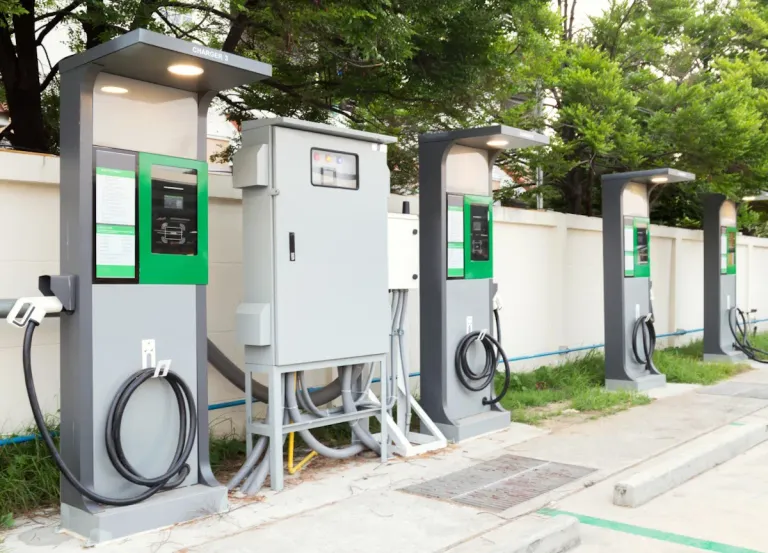
The Ministry of Housing and Urban Affairs has already recognised the need for EV-ready buildings. Its Model Building Bye-Laws amendment for EV charging infrastructure assumes that charging infrastructure should be planned for 20% of the total parking capacity at a premise. It also says the building should have additional power load for charging points, with a safety factor of 1.25.
That is a useful planning benchmark. But it is easier to apply in new buildings than in older apartment complexes where parking, wiring and utility rooms are already fixed.
This is where the current conflict begins. A new project can be designed with EV-ready parking from day one. An older building has to retrofit ducts, cables, meters, protection devices and fire-safety access into a layout that was never meant for EV charging.
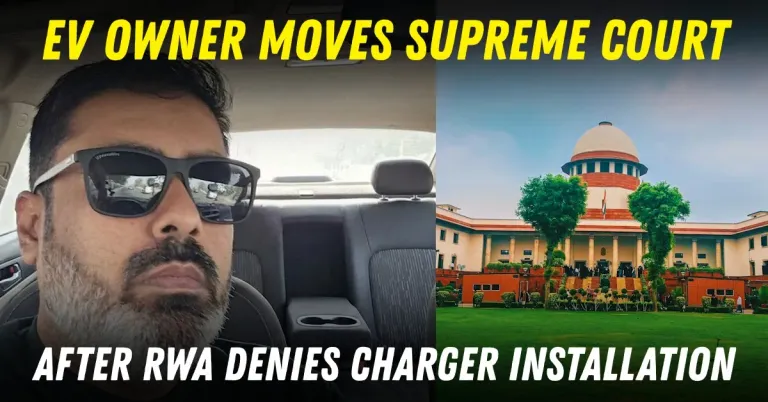
Without a definitive national or state-level law mandating how EV infrastructure must be handled in existing private residential buildings, flat owners and RWAs are left to fight it out based on building by-laws.
Both sides have valid concerns. EV owners have a practical need to charge the vehicles they are encouraged to buy. RWAs carry the liability for building safety and shared infrastructure. If something goes wrong, the responsibility will not sit only with the vehicle owner.
To solve this, the government, along with town planning, electricity and fire safety departments, needs to establish clear, legally binding Standard Operating Procedures. These should define who pays, who certifies, what kind of charger is allowed, what electrical protection is mandatory, what distance must be kept from fire exits, and when a society can reject a request.
Other countries have already tackled this. In France, the “Right to a Socket” law gives a tenant or owner in a shared residential building the right to install a personal EV charger at their own parking spot. The owner must submit a technical proposal from a certified electrician to the building management. If the management cannot prove a specific legal or safety objection within a set timeframe, the installation proceeds.
Germany introduced a similar law in 2020, granting apartment owners the right to install chargers at their own expense. It removed the earlier need for unanimous approval from all other owners.
Both models shift the burden from asking permission to proving technical compliance. That is the framework India may need. Not every building can support every charger, and safety cannot be treated casually. But a society should not be able to block EV charging without a technical reason.
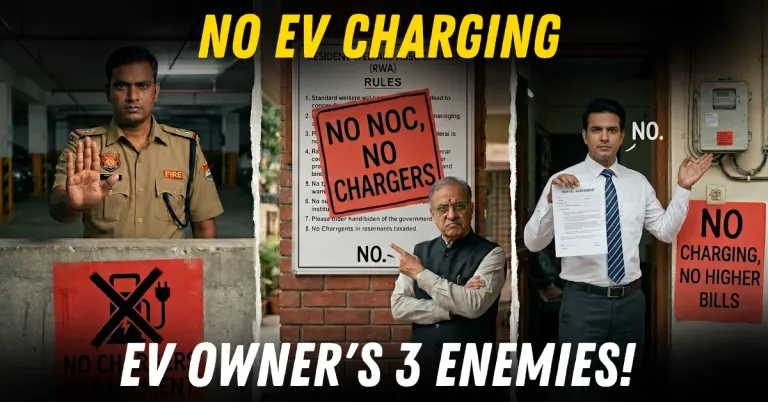
For Bengaluru apartments, the solution will likely be a mix of private chargers, shared chargers and phased electrical upgrades. Not every resident needs a dedicated fast charger. Many electric cars and scooters can be charged overnight using slower AC charging, which places less stress on the building load.
A practical framework could start with an electrical audit, followed by capped charger loads, certified installation, separate metering, mandatory residual current protection and a clear fire-safety plan. For larger complexes, shared charging bays may be easier than running individual cables to every parking slot in the first phase.
The EV market cannot grow only through public charging. Home and workplace charging are central to daily EV use. Bengaluru’s apartment problem is therefore not a small local dispute. It is a preview of what every dense Indian city will face as EV ownership rises.
Via DeccanHerald
Comments are closed.